What to Use if You Don’t Have a Coffee Grinder
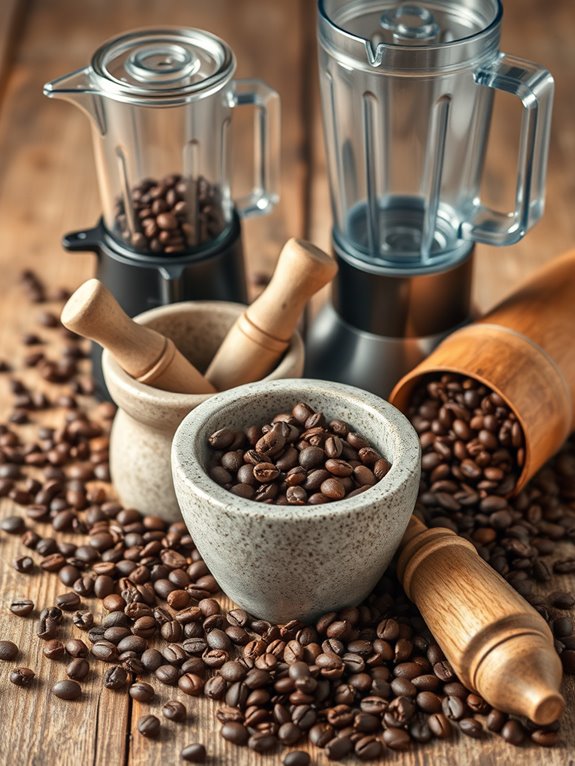
If you don't have a coffee grinder, don't worry—there are several effective alternatives. You can try using a blender; make certain it's clean and dry, then pulse the beans to a coarse grind. A rolling pin works too; crush beans in a Ziploc bag, then roll them to your desired texture. Mortar and pestle also offer great control for grind size. Exploring these methods will guarantee you enjoy fresh coffee any time!
Key Takeaways
- Use a blender on pulse setting for a coarse to medium coffee grind.
- Crush coffee beans with a rolling pin inside a sturdy Ziploc bag for consistency.
- Employ a mortar and pestle for precise grind control without electricity.
- Utilize a food processor with close monitoring for varied grind textures.
- Hammer coffee beans inside a plastic bag for an even coarse grind.
Exploring the Blender Method
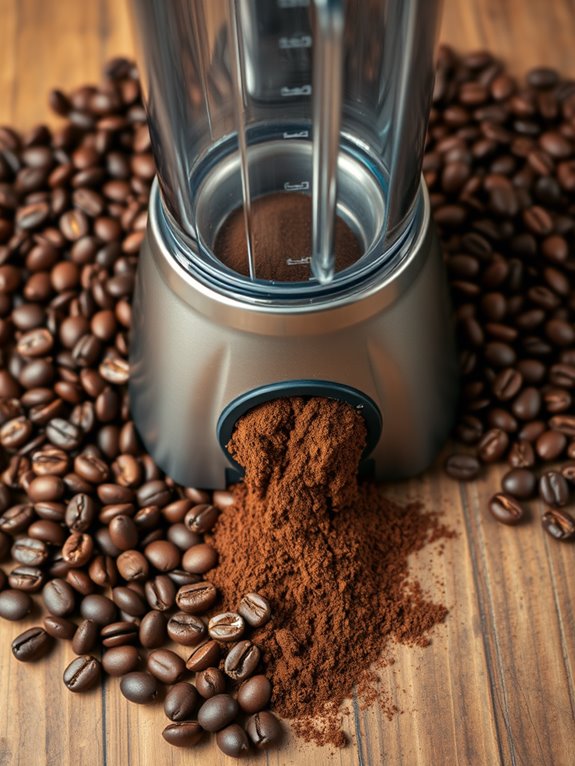
When you don't have a coffee grinder, a blender can serve as a handy alternative for grinding your coffee beans.
Let's examine this method. Start by ensuring your blender is clean and dry to avoid unwanted moisture. Measure two tablespoons of beans per six ounces of water. Some blenders have a built-in grind setting, which can simplify the process and offer better control over the grind consistency. Use the pulse setting in short bursts of 3-5 seconds to prevent overheating, shaking the blender gently for even distribution. While burr grinders provide superior consistency, a blender can still produce acceptable results for cold brew coffee. Check the grind size regularly, aiming for a coarse to medium texture, similar to sea salt or sand.
Mastering the Rolling Pin Technique
Experiencing a lack of a coffee grinder doesn't mean you're out of options.
Let's investigate how perfecting the rolling pin technique can help. Start by placing your coffee beans in a sturdy Ziploc bag, ensuring even distribution on a chopping board or foil-covered surface. Seal the bag, removing excess air, and place it on a hard surface.
Initially, use the rolling pin as a hammer to break up the beans. Once mostly crushed, switch to rolling with steady pressure to refine the grind. Shake the bag to redistribute beans if needed.
Be patient, and you'll achieve a consistent grind over time. This method works especially well for achieving medium to coarse particle sizes ideal for various brewing methods.
Utilizing a Mortar and Pestle
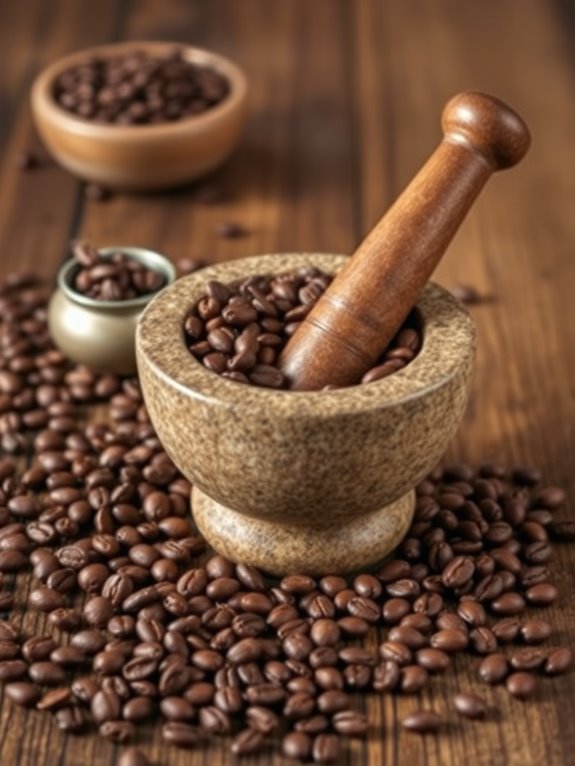
Let's investigate how using a mortar and pestle can be a practical and effective alternative for grinding coffee beans.
You don't need electricity, which makes it energy-efficient. With this method, you get precise control over your grind size, from coarse to fine.
Fill the mortar just one-fourth full with beans, then crush them using a twisting motion with the pestle. Roll them around until you achieve your desired consistency.
It's affordable and gives your arms a workout. However, it requires effort and can be time-consuming.
Make certain you clean it thoroughly after each use to avoid contamination.
Hand Grinder Alternatives
Investigating hand grinder alternatives can open up a world of possibilities for those times when a traditional coffee grinder isn't available.
Let's examine four effective methods:
- Hammer and Plastic Bag Method: Crush beans evenly using a hammer or rolling pin. This is perfect for coarse grinds like French press or cold brew. Be gentle to avoid countertop damage.
- Rolling Pin Method: Roll beans on a flat surface, adjusting pressure for desired grind size. It's simple but may lack consistency.
- Spice Grinder Method: Quick and easy with spinning blades, but watch for heat that affects flavor.
- Food Processor Method: Pulse beans for varied textures, but monitor closely to prevent over-processing.
While these methods work in a pinch, a Dragon Tooth burr grinder like the Vivaant provides more consistent results for various brewing methods.
Electric Grinder Options
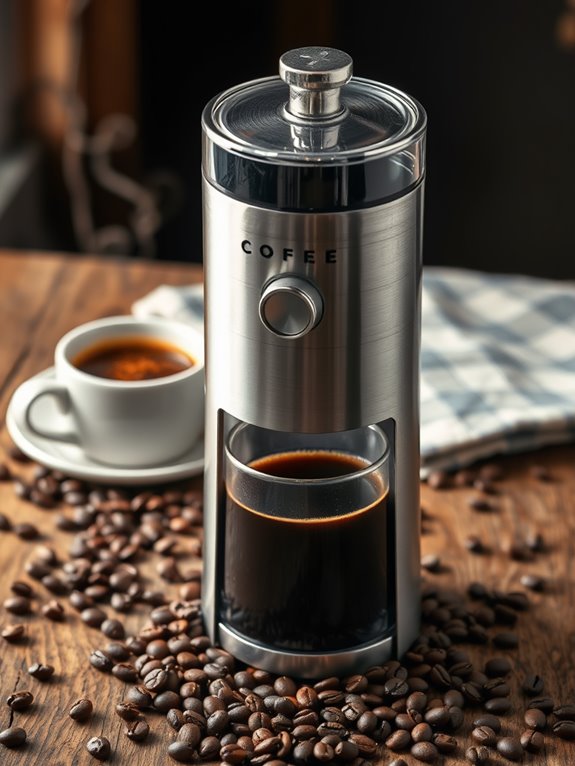
When you need a quick and efficient way to grind your coffee beans, electric grinders offer an appealing solution.
Let's examine their features and benefits. With automatic grind settings, you can quickly adjust between more than 40 options on models like the Baratza Virtuoso Plus.
These grinders, powered by powerful DC motors, provide speed and consistent grind quality. The ease of use is enhanced by timers and pulse buttons, ideal for espresso lovers.
However, consider the price, size, and noise levels. Brands like Baratza and Breville offer durable and versatile options, ensuring your coffee-making process is both efficient and enjoyable.
Popular models like the Cuisinart DBM-8P1 feature 18 different grind settings for precise brewing control.
Combining Grinding Solutions
Although you may not have a coffee grinder on hand, there are several alternative methods you can use to achieve the perfect grind for your coffee beans.
Let's investigate these options:
- Mortar and Pestle: This traditional method gives you great control over grind size, though it's time-consuming and best for small amounts.
- Blender: Quick for a coarse grind, but be cautious of over-grinding, which can spoil the flavor.
- Hammer or Mallet: A last resort, it's messy and inconsistent, suitable only when no other tools are available.
- Spice Grinder: Compact and easy to clean, yet it might produce uneven grinds.
Pre-ground Coffee as an Option
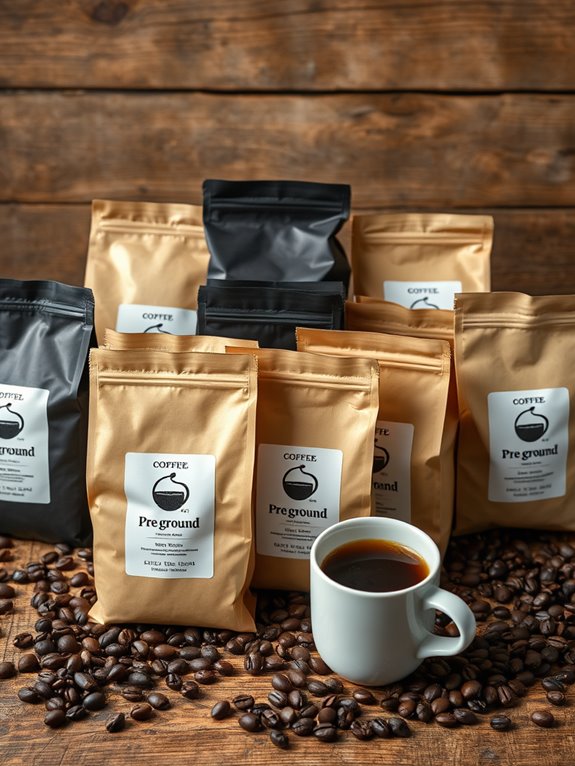
Pre-ground coffee offers a convenient, hassle-free solution for those who don't have a grinder or simply prefer to skip a step in their morning routine.
It's readily available in stores, making it an accessible option without the need for special equipment. The cost is generally lower than whole-bean coffee, which is a bonus for budget-conscious coffee lovers.
However, you might notice a difference in flavor and freshness, as pre-ground coffee loses its oils and aroma faster due to oxidation.
Despite this, it's an efficient choice for casual drinkers and those brewing large batches, especially in time-sensitive situations.
Embracing Instant Coffee Alternatives
Why settle for less when you can welcome instant coffee alternatives that offer both convenience and versatility in your kitchen adventures?
Let's investigate some options.
- Instant Coffee: Use as a quick substitute. Double the amount for a bolder flavor.
- Brewed Coffee: Substitute for liquid, like water or milk, maintaining your recipe's balance.
- Ground Coffee: Add a tablespoon or two for a mild coffee flavor without overpowering.
- Espresso Grounds: Use sparingly for intense coffee flavor. Adjust to avoid bitterness.
These alternatives provide flexibility in baking and cooking, allowing you to enjoy coffee flavors without a grinder.
Discovering Coffee Substitutes
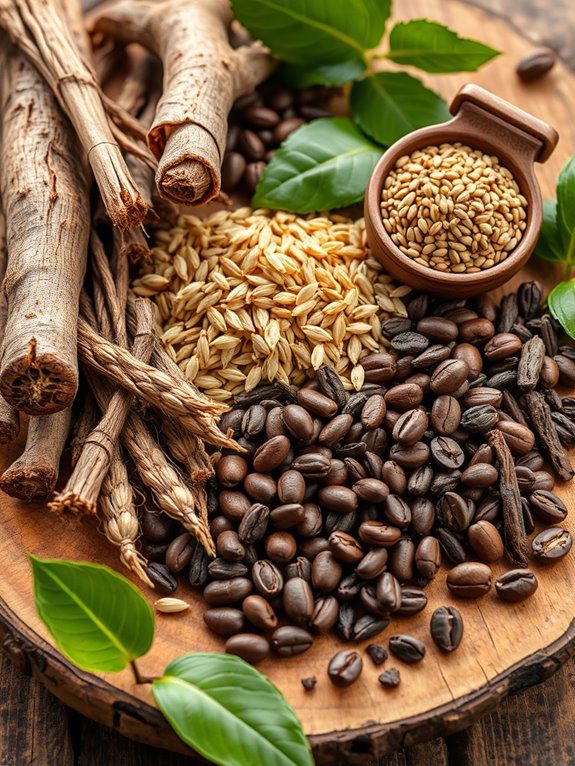
Have you ever wondered about the possibilities when you don't have coffee beans or a grinder on hand?
Let's examine some intriguing coffee substitutes you can try.
Natural Ingredients:
Barley, chicory root, rye, and wheat can be roasted and ground to offer coffee-like flavors.
Sunchokes, once dehydrated and roasted, provide a mellow taste.
Preparation Techniques:
Roast these ingredients in a skillet, then grind them using tools like a rolling pin or blender.
Mix different ingredients for richer flavors.
Health Benefits:
These substitutes are often caffeine-free, high in fiber, and rich in beneficial antioxidants, offering a healthier coffee-like experience.