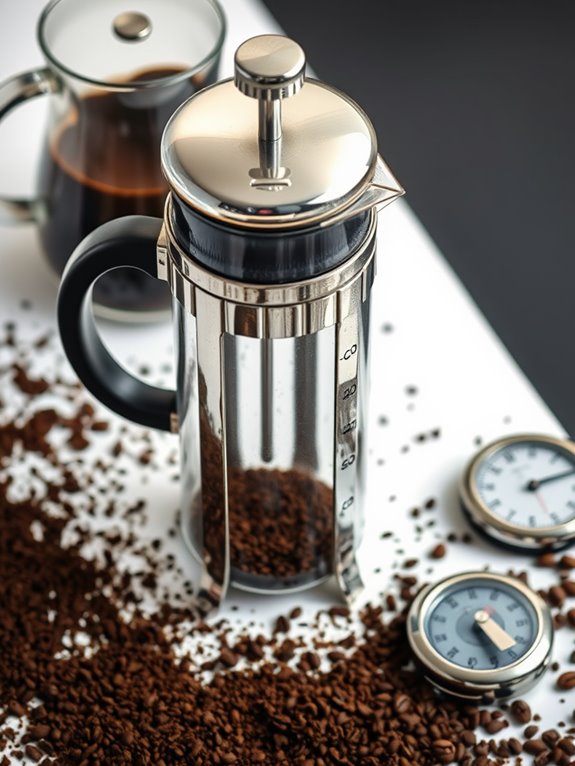
What Are the Disadvantages of a French Press Coffee Maker
A French press coffee maker might seem simple, but it has some disadvantages. It takes around 4 minutes to brew, and pressing the plunger needs some force. Cleaning can be tricky, especially with clogged screens, and glass carafes can break. Sediment often ends up in your cup when grounds aren't managed well. Additionally, it's not very travel-friendly, and there are health considerations with unfiltered coffee. Let's examine these challenges in detail to understand more.
Key Takeaways
- French presses can leave coffee grounds in the brew, affecting taste and texture.
- Regular cleaning is required to prevent clogging and maintain optimal function.
- Glass carafes are fragile and pose a risk of breaking during use or travel.
- Unfiltered coffee may increase LDL cholesterol levels, posing health risks.
- They are less portable due to their weight and fragile materials.
Time Consumption and Effort Required
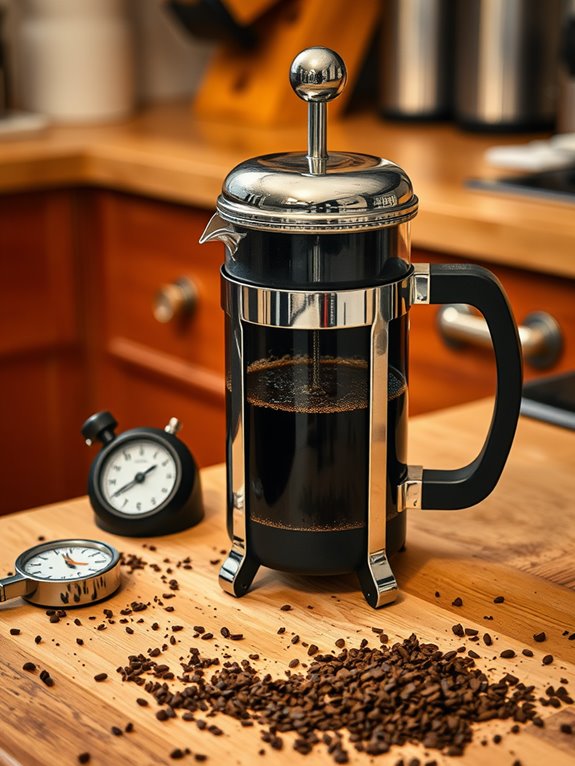
When you immerse yourself in the world of French press coffee making, you'll quickly notice that time consumption and effort required are key aspects to reflect upon.
The total brew time is approximately 4 minutes, but don't forget about heating water and grinding beans. You'll find these steps add to the overall time. Precision is essential—water should be between 195°F and 205°F, and you'll need a careful 1:15 coffee-to-water ratio. Using a scale simplifies the brewing process by removing guesswork, ensuring you achieve the perfect balance of flavors every time.
The process demands physical effort, especially when pressing the plunger, which requires around 32 N of force.
Let's investigate how these elements can make French press brewing a labor of love.
Challenges in Cleaning and Maintenance
Cleaning and maintaining a French press can present several challenges that may surprise even the most diligent coffee enthusiasts.
Clogged screens can make pressing difficult, as coffee oils and residues mix with fine grounds, trapping debris. Regular disassembly and cleaning with vinegar can prevent this.
Be cautious with glass carafes—shattering risks arise from temperature changes or metal utensils. Use soft cloths to dry components, avoiding harsh detergents that leave unwanted scents.
Moisture invites mold, so thorough drying is essential. Store your French press in a dry place, checking for wear to prevent residue buildup.
Similar to coffee grinders, avoid using direct water contact when cleaning electrical components of your French press to prevent damage and rust.
Let's investigate these maintenance tips for longevity.
Presence of Coffee Grounds in the Brew
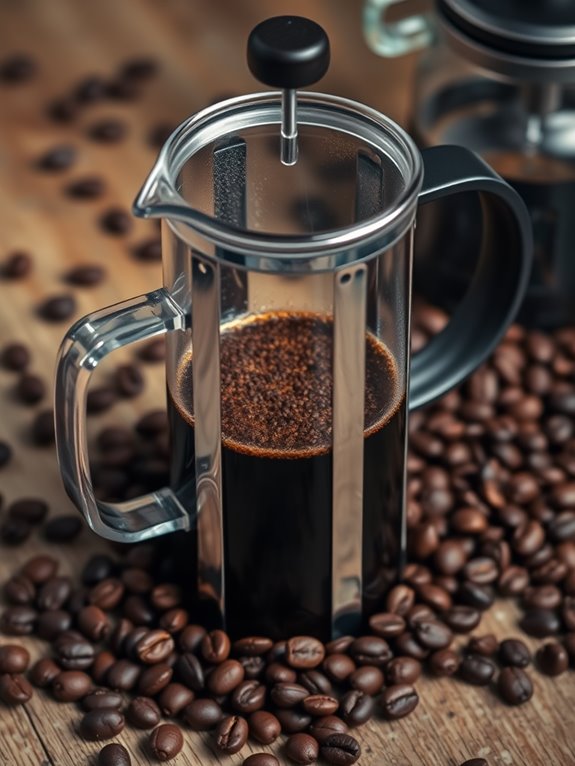
Although the French press is beloved for its rich, full-bodied coffee, the presence of coffee grounds in your brew can be a common, albeit frustrating, issue.
Grounds sometimes sneak past the plunger due to steeping coarse grounds in hot water. This sediment, or sludge, accumulates at the bottom, affecting both taste and texture. Incorrect plunger technique or using too fine a grind can exacerbate this.
To alleviate, use a coarse grind, break the crust properly, and press the plunger slowly. Decanting immediately after pressing helps too. Regular cleaning guarantees no old grounds spoil your next cup.
While automatic coffee makers typically prevent grounds from entering your cup through paper filters, French presses require more attention to technique to achieve a clean brew.
Let's investigate these strategies further.
Portability Limitations
After perfecting the art of keeping coffee grounds at bay, let's examine the portability limitations of French press coffee makers.
These devices can be heavy, especially when made from stainless steel or glass, making them cumbersome to carry. Larger models take up significant space in your luggage or backpack.
Glass versions are fragile and prone to damage during travel. Additionally, cleaning a French press while on the go can be inconvenient.
Although some designs are compact and travel-friendly, the challenge remains in balancing weight distribution and material durability for true portability.
Let's investigate how these factors affect your travel plans.
Potential Health Concerns
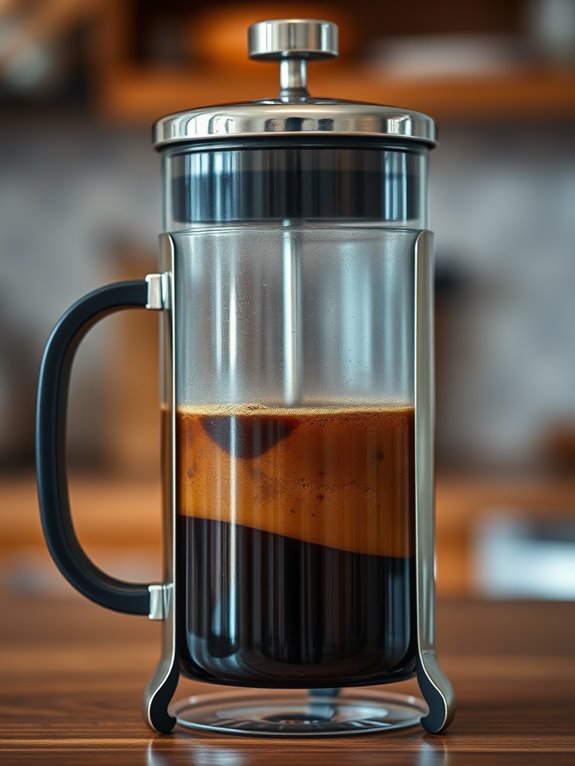
When you enjoy a cup of coffee brewed with a French press, you mightn't consider the potential health concerns that come along with it.
French press coffee contains diterpenes like cafestol and kahweol, which can increase LDL cholesterol levels. These compounds aren't filtered out by metal filters, unlike paper ones.
Consuming unfiltered coffee regularly may raise LDL cholesterol by 7 mg/dL, increasing heart disease and stroke risks. Drinking more than four cups daily is linked to higher mortality rates.
The coarse grind size typically used in French press brewing creates more surface area for these compounds to be extracted into your cup.
It's important to balance your coffee habits, especially if you have high cholesterol or heart issues.
Let's investigate smart consumption.
Cost Considerations
When considering a French press, let's examine the cost considerations that come into play. Prices range considerably from $7.99 to over $129. Budget-friendly options like the Bodum Brazil start at $13, while high-end models like the Bodum Columbia can reach $99.95. Let's investigate how different factors affect price:
| Price Range | Examples |
|---|---|
| Low ($7.99-$20) | Bodum Brazil |
| Mid ($40-$80) | ESPRO P3 |
| High ($99-$129) | Fellow Clara |
| Premium ($110+) | Yeti Model |
Quality doesn't always match price; even affordable models can brew excellent coffee. Consider durability and taste when deciding if a pricier option is worth it. Unlike programmable coffee makers, French presses don't offer automated features like customizable brewing times or auto-off functions.
Durability and Maintenance Needs
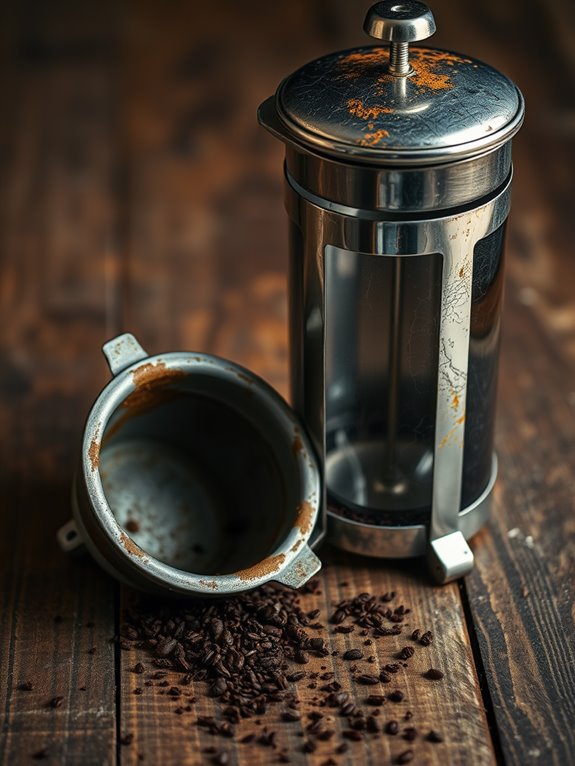
Durability and maintenance are essential factors to take into account if you're thinking about using a French press coffee maker.
Metal ones are sturdy but can get dented, which is tough to fix. Glass presses have a risk of breaking, especially if mishandled.
Regular use demands proper cleaning to prevent wear and tear. Daily cleaning involves rinsing and drying, while weekly cleaning with baking soda and vinegar tackles residue.
Maintenance, including rinsing the frame and lid, keeps your brewer in top shape. Without it, old oils can spoil your coffee, requiring time-consuming care to guarantee lasting performance.
Issues With Brew Clarity
Brew clarity is a common concern for many French press users, as achieving that perfectly smooth cup of coffee can be a bit tricky. Grounds often slip through the mesh filter, creating grittiness.
To combat this, use a slow press technique and scrape the top layer of grounds before pressing. A snug filter fit is crucial, as a loose one increases sediment.
Coarse grind size minimizes sediment, but doesn't eliminate it. Adjust the coffee-to-water ratio, and verify water temperatures stay between 195-200°F for ideal clarity.
Let's investigate these techniques to enhance your French press experience, yielding a cleaner, more satisfying brew.