Does Coffee Maker Boil Water
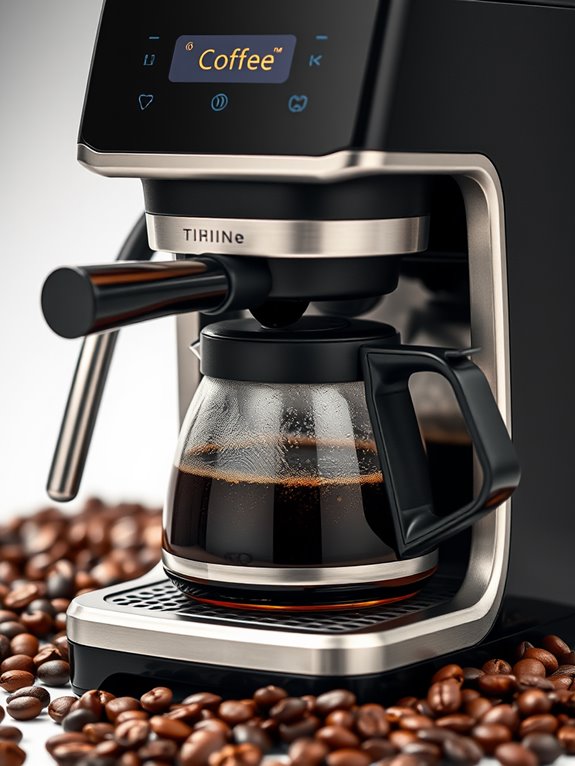
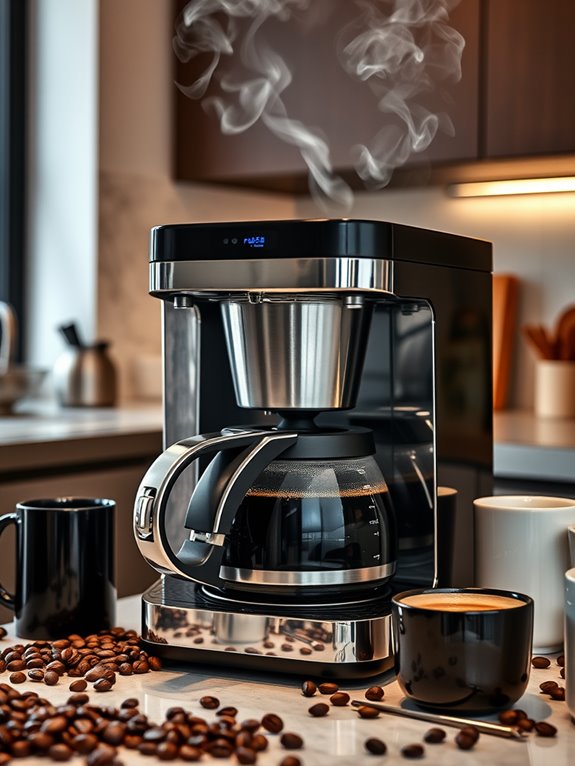
Coffee makers heat water to nearly boiling temperatures but don't actually boil it. These machines maintain water between 195°F and 205°F, the perfect range for brewing coffee that's flavorful but not bitter or under-extracted. Unlike a kettle, coffee makers are designed for precise temperature control, ensuring ideal extraction. So, while your coffee maker won't bring water to a full boil, it expertly prepares it for brewing. Investigate further to uncover how this affects your coffee's taste.
Key Takeaways
- Coffee makers heat water to around 90-96°C, below boiling point, ideal for brewing coffee.
- Unlike hot water dispensers, coffee makers don't boil water; they maintain optimal brewing temperatures.
- Heating elements and sensors in coffee makers ensure precise temperature control without reaching boiling.
- Water boiling is not necessary for coffee extraction, which relies on specific temperature ranges.
- Boiling water can damage coffee flavor through over-extraction, making controlled heating preferable.
Understanding Coffee Maker Temperature Settings
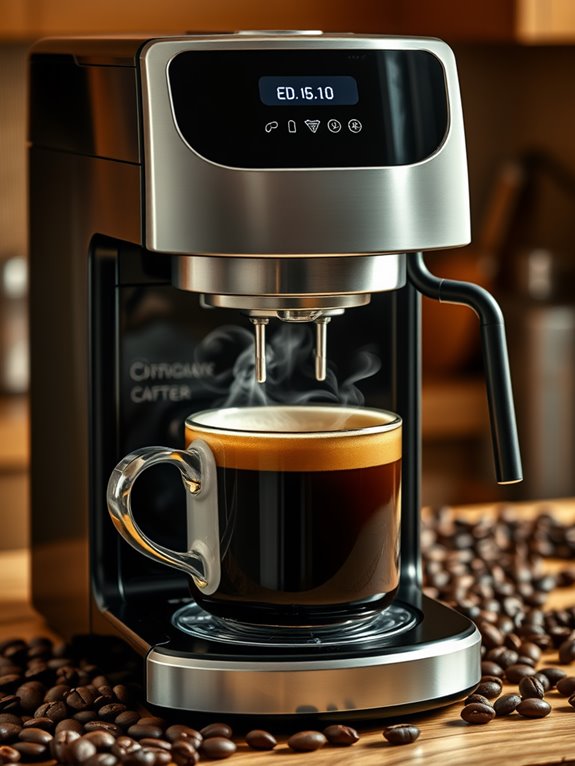
When brewing your favorite cup of coffee, understanding the temperature settings of your coffee maker is essential for achieving the best flavor. Coffee makers don't boil water; instead, they heat it to an ideal range. The Specialty Coffee Association of America suggests 90-96°C for brewing. This prevents over-extraction, ensuring a balanced taste. Consistent temperature settings in coffee brewing lead to predictable taste outcomes, enhancing the overall coffee experience. Espresso machines have components like boilers and group heads, each with specific temperatures. The boiler is hotter to account for heat loss, while the portafilter should be preheated. Using the correct grind size helps prevent over-extraction and maintains optimal brewing temperatures.
Ideal Brewing Temperature for Coffee
Understanding the temperature settings of your coffee maker is just the beginning; now, let's examine the ideal brewing temperature for coffee to enhance your coffee-making skills.
The recommended brewing temperature range is 195°F to 205°F. Hitting the sweet spot, 200°F, often yields the best extraction. Higher temperatures risk over-extraction, while lower ones under-extract.
Adjust based on roast: lighter roasts thrive at 205°F, darker ones at 195°F. Water hotter than 205°F can scald your coffee. Use a thermometer for accuracy.
Personal taste matters—experiment within this range to find your preferred flavor profile. Let's investigate how these temperatures affect your brew!
Your coffee's grind size consistency plays a crucial role in achieving optimal extraction at these brewing temperatures.
The Role of the Heating Element in Coffee Makers
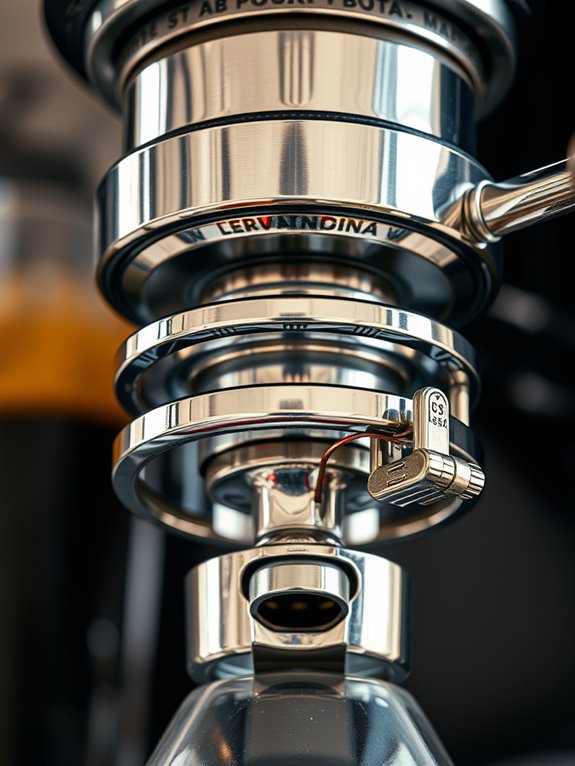
The heating element in your coffee maker is the unsung hero responsible for changing cold water into the perfect brewing temperature, ensuring you get a flavorful cup every time.
It efficiently converts electrical energy into heat using the Joule heating effect. Let's investigate its role:
- Material: Made of high-resistance materials like nichrome wire, ensuring durability and effective heating.
- Location: Situated near the bottom, it quickly reaches high temperatures.
- Design: Its small size allows rapid heating and precise control.
- Temperature Control: Sensors regulate the element to maintain the ideal brewing range of 91°C to 96°C.
Regular maintenance of the heating element components helps prevent mineral buildup that can slow brewing times and affect coffee taste.
How Bubbles Aid in Water Circulation
Let's investigate how bubbles play an essential role in circulating water within your coffee maker. When water heats up, it turns into vapor, creating buoyancy that moves water through the system. This is called a two-phase flow, combining liquid and vapor to form a slug or churn flow. A one-way valve guarantees water moves in one direction, using the buoyancy principle efficiently. While not as quick as traditional methods, the water temperature reaches approximately 200°F during operation.
| Component | Function |
|---|---|
| Heating Element | Creates vapor-liquid mixture |
| Tubing | Pathway for vapor-liquid movement |
| One-Way Valve | Regulates flow, prevents backflow |
| Reservoir | Source of water |
Regular cleaning prevents clogs, guaranteeing smooth operation.
Why Coffee Makers Don't Boil Water
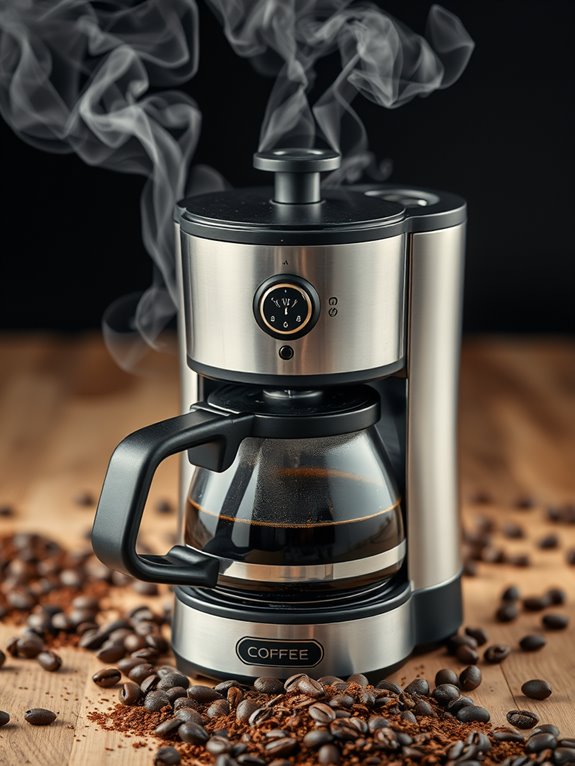
While many people assume a coffee maker can boil water, it actually doesn't reach that temperature due to its technical design limitations.
Coffee makers are crafted for brewing, not boiling. Their heating elements only warm water to 195°F-205°F. Water flows past these elements quickly, never reaching boiling. This design is intentional for a few reasons:
- Safety: Boiling water can damage your coffee maker and pose burn risks.
- Efficiency: Other methods, like kettles, are faster and more effective.
- Functionality: Coffee makers focus on brewing, not boiling.
- Temperature Control: Sensors guarantee water stays below boiling, maintaining a steady brew temperature.
Temperature Limitations and Coffee Flavor
Understanding the role of temperature in brewing coffee is key to making a delicious cup.
Water at 195-205 degrees Fahrenheit guarantees ideal flavor extraction. Too hot, and you risk bitterness due to over-extraction; too cold, and the coffee tastes weak and sour.
Different roasts need specific temperatures: lighter roasts thrive at the higher end, while darker roasts prefer it cooler.
Think of it like dissolving sugar: the right temperature extracts just the right amount of flavors, acids, and oils.
Use accurate equipment to maintain this balance, making sure every cup you brew hits that sweet spot of flavor perfection.
Key Features of Modern Coffee Makers
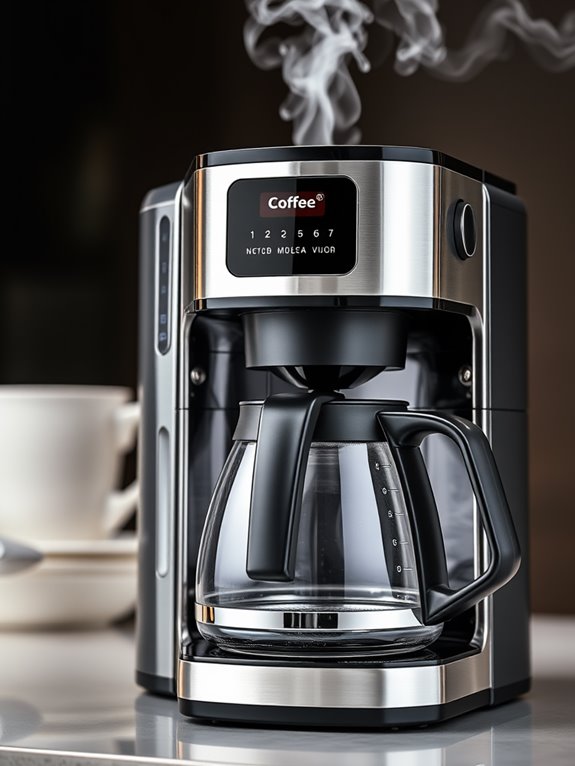
Modern coffee makers have evolved to offer a variety of features that make brewing your perfect cup both convenient and customizable.
You'll find advanced capabilities like programmable brewing for precise control over each pulse of water and temperature. Some models even include:
- Multiple Temperature Profiles: Adjust heating plate temperatures to match coffee volume.
- Flow Rate Adjustment: Optimize extraction times for full or half pots.
- Automatic Shut-Off: Prevent drips when removing spent grounds.
- Advanced Sensors: Monitor conditions and prevent mistakes.
With features like thermal carafes, one-touch operation, and energy efficiency, these coffee makers guarantee an exceptional brewing experience.
Differences Between Coffee Makers and Hot Water Dispensers
Coffee makers and hot water dispensers, though both providing hot liquids, serve different purposes and operate distinctly.
Coffee makers heat water to about 90-96°C, ideal for coffee brewing, avoiding bitter flavors. In contrast, hot water dispensers reach 100°C, perfect for tea and other hot beverages.
Let's investigate their designs: coffee makers focus on brewing, with timers and settings, while hot water dispensers prioritize fast heating and large capacity.
Coffee makers suit coffee lovers, but dispensers offer versatility, handling tea, cocoa, and more.
Choose based on your needs—brew precision or boiling versatility. Each appliance excels in its own niche.
Importance of Regular Maintenance and Cleaning
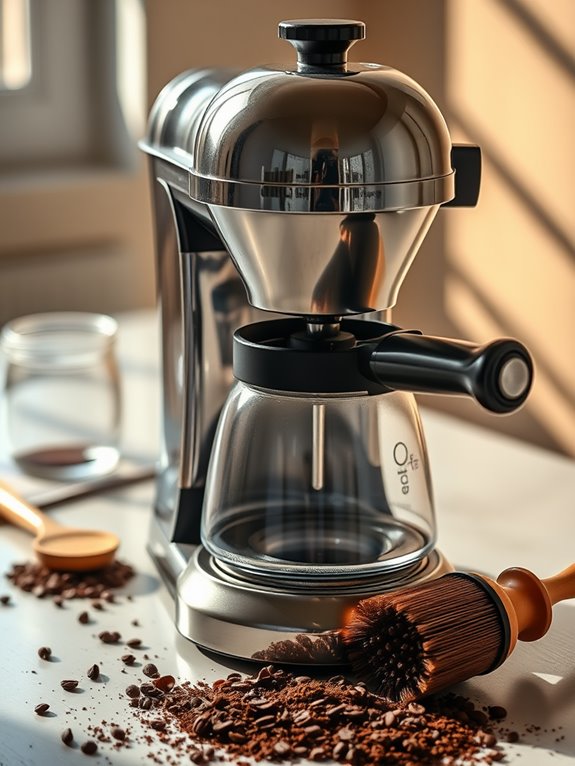
Regular maintenance and cleaning of your coffee maker aren't just about keeping it looking nice—they're essential for ensuring the best-tasting coffee and extending the life of your machine.
Cleaning prevents bacterial and mold buildup, which could affect flavor clarity.
Let's investigate some key cleaning tips:
- Daily: Rinse and wipe down to remove coffee oils.
- Weekly: Deep clean with vinegar or a cleaning solution to tackle stubborn residue.
- Monthly: Descales mineral deposits, protecting your machine from damage.
- Regularly: Check seals and gaskets for wear, ensuring consistent brewing quality.
Technical Specifications to Consider
Why are technical specifications so essential when choosing a coffee maker? They guarantee your coffee reaches the perfect temperature, enhancing flavor without burning it.
Let's investigate key features:
Water Temperature Control: Aim for temperatures between 91°C and 96°C. Boiling water can burn coffee, leading to bitterness.
Brewing Options and Features: Look for programmable delays, brew strength control, and thermal carafes for temperature retention.
Coffee Maker Components: Key parts include heating elements for even temperature and charcoal filters to purify water.
Additional Considerations: Consider features like automatic shut-off and non-slip feet for safety and convenience.
These specs make your coffee experience flawless.
Enhancing Coffee Taste With Quality Water
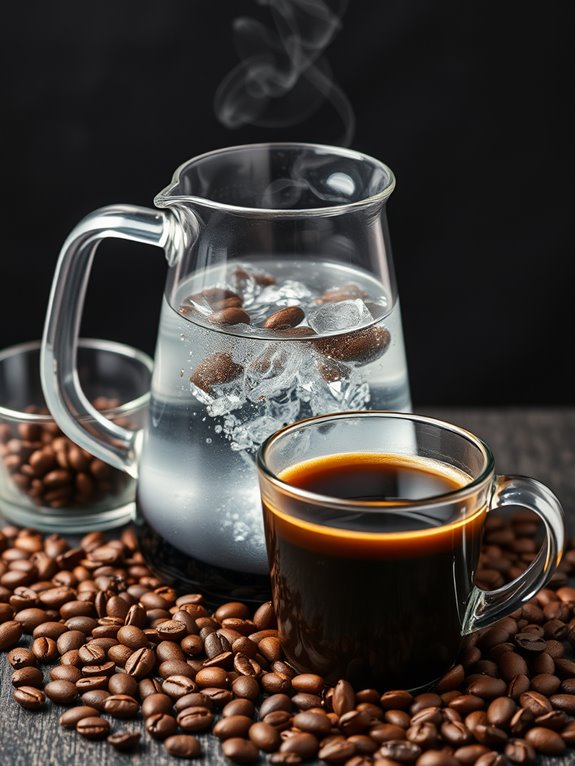
When it comes to brewing the perfect cup of coffee, the quality of the water you use plays an essential role.
Let's investigate how you can enhance your coffee's taste using quality water.
Start by ensuring your water has the right mineral balance:
- Mineral Content: Aim for water with a balanced mineral content for ideal flavor extraction.
- pH Levels: Keep pH levels between 6 and 7 to avoid bitterness or acidity.
- TDS Concentration: Check that total dissolved solids (TDS) are around 150 ppm.
- Filtration: Use filtered water to remove chlorine and impurities for a pure coffee taste.