How to Grind Coffee Beans Without a Grinder
Grinding coffee beans without a grinder is possible using simple kitchen tools. Let's investigate: try a blender, using a medium-high setting and pulsing for even results. Mortar and pestle offer control; smash and grind beans in circles for fresh flavor. Others include a food processor, lightly pulsed, or even a rolling pin—press consistently for uniformity. These methods create varied grind sizes, so learning technique can greatly improve your brew. You'll perfect these methods with practice.
Key Takeaways
- Use a blender on medium-high, pulse for three seconds and shake to ensure an even grind.
- Employ a mortar and pestle, crushing in circular motions for a fresh flavor.
- Try a food processor, adding beans and pulsing briefly, shaking for uniformity.
- Place beans in a bag and use a rolling pin, applying consistent pressure for an even crush.
- Expect varying grind sizes with these methods, which may affect coffee extraction.
Exploring Alternative Methods
When you find yourself without a coffee grinder, don't worry—there are several alternative methods to grind coffee beans effectively.
Let's investigate these options.
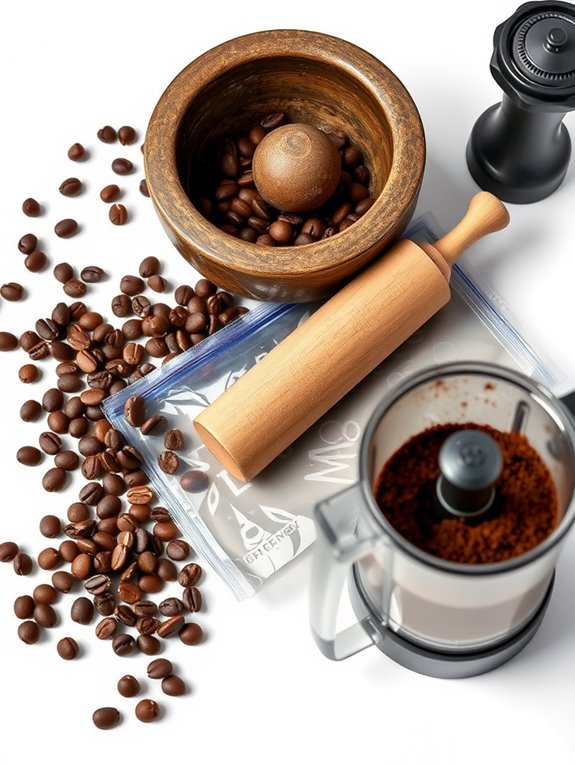
Blender Method: Use the medium-high setting or 'grinder' if available. Secure the lid, pulse for about three seconds, and gently shake to move larger pieces. Keep in mind that using a blender may result in an inconsistent grind size, which can affect the extraction process during brewing.
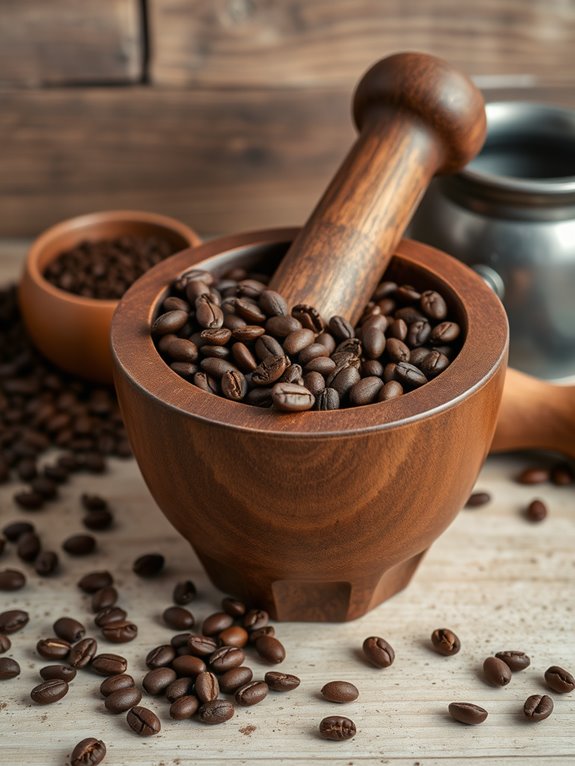
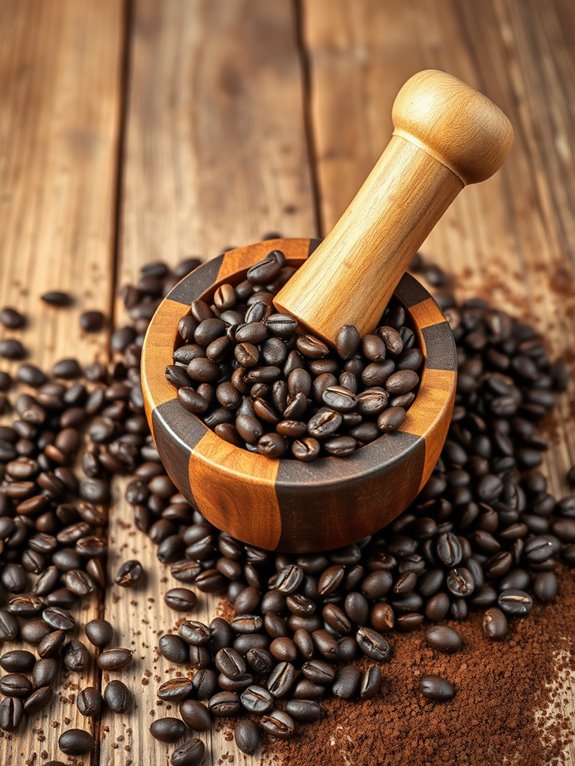
Mortar and Pestle: Fill a quarter of the mortar with beans, smash with the pestle, and grind in circular motions. While not as convenient as electric methods, this traditional tool delivers fresh coffee flavor superior to pre-ground alternatives.
Food Processor: Add beans, secure the lid, pulse briefly, and shake for uniformity.
Rolling Pin: Place beans in a bag, crush evenly on a board, applying consistent pressure.
Preparing Your Coffee Beans
Understanding how to prepare your coffee beans is vital for a flavorful brew.
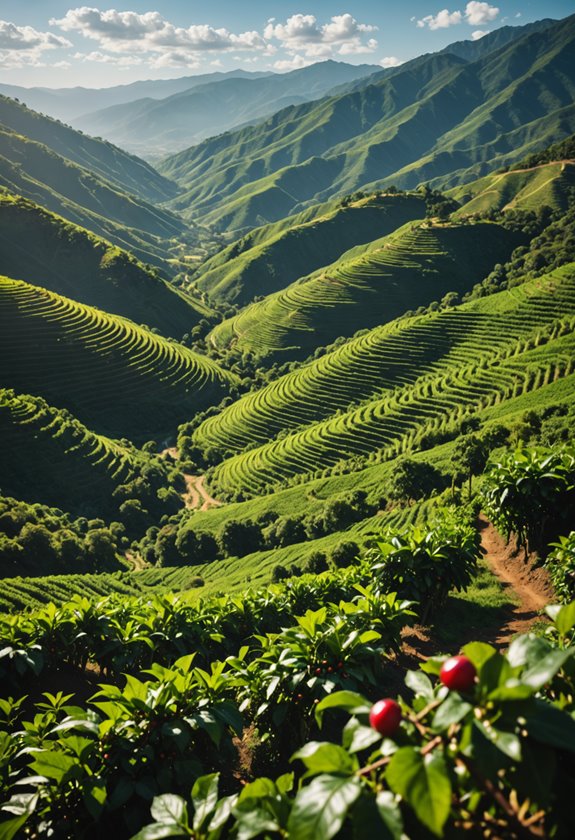
First, let's investigate how coffee beans are processed. They're initially processed using dry, wet, or pulped natural methods to remove the pulp and skin.
Sorting follows, where air sorters and sieve shakers separate beans by density and size, ensuring uniform quality.
Once sorted, beans get polished to remove any remaining layers, becoming "green coffee beans."
Next, they're roasted, an important step that alters their flavor profile.
Finally, after roasting, beans are cooled and readied for grinding, ensuring the freshest flavors emerge in your cup.
The surface area extraction process during grinding significantly impacts the final taste of your coffee.
Understanding Grind Textures
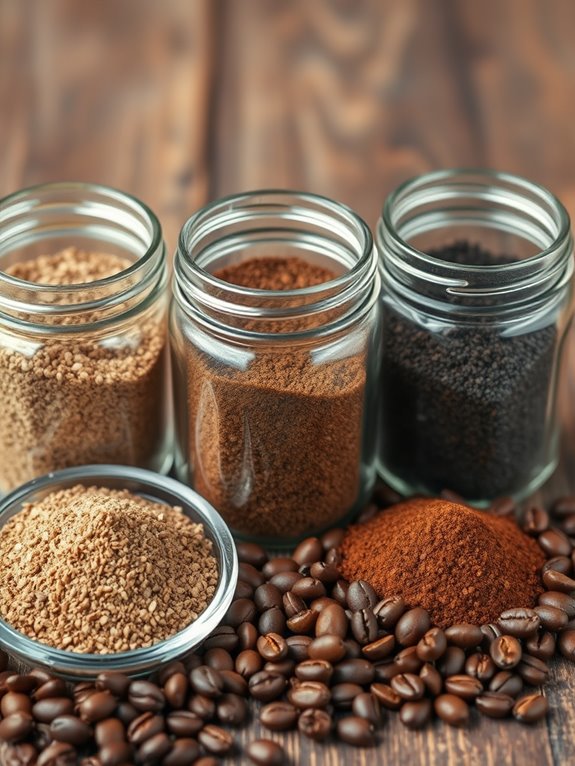
Grind texture plays an essential role in crafting the perfect cup of coffee, as it determines how water interacts with the coffee grounds, ultimately impacting the flavor and quality of your brew. Finer coffee grounds create stronger brews by maximizing surface area contact with water during extraction.
Let's investigate the different textures:
- Coarse Grind: Resembling sea salt, it's perfect for French press and cold brew, preventing over-extraction.
- Medium Grind: Like regular sand, it's versatile, ideal for drip coffee makers and AeroPress.
- Fine Grind: With a flour-like texture, it's vital for espresso machines, creating rich, concentrated shots.
- Medium Coarse Grind: Similar to rough sand, great for Chemex and pour-over.
- Extra Fine Grind: Exclusively for Turkish coffee, offering unique flavors.
Mastering Manual Grinding Techniques
While you might think grinding coffee by hand is a tedious task, mastering manual grinding techniques can enhance your coffee experience to new heights. Let's investigate key aspects:
| Grinder Type | Advantages | Disadvantages |
|---|---|---|
| Blade Grinder | Inexpensive, easy to use | Inconsistent, produces heat |
| Burr Grinder | Consistent grinds | Expensive, hard to clean |
| Hand Grinder | Full control, high-quality grinds | Requires effort, time-consuming |
Adjust grind size with a simple twist of the knob. Fine-tune by turning clockwise for finer grounds. Maintain a steady, moderate pace for best results. Regular maintenance guarantees longevity and peak performance. The 51 grind settings available on modern grinders like the Shardor allow precise customization for any brewing method.
Addressing Common Grinding Issues
When tackling common coffee grinding issues, it's important to first identify the problem at hand, as this will guide your solution approach.
Let's examine some typical challenges you might face:
- Ground Too Fine or Coarse: Check burr alignment and adjust settings for even grind.
- Jammed Grinders: Remove stuck beans by cleaning the hopper and chute regularly.
- Overheated Grinders: Allow for cooling breaks to prevent overheating and preserve flavor.
- Grinder Maintenance: Clean and replace burrs to maintain consistent performance.
- Bean Selection: Use dry, uniform beans to avoid jamming.