
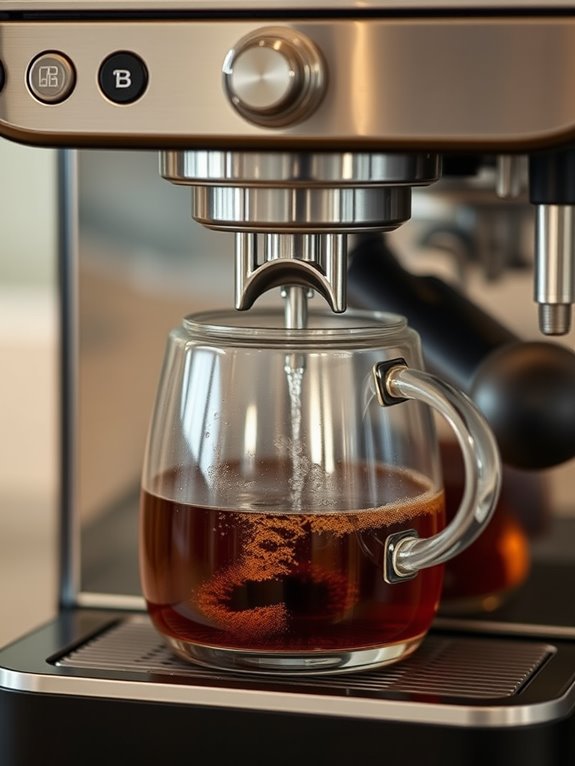
How to Descale a Coffee Machine With Vinegar
To descale your coffee machine with vinegar, fill the water reservoir with a half-water, half-vinegar solution, then run a brew cycle to let it flow through the machine. Let it sit for 30-60 minutes before running two fresh water cycles to rinse out any remaining vinegar taste. Regular descaling with vinegar helps break down mineral deposits and coffee residue, maintaining your machine's peak performance and longevity – and it's an eco-friendly alternative to commercial descalers. Want to learn more about the importance of descaling and how to keep your coffee machine in top shape?
Key Takeaways
- Fill the water reservoir with a half-water, half-vinegar mixture to create a descaling solution that breaks down mineral build-up.
- Run a brew cycle with the vinegar solution to allow it to flow through the machine and remove mineral deposits.
- Let the machine sit for 30-60 minutes after the cycle to allow the solution to penetrate and dissolve stubborn mineral deposits.
- Run two additional cycles with fresh water to rinse out the vinegar taste and remove any remaining mineral deposits.
- Regular descaling with vinegar helps maintain peak performance, prevents limescale buildup, and extends the machine's lifespan.
Understanding Descaling vs. Cleaning a Coffee Machine
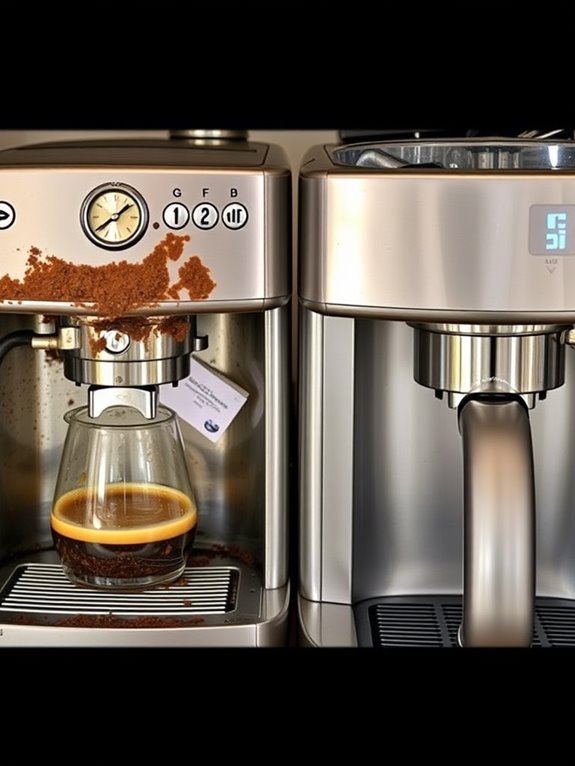
When it comes to maintaining your coffee machine, it's vital to understand the difference between descaling and cleaning.
Descaling removes limescale build-up from minerals in water, which can affect the flavor of your coffee and clog the machine's components.
On the other hand, daily cleaning removes coffee splashes, oils, and residues.
Both processes are essential for ideal coffee brewing.
Let's examine the importance of descaling and cleaning to keep your coffee machine in top shape.
Regular descaling with a natural solution like citric acid can be an affordable and eco-friendly alternative to commercial descalers.
How Vinegar Removes Mineral Deposits and Coffee Residue
Now that you understand the importance of descaling and cleaning your coffee machine, let's explore how vinegar removes mineral deposits and coffee residue.
Vinegar's acidity helps break down mineral build-up, allowing it to be rinsed away and restoring the machine's peak performance.
When mixed with water, vinegar creates a solution that effectively removes coffee residue and mineral deposits that can affect the flavor of coffee and clog the components of the coffee maker.
This process helps maintain your machine's performance and longevity by removing unwanted deposits and residue.
Regular descaling with a descaling kit can also prevent limescale buildup, which coffee machine corrosion can lead to costly repairs or even complete machine failure.
Equipment and Materials Needed for Descaling
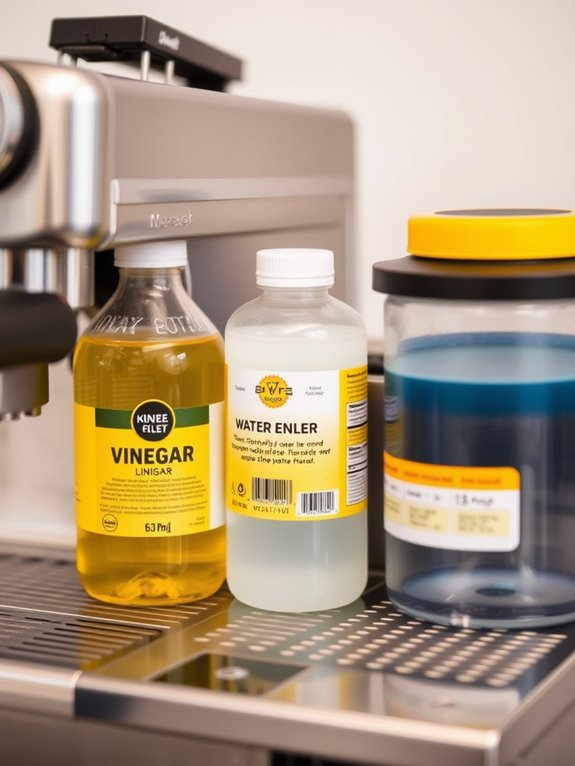
To descale your coffee machine effectively, you'll need a few essential pieces of equipment and materials.
Having the right tools will guarantee the process goes smoothly and efficiently.
- Vinegar: You'll need a sufficient amount of white vinegar to fill the water reservoir.
- Water reservoir: Make sure it's clean and free of any coffee oils or residue.
- A clean container: You'll need a container to catch the vinegar solution as it flows through the machine.
- A paper clip or small brush: These can come in handy for removing any stubborn mineral deposits.
It's also important to regularly clean your coffee machine with a coffee machine cleaning brush to prevent buildup and scale.
With these items ready, you'll be all set to descale your coffee machine and get it running like new again.
Step-by-Step Vinegar Descaling Instructions
Start by filling the water reservoir with a mixture of half water and half white distilled vinegar, creating a descaling solution that effectively breaks down mineral build-up in your coffee machine.
Run a brew cycle with the vinegar solution to allow it to flow through the machine and remove any mineral deposits. After the cycle is complete, turn off the machine and let it sit for 30-60 minutes.
Then, resume the brew cycle to finish running the vinegar solution through the machine, and finally, run two additional cycles with fresh water to rinse out any remaining vinegar taste.
Regular descaling with Jura descaling tablets can also help prevent limescale buildup and prolong the life of your coffee machine.
Importance of Regular Descaling for Optimal Coffee Brewer Performance
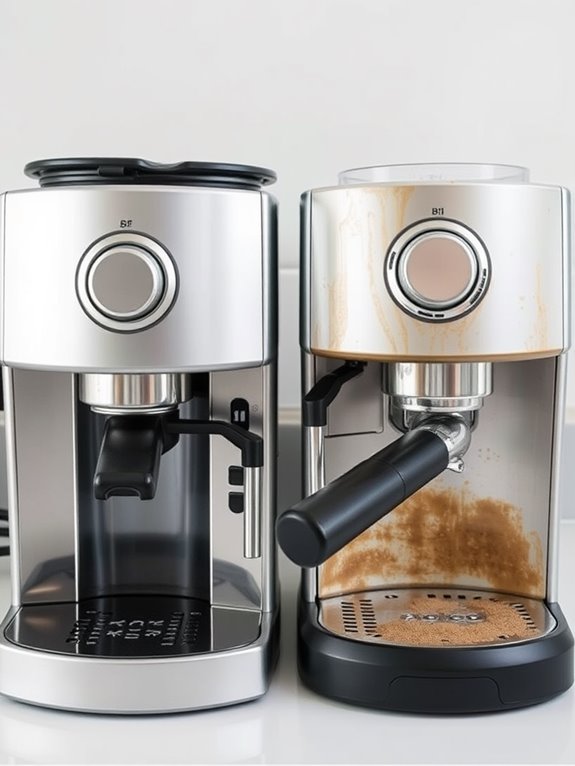
Regular descaling is essential to free your coffee brewer's full potential, as mineral buildup can substantially impact the taste of your coffee and even lead to machine breakdown.
By incorporating the descaling process into your regular maintenance routine, you'll prevent issues like slow brewing, poor flavor, and machine failure.
- Prevents mineral build-up: Removes deposits that affect taste and clog machine components.
- Maintains peak performance: Guarantees your coffee maker brews efficiently and effectively.
- Reduces bacterial growth: Prevents a 50% increase in yeast, mold, and bacterial contamination.
- Extends machine lifespan: Helps prevent costly repairs or replacement by maintaining your coffee maker's longevity and safeguarding its functionality.
Preventing Mineral Build-Up in a Coffee Machine
By maintaining a clean coffee machine, you're already taking a significant step in preventing mineral build-up. Regular descaling and using filtered water can reduce dissolved minerals, which can lead to build-up. Let's delve into some additional tips to prevent mineral accumulation:
| Tip | Description |
|---|---|
| Use filtered water | Reduces mineral content in your coffee machine |
| Rinse and wash daily | Minimizes mineral build-up and extends machine life |
| Avoid distilled water | Prevents metal breakdown and corrosion in certain machines |
| Descaling frequency | Depends on water hardness and daily usage |
| Monitor signs | Excessive brew times, unusual noises, and poor-tasting coffee indicate descaling is needed |
Vinegar Descaling vs. Commercial Descaling Solutions
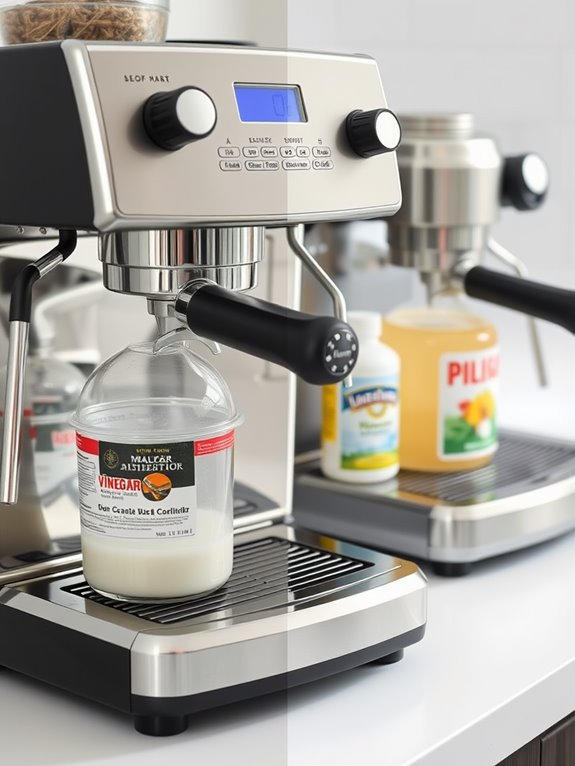
When it comes to descaling your coffee machine, you've got two primary options: vinegar descaling or commercial descaling solutions.
Let's investigate the pros and cons of each.
- Cost-effective: Vinegar can be used as a natural descaler, breaking down mineral build-up without breaking the bank.
- Warranty check: Before using vinegar, verify your manufacturer's warranty covers it, as some may not.
- Specific design: Commercial descalers are often customized for coffee machines, making them more effective at removing mineral deposits.
- Eco-friendly option: Vinegar is a viable, eco-friendly alternative to commercial descalers, but may require multiple water cycles to remove residue.
Maintenance and Tips for a Clean and Efficient Coffee Machine
Proper maintenance is key to ensuring your coffee machine continues to brew your favorite cup efficiently.
Daily cleaning and rinsing of removable parts can minimize mineral build-up and prevent bacterial growth in the coffee maker. Using filtered water can reduce dissolved minerals and lower the frequency of descaling needed, especially in areas with hard water.
Let's investigate how descaling with vinegar every 1-3 months can prevent limescale buildup and maintain peak performance. By following these tips, you'll be able to clean your coffee maker effectively, extend its lifespan, and prevent issues like excessive brew times or unusual noises.
Conclusion
By now, you've successfully descaled your coffee machine with vinegar! You've removed those pesky mineral deposits and coffee residue, ensuring your brewer performs at its best. Remember, regular descaling is vital to prevent buildup and maintain perfect flavor. With this simple, cost-effective method, you'll enjoy a cleaner, more efficient coffee machine for years to come.