How Do You Know When You Need a New Coffee Maker
If your coffee maker’s producing odd tastes or odors, brewing unevenly, or showing leaks, it might be time for a replacement. Unusual flavors often signal residue; leaks indicate potential wear. Longer brewing times suggest possible malfunctions or mineral build-up. Consistent cleaning is essential, yet sometimes the issues persist. Frequent expensive repairs can outweigh the cost-effectiveness of a new, efficient model. Noticing these signs now can help guarantee a smooth brewing experience. Let’s investigate further.
Key Takeaways
- Unusual flavors or odors can indicate internal residues and the need for replacement.
- Frequent breakdowns can lead to higher costs than investing in a new coffee maker.
- Cracks and leaks in the water reservoir may require a new machine.
- Inconsistent coffee strength or longer brew times suggest internal malfunctions.
- Energy-efficient models offer long-term savings and improved workplace productivity.
Signs of Declining Performance
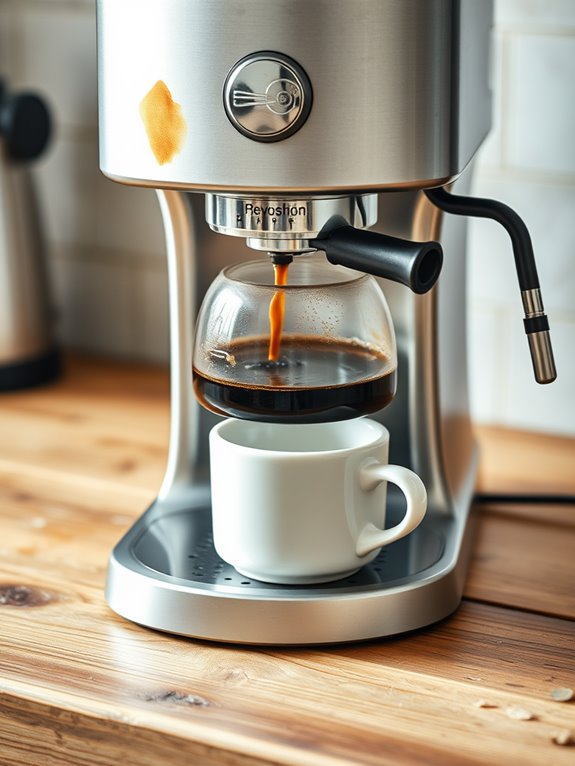
When your morning coffee starts tasting off, it might be time to evaluate your coffee maker’s performance. Unusual flavors or odors often stem from residues inside, which can linger despite regular cleaning. Excessive leaks or cracks in the water reservoir may also indicate age and wear, suggesting it’s time for an upgrade.
If brewing takes longer than usual, internal malfunctions or mineral build-up might be to blame. Regular descaling every 3-6 months can prevent these issues and extend your machine’s lifespan. Inconsistent coffee strength hints at brewing issues, while burnt or lukewarm coffee signals temperature problems.
Scale build-up not only affects taste but complicates cleaning efforts. Let’s investigate these signs: taste shifts, brewing delays, and temperature inconsistencies. They all indicate your machine’s declining performance, urging you to weigh a replacement for better brews.
The Frequency of Necessary Repairs
Replacing your coffee maker isn’t just about better taste; it’s also about the hassle and cost of frequent repairs. When your machine constantly breaks down, it shortens its lifespan and increases repair costs.
Frequent breakdowns, especially in heavily used machines, demand regular maintenance. This not only improves coffee quality but also reduces downtime. High-end machines often have better warranties, extending their lifespan.
However, if repair costs keep piling up, it might be time to evaluate a new investment. Let’s investigate: inconsistent coffee quality and unusual sounds during operation are key indicators that frequent repairs may no longer be cost-effective. Regular descaling with vinegar can prevent many common clogs and extend your coffee maker’s life.
Identifying Physical Deterioration
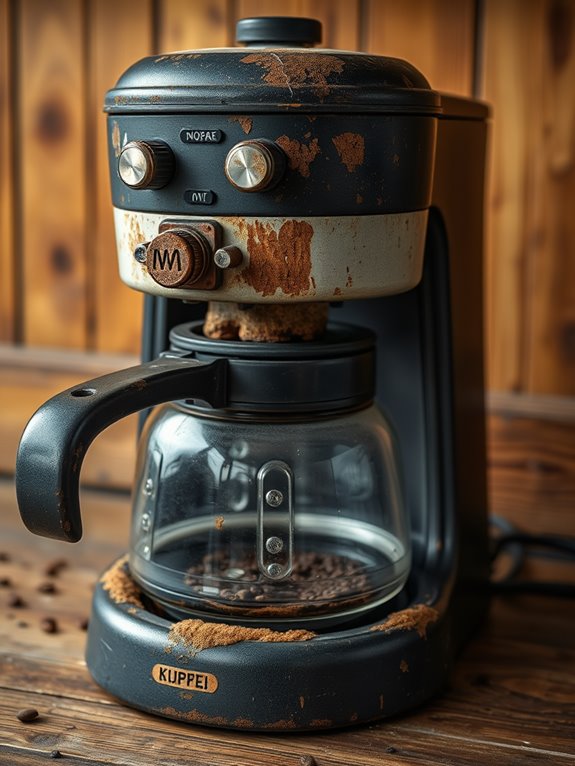
While it might be easy to overlook at first, physical deterioration in your coffee maker can greatly impact its performance and longevity. You might notice leaks or cracks, which often mean worn-out seals or an aging water reservoir. Mineral deposits can build up, causing a burnt taste and blocking heat exchange. This affects performance, leading to longer brewing times and inconsistent quality. Regular descaling with vinegar can help prevent many of these issues and extend your machine’s life. Let’s investigate these signs in detail:
| Sign | Indicators | Consequences |
|---|---|---|
| Leaks and Cracks | Drips, puddles, brittle seals | Larger issues, need for replacement |
| Mineral Deposits | Visible residue, discoloration | Altered flavor, performance issues |
| Brewing Issues | Longer brew times, inconsistent quality | Internal malfunctions, component failure |
| Taste and Odor Changes | Unusual tastes, metallic flavors | Internal breakdown, scaling |
Understanding these signs guarantees your coffee maker stays in top shape.
Challenges in Maintenance
Moving from identifying physical issues, let’s examine the common challenges in maintaining your coffee maker.
Regular use leads to residues and mineral buildup, requiring diligent cleaning. Manuals are your guide; they explain troubleshooting steps for issues like brew basket blockages.
Advanced models add complexity with more components prone to malfunction. Understanding your machine’s features aids in problem-solving. Premium machines like Jura require descaling every 180 brews to maintain optimal performance.
Key maintenance challenges include:
- Descaling regularly to prevent mineral buildup.
- Reading the manual for specific guidance.
- Cleaning schedules to maintain performance.
- Inspecting components for wear and tear.
- Using quality water to reduce scaling.
Let’s investigate these to guarantee your coffee maker runs smoothly.
Recognizing Operational Issues
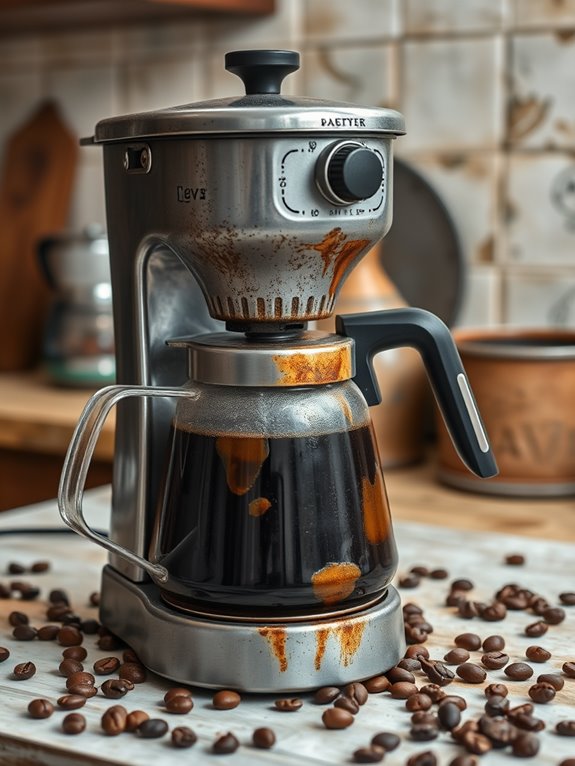
Understanding the operational issues of your coffee maker is essential for ensuring a smooth coffee-making experience.
If your machine fails to power on, start by checking the power supply, ensuring it’s plugged in, and that the outlet functions. Inspect for blown fuses or faulty cords, and consult your user manual for troubleshooting.
When brewing problems arise, check for blocked water lines and descale if needed. Leaks can stem from loose connections or faulty seals; tightening or professional help might be needed.
Poor coffee quality often improves with fresh beans, the correct grind size, and a consistent cleaning routine.
Let’s investigate these issues.
Economic Considerations for Replacement
When considering whether to repair or replace your coffee maker, it’s crucial to weigh the economic implications carefully.
Let’s examine key factors: repairing might seem cheaper initially, but costs can pile up if breakdowns persist. New coffee makers, although pricier, offer long-term savings due to energy efficiency and reduced maintenance.
Consider the value of upgrades—new models often brew better coffee, saving on beans and cutting waste. Your budget should guide whether you repair or replace, reflecting both short-term and long-term impacts.
- Repair Costs vs. Replacement Costs
- Long-term Savings
- Budget Considerations
- Value of Upgrades
- Energy Efficiency
Brewing Time and Coffee Quality Concerns
As you consider the economic factors of replacing your coffee maker, let’s examine another crucial aspect: brewing time and coffee quality.
Ideal Brewing Time: Aim for 2 to 6 minutes, depending on your method.
Automatic brewers often struggle with consistency, unlike manual methods where you control time and temperature for better quality.
Temperature Impact: Water temperature matters—too hot ruins flavors, too cool leads to sour coffee.
Manual methods let you fine-tune this.
Common Issues with Automatic Brewers: Many automatic models can’t maintain the ideal 195°F to 205°F range, impacting flavor extraction.
Investigate manual options for precise control and superior taste.
Evaluating Cost-Effectiveness of Repairs
Let’s investigate the cost-effectiveness of repairing your coffee maker, an essential consideration when deciding whether to fix or replace it.
First, identify whether your issue is external or internal. External problems, like seals or gaskets, are often inexpensive and easy to fix. Internal issues, such as boiler or circuit board problems, can be costly due to parts and labor.
Consider labor costs and repair time: they add up quickly, especially with complex repairs. Also, weigh the machine’s age and condition; older models mightn’t justify the expense.
- Simple repairs: Quick and low-cost
- Complex issues: Expensive parts, longer labor
- Age matters: Older machines may not be worth it
- Labor costs: Significant portion of total expenses
- External vs. internal: External usually cheaper
Benefits of Upgrading to Modern Machines
Repairing an older coffee maker might seem cost-effective at first, but upgrading to a modern machine offers a range of significant benefits that enhance both personal and workplace experiences. Modern machines are designed for precision brewing, ensuring consistent coffee quality while reducing waste. They elevate productivity by providing high-quality coffee, improve morale by enhancing social spaces, and offer healthier options for diverse dietary needs. Let’s investigate these advantages further:
| Benefit | Workplace Impact | Feature |
|---|---|---|
| Elevates Productivity | Increased energy | High-quality coffee |
| Improves Morale | Enhanced interaction | Upgraded social spaces |
| Energy Efficiency | Lower costs | Reduced energy consumption |
Assessing the Availability of Spare Parts
Why is it fundamental to contemplate the availability of spare parts when evaluating your coffee maker’s longevity?
Well, spare parts play a significant role in maintaining your machine’s performance. Genuine parts guarantee quality, meeting the manufacturer’s standards.
Let’s investigate why analyzing spare part availability is essential:
- Longevity: New machines have widely available spare parts.
- Quality: Genuine parts assure peak performance.
- Access: Easily ordered online or at service centers.
- Variety: Includes components like gaskets and seals.
- Warranty: Often covered for new machines.
Considering these factors helps you decide if keeping or replacing your coffee maker is best.