Why Does Coffee Maker Take so Long
Your coffee maker takes so long because several factors influence the brewing speed. Scale buildup and clogged valves from minerals and trapped coffee grinds can restrict water flow, slowing the process. The age of the machine and its maintenance play vital roles too; older machines tend to brew slower. Additionally, incorrect grind size and filter use can extend brewing time. Let's investigate how these elements interact and what you can do to improve your coffee-making experience.
Key Takeaways
- Scale buildup from mineral deposits can slow down the coffee maker's brewing speed.
- Clogged valves and filters, often from trapped coffee grinds, hinder water flow and delay brewing.
- Incorrect filter materials can restrict water flow, causing the coffee maker to take longer.
- Older coffee machines may brew slower due to wear and lack of maintenance.
- High mineral content in water leads to frequent scale buildup, extending brew times.
Factors Affecting Brewing Speed
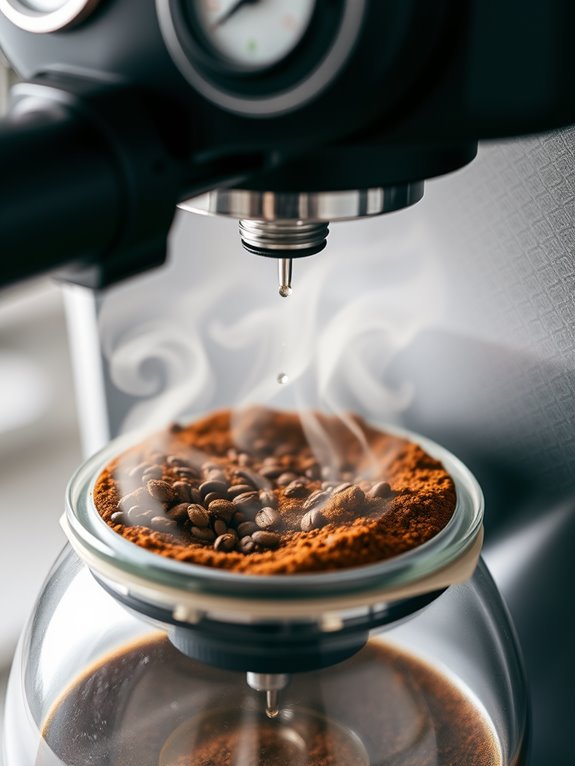
When it comes to understanding why coffee makers might take their sweet time brewing your morning cup, there are several factors at play. Scale buildup is a common culprit, with mineral deposits slowing down brewing. Clogged valves, often due to trapped coffee grinds, can also hinder flow. Your machine's age and how well you maintain it greatly affect performance, with older, uncleaned machines brewing slower. Filter issues arise when incorrect materials restrict flow. Finally, the quality of your water contributes; high mineral content leads to more frequent scale buildup. Regular descaling every month can prevent mineral buildup in areas with hard water. Additionally, the viscosity of the water, influenced by its temperature, can affect how easily it flows through the coffee grounds. Let's investigate these further to keep your coffee maker running smoothly.
The Role of Grind Size in Brewing Time
Understanding the role of grind size in brewing time can be crucial for crafting the perfect cup of coffee. A finer grind increases the surface area, which means faster extraction, while a coarser grind decreases it, leading to slower extraction.
By adjusting the grind size, you can control extraction time, avoiding bitter over-extraction or weak under-extraction. Different brewing methods demand specific grind sizes; for instance, a French press needs a coarse grind, while espresso requires a fine one.
Let's examine how matching the right grind size to your brewing method guarantees a balanced extraction and enhances your coffee-drinking experience. Keep in mind that surface area contact with water directly affects the strength and intensity of your final brew.
Water Temperature and Its Impact on Extraction
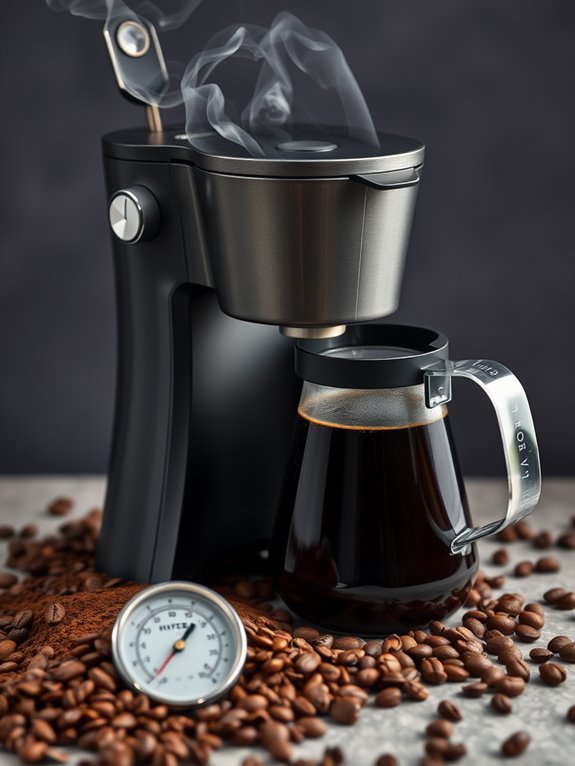
Water temperature plays an essential role in the coffee brewing process, influencing the extraction of flavors and overall quality of your cup.
The solubility of compounds varies with temperature; too hot, and your brew becomes bitter. Too cold, and you risk a sour, weak flavor. Ideal temperatures balance acidity and bitterness, creating a satisfying drink.
Let's investigate:
- Drip Coffee: 195°F to 205°F guarantees a balanced extraction.
- Espresso: 197°F to 205°F permits for rich, quick extraction.
- French Press: Around 200°F compensates for longer steeping.
Your grind size settings directly affect how water temperature interacts with the coffee beans during extraction.
Manual vs. Automatic Brewing: Time Considerations
While brewing a perfect cup of coffee might seem straightforward, the choice between manual and automatic brewing can greatly impact both the time you spend and the quality of your drink.
Manual brewing offers complete control over variables like grind size and water temperature, letting you tailor your coffee to personal tastes. But it's time-consuming and requires practice.
Automatic machines, on the other hand, prioritize convenience with pre-programmed settings, saving time through quick heat-up and consistent results. They're perfect for busy mornings.
Let's examine these methods to understand how they fit different lifestyles and coffee preferences.
The built-in grinders in automatic machines eliminate the need for separate grinding equipment, further streamlining the brewing process.
Common Issues Leading to Extended Brew Times
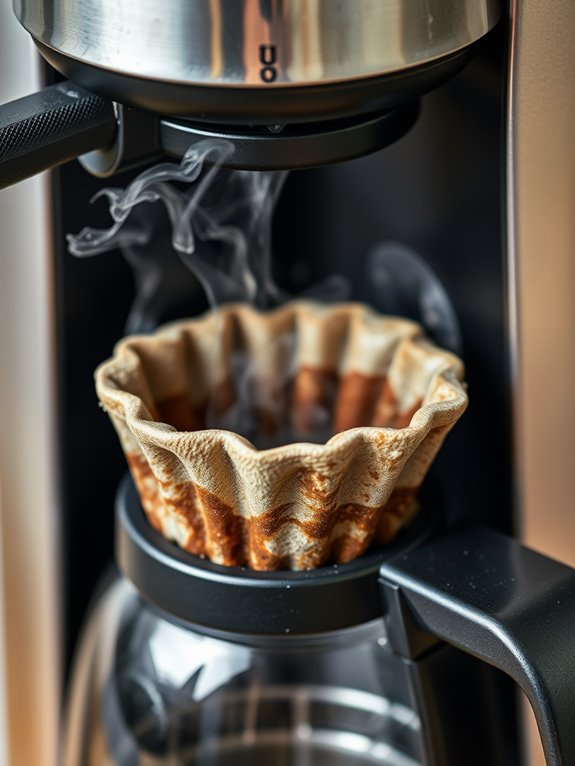
In the quest for the perfect cup, choosing between manual and automatic brewing is just one piece of the puzzle. Common issues can slow your coffee maker down. Clogged valves and filters often cause trouble.
Mineral buildup and trapped coffee grinds restrict water flow. Incorrect filter materials or thickness can also extend brew times.
- Mineral buildup: Restricts water flow, slowing brewing.
- Coffee grinds in valves: They block water, delaying your brew.
- Filter material: Incorrect types or thickness increase brew time.
Regular cleaning is essential. Use vinegar and water to clean mineral deposits, and always rinse thoroughly to prevent residue.
Achieving Consistency in Coffee Brewing
Achieving consistency in coffee brewing requires a keen understanding of several key factors that can dramatically impact your final cup.
Start with grind size; finer grinds suit smaller pour-over cones, while medium-coarse works for larger brewers like the Chemex. Consistent grind size guarantees even extraction.
Next, focus on a balanced water-to-coffee ratio, typically 1:16, but tweak for taste. Steady, circular pouring prevents channeling, promoting uniform extraction.
Your equipment matters too—different brewers demand specific techniques, and filter permeability affects flavor.
Finally, control roasting temperatures for consistent results.
Let's investigate these aspects to master brewing consistency and enjoy a perfect cup every time.