
What Is the Difference Between a Coffee Maker and a Percolator
A coffee maker and a percolator both brew coffee, but they do so differently, affecting taste and maintenance. Coffee makers use a drip method for a smooth, consistent flavor, while percolators repeatedly boil water through grounds, creating a bold taste. Drip machines offer programmable settings and ease of cleaning, whereas percolators deliver richer flavors but need more maintenance. Uncovering which suits your taste buds and lifestyle can be an aromatic adventure worth undertaking.
Key Takeaways
- Coffee makers use a drip method, while percolators repeatedly cycle boiling water through grounds.
- Percolators produce bold flavors but require more maintenance due to oil buildup.
- Coffee makers brew larger batches faster and offer programmable settings for customization.
- Percolators are primarily made of metal, whereas coffee makers use glass, metal, and plastic.
- Coffee makers are more energy-efficient and popular, with 82% household ownership in the U.S.
Brewing Methods and Key Differences
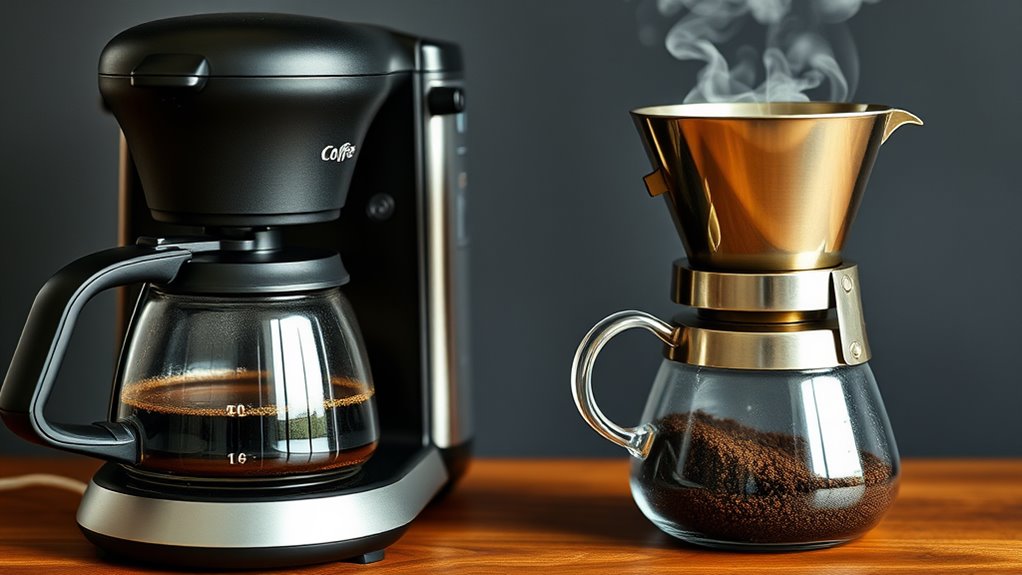
When it comes to brewing coffee, understanding the methods and key differences between a coffee maker and a percolator can help you choose the right one for your needs.
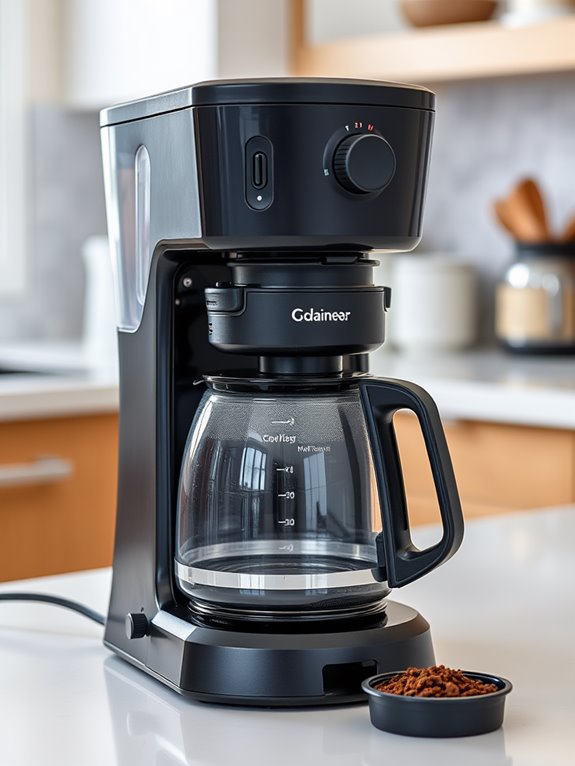
Let’s investigate their brewing methods. Coffee makers use a drip method—water heats and drips through ground coffee and a filter, producing a smooth, consistent flavor.
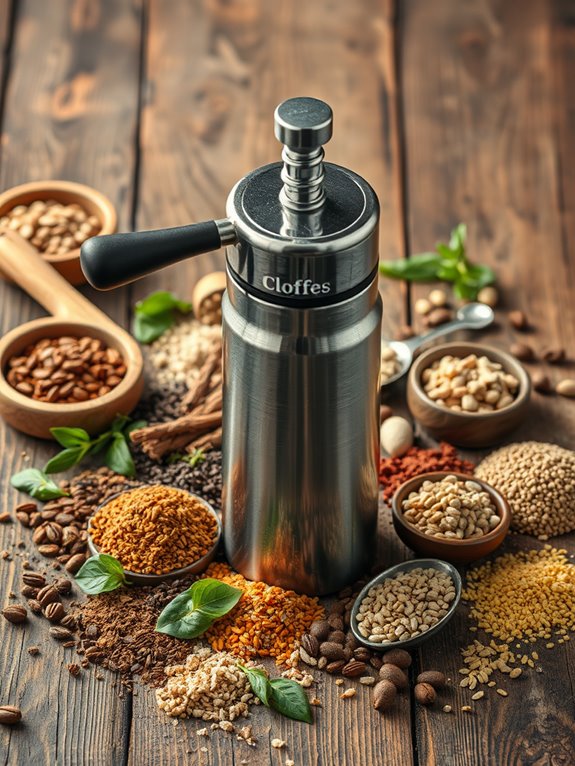
Percolators, however, force boiling water through the grounds repeatedly, creating a bold, rich taste but with a risk of bitterness.
Drip coffee makers are efficient, brewing larger batches in 4-7 minutes, while percolators finish in about 10 minutes but often require more maintenance due to oil buildup.
Modern drip coffee makers offer programmable brew settings that allow you to customize the strength and timing of your coffee, a feature not available in traditional percolators.
Design and Functionality
Design and functionality are essential aspects when choosing between a coffee maker and a percolator, as each offers unique features catering to different preferences. Percolators have a straightforward design, with a water vessel and coffee basket, making them less complex.
In contrast, coffee makers often boast advanced technology, including sensors, automation, and control systems, providing a range of features. For optimal brewing results, both devices should maintain water temperatures between 195-205°F during the extraction process.
| Feature | Coffee Maker | Percolator |
|---|---|---|
| Design Complexity | High | Low |
| Automation | Extensive | Minimal |
| Material Variety | Glass, metal, plastic | Metal |
Let’s investigate how these design elements impact your brewing experience.
Brewing Capacity and Versatility
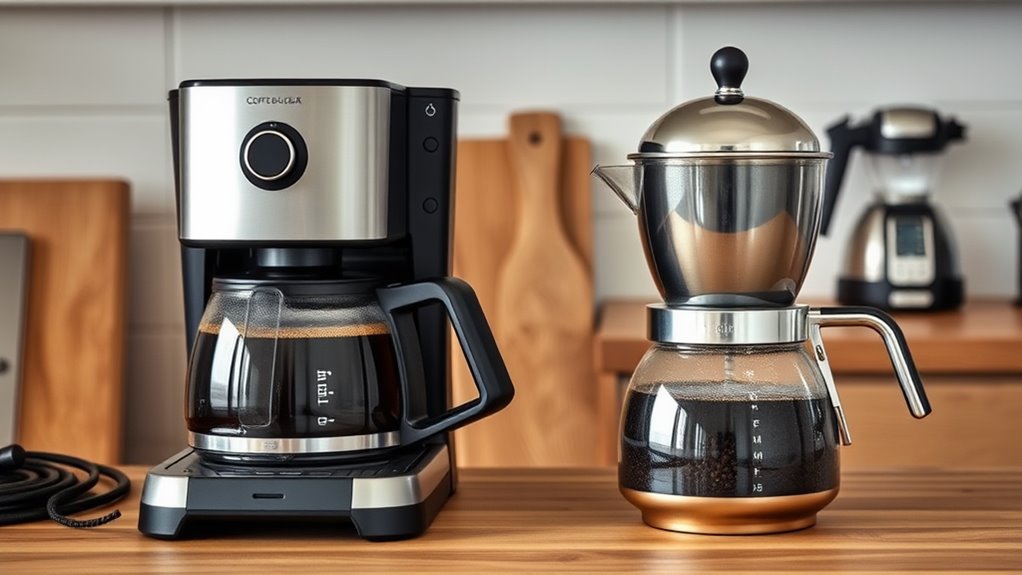
Brewing capacity and versatility are essential factors to evaluate when choosing between a coffee maker and a percolator, as each caters to different needs and preferences.
Coffee makers typically brew larger quantities, relying on a drip method for consistent, smooth flavor. Percolators, however, excel in brewing smaller batches, allowing you to investigate coffee strengths and flavors.
Modern 12-cup coffee makers offer convenient features like programmable settings and auto-pause for enhanced brewing control.
Let’s examine key points:
- Capacity: Coffee makers brew more at once; percolators vary but are usually smaller.
- Versatility: Coffee makers offer multiple brewing methods; percolators allow strength adjustments.
- Flavor: Percolators produce stronger flavors; coffee makers aim for smoother tastes.
Cleaning, Maintenance, and Ease of Use
To keep your coffee maker or percolator in top condition, regular cleaning and maintenance are vital.
Percolators need frequent cleaning because they circulate boiling water through coffee grounds multiple times, leading to mineral buildup. Use a vinegar and water mixture or baking soda to tackle stubborn stains.
Coffee makers, especially drip models, are easier to maintain with removable, dishwasher-safe parts. Run a cleaning cycle with vinegar or a cleaner like Affresh to remove hard water deposits.
Regularly rinse and air-dry components to prevent mold and bacteria.
Let’s investigate these cleaning methods to guarantee your coffee tastes great every time.
Coffee Quality and Taste
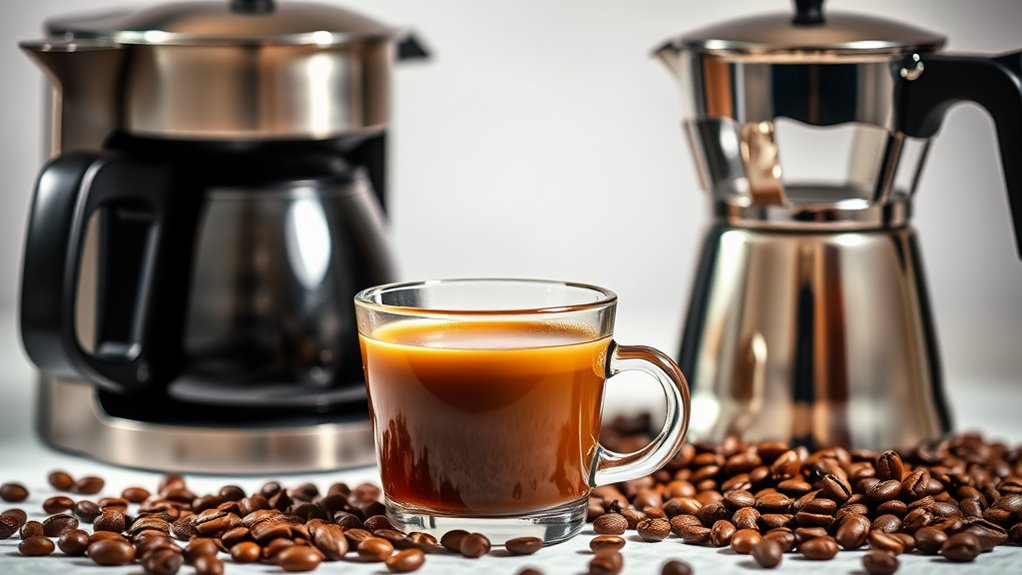
Understanding the intricacies of coffee quality and taste requires a close look at the way percolators and coffee makers brew your favorite drink.
Percolators use a cycling method, recirculating boiling water through coffee grounds. This often results in a stronger, more bitter flavor because of over-extraction. They don’t always reach the ideal brewing temperature, leading to weak, sour coffee.
On the other hand, drip coffee makers offer a smoother taste by passing water just once through the grounds.
Let’s investigate three key points:
- Bitterness: Percolators introduce more bitterness.
- Consistency: Drip makers provide a consistent flavor.
- Control: Percolators lack precise temperature control.
Cost Efficiency and Popularity
When considering cost efficiency and popularity, it’s crucial to recognize that percolators and coffee makers offer different experiences both regarding energy usage and market presence.
Percolators consume 800 watts, costing about $0.19 daily, or $70.08 yearly. They’re less energy-efficient than most coffee makers, impacting household energy use. To save energy, use smaller percolators or add timers.
With respect to popularity, the U.S. coffee machine market was $9.37 billion in 2022, with 82% of households owning coffee makers. Coffee consumption is widespread, with 66% of Americans drinking coffee daily, highlighting the strong presence of coffee makers over percolators.
Frequently Asked Questions
Can You Use a Coffee Maker for Brewing Tea?
Yes, you can use a coffee maker for brewing tea. Fill the reservoir with cold water, place tea in the basket, and brew. However, control over temperature and steeping time is limited, which might affect the tea’s flavor.
Are There Any Health Benefits of Using a Percolator?
You might enjoy the rich, strong flavor percolators provide, but remember, they don’t filter diterpenes, which can raise cholesterol. While coffee offers health benefits, consider using filters to reduce potential risks from percolator-brewed coffee.
What Type of Coffee Grind Is Best for a Percolator?
You’re best off using a medium-coarse grind for a percolator. This grind prevents over-extraction and sediment, ensuring smooth coffee. Experiment with grind sizes based on taste, and use a burr grinder for consistency.
Is It Possible to Make Espresso With a Coffee Maker?
You can’t make espresso with a coffee maker because it lacks the high pressure needed. Espresso requires specific pressure and temperature. Consider using an AeroPress or Moka Pot for a stronger coffee, resembling espresso.
What Are Some Common Issues With Using a Percolator?
You’re likely to face maintenance challenges with a percolator, needing regular cleaning to avoid bitter coffee. Over-extraction can lead to a harsh taste, and it’s not ideal for brewing large quantities quickly.