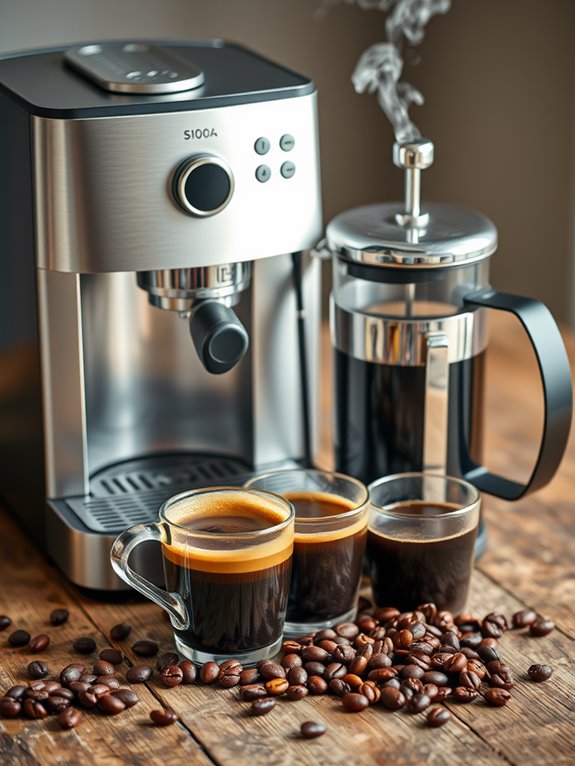
What Is the Difference Between a Coffee Maker and a French Press
Coffee makers and French presses brew coffee differently. A coffee maker uses a paper filter for a lighter, cleaner taste, while a French press immerses grounds in hot water, enhancing coffee's oils for a full-bodied flavor. Each approach offers distinct control over variables like time and temperature. Health-conscious individuals may prefer the filtered brew for its reduced cholesterol-linked compounds. Curious about which method suits your palette and lifestyle? Uncover more about these brewing differences.
Key Takeaways
- A French press immerses grounds in hot water, while a coffee maker uses a drip method with a paper filter.
- French press coffee is full-bodied with blended oils; coffee maker brews lighter, cleaner-tasting coffee.
- French press brewing requires more control over variables like temperature and grind size than a coffee maker.
- Cleanup for a French press is messier and takes longer than the straightforward process of a coffee maker.
- French press retains more diterpenes, which can increase cholesterol, unlike filtered coffee from a coffee maker.
Brewing Methods Explained
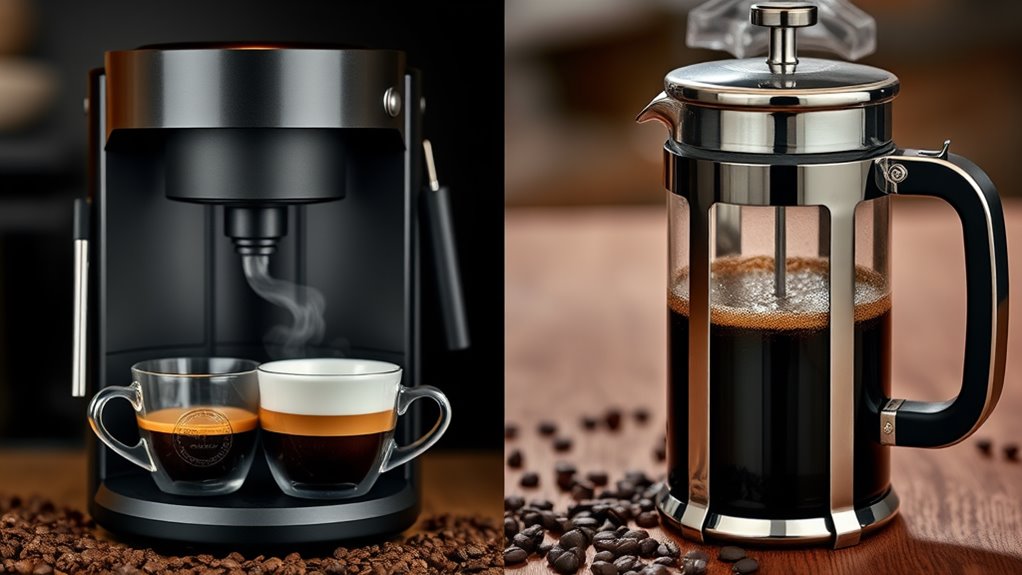
Brewing coffee is an art, and understanding the differences between methods can enhance your daily cup.
With a French Press, you immerse coffee grounds in hot water, steeping them for about 4-5 minutes. This technique allows the coffee's oils to blend, resulting in a full-bodied flavor. You'll need a French press and kettle for this. It's simple to use, but cleanup can be messy due to wet grounds.
In contrast, drip coffee makers use a paper filter, giving a lighter taste. Here, water passes through the grounds.
Both methods require a kettle, but each delivers a unique coffee experience.
For optimal French press results, using a conical burr grinder will ensure consistent coarse grounds that prevent sediment in your cup.
Control Over Brewing Variables
When it comes to crafting the perfect cup of coffee with a French Press, control over brewing variables is crucial.
Let's investigate the key factors:
- Brew Ratio: Start with 1g of coffee per 15g of water. Adjust higher for strength and flavor.
- Contact Time: Aim for 3-4 minutes, but coarser grinds may need 6-8 minutes. Stir after a minute for balance.
- Temperature Control: Use water between 195°F and 205°F. Preheat your French Press to maintain heat.
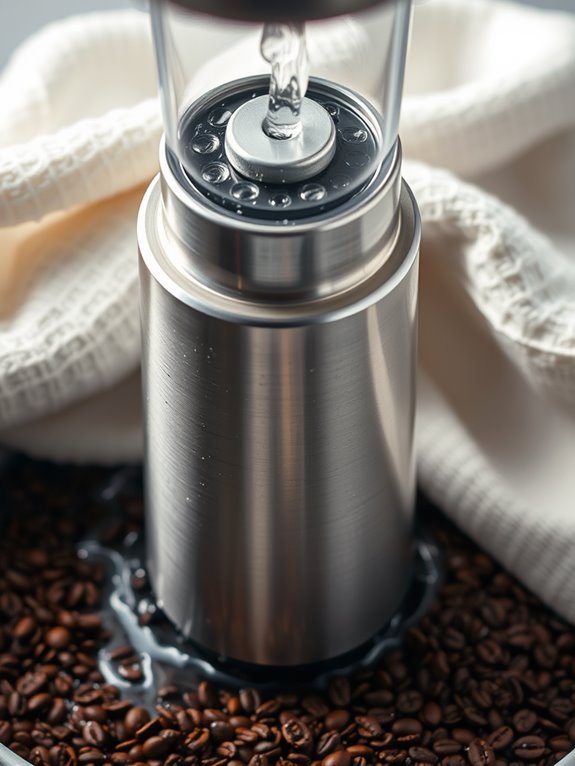
- Equipment Quality and Insulation: Insulated designs retain heat, enhancing flavor. Choose double-walled for consistent results.
Using precise grind settings from a quality burr grinder helps achieve optimal extraction and flavor development.
Mastering these variables guarantees a pleasing coffee experience.
Flavor Profiles and Extraction Process
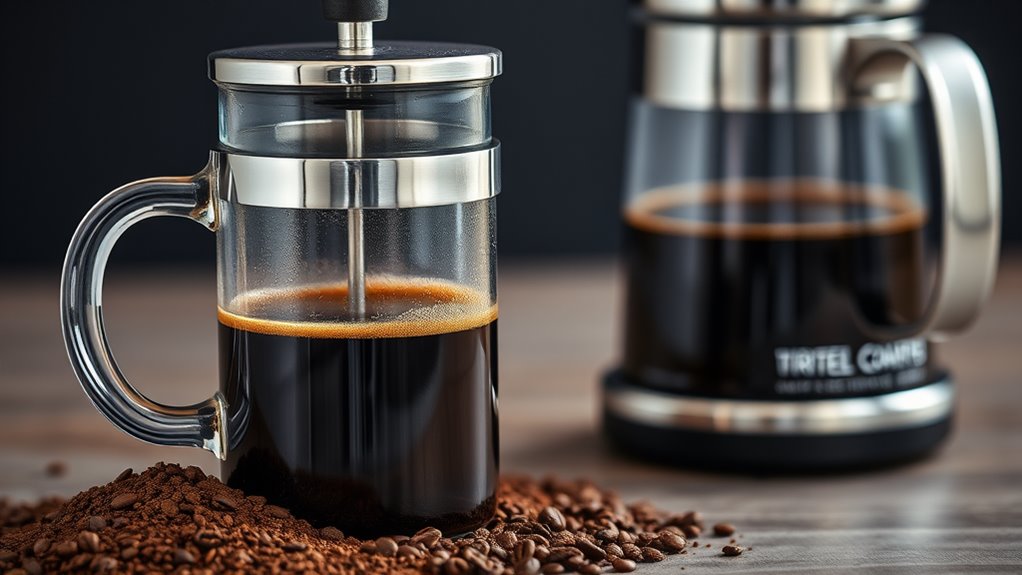
Let's investigate the distinct flavor profiles and extraction processes of coffee makers and French presses.
A French press offers a strong, rich coffee with a thick mouthfeel. Its immersion method allows coffee oils and particles to enhance the brew, creating bold flavors with less acidity.
In contrast, pour-over methods, like Chemex, use paper filters to absorb oils, resulting in a cleaner, brighter taste.
The extraction process differs too. The French press steeps grounds in water, extracting vigorous flavors, while pour-over involves water flowing through grounds, emphasizing subtle flavors.
Each method caters to different flavor preferences and coffee characteristics.
For optimal French press results, using a ceramic burr grinder ensures consistent grounds that enhance the immersion brewing process.
Time and Skill Requirements
As you consider the flavor profiles and extraction processes of different coffee brewing methods, it's also important to think about the time and skills each method requires.
A French press demands more hands-on effort but rewards you with control over the brewing process. Let's investigate:
- Time Commitment: French press takes about 4 minutes to brew and a few more for cleaning, while a coffee maker spans 5-10 minutes total.
- Skill Level: Acquiring proficiency with a French press involves attention to grind size and water temperature.
- Automation: Coffee makers simplify the process with automated brewing.
- Maintenance: French press cleaning requires disassembly and dealing with sediment.
Advantages of Using a French Press
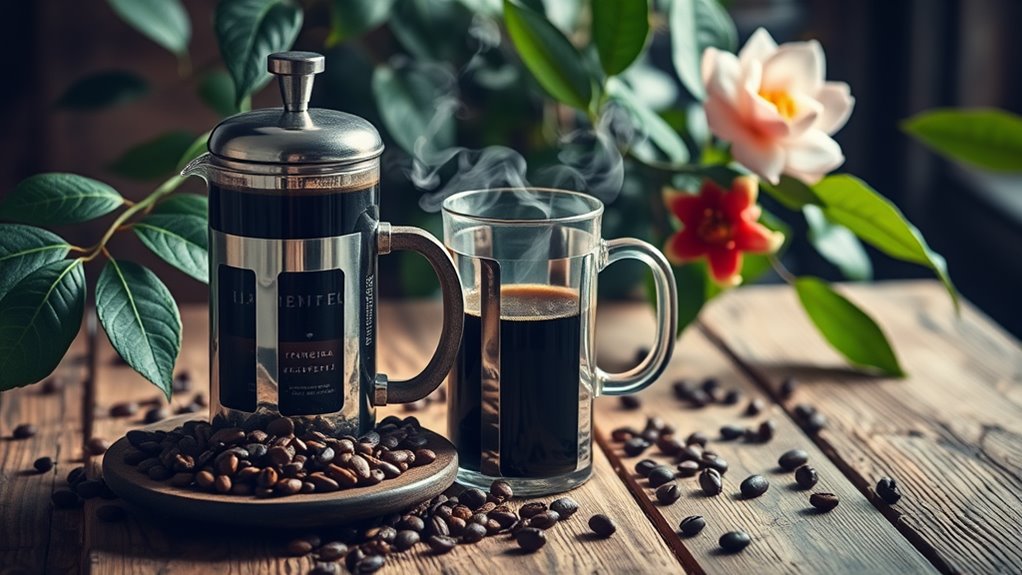
If you're seeking a coffee brewing method that enhances flavor while offering a hands-on experience, the French press might be your ideal choice.
Superior Flavor
The French press excels at providing a rich, full-bodied coffee. Its immersion brewing allows essential oils to diffuse, creating a hearty and intense taste.
You'll enjoy a thicker brew, retaining the coffee grounds' natural oils for a smoother, silkier consistency.
Ease of Use
It's simple: just ground beans and hot water. With no mechanical parts, it's easy to clean and maintain.
Environmental Benefits
No paper filters mean less waste. Reuse coffee grounds as fertilizer, and enjoy eco-friendly brewing.
Benefits of Drip Coffee Makers
Drip coffee makers offer a blend of convenience and customization that appeals to both busy individuals and coffee enthusiasts.
With their simple operation, you just need water and coffee grounds to brew a consistent cup. Plus, programmable features let you set brewing times to fit your schedule.
Let's investigate key benefits:
- Ease of Use: Just press a button, and you're on your way to a hot cup.
- Adjustable Strength: Customize your brew's strength and flavor.
- Versatile Serving Options: Brew for one or multiple people effortlessly.
- Low Maintenance: Cleaning is a breeze with dishwasher-safe parts.
Enjoy a perfect brew every time!
Health Considerations in Coffee Brewing
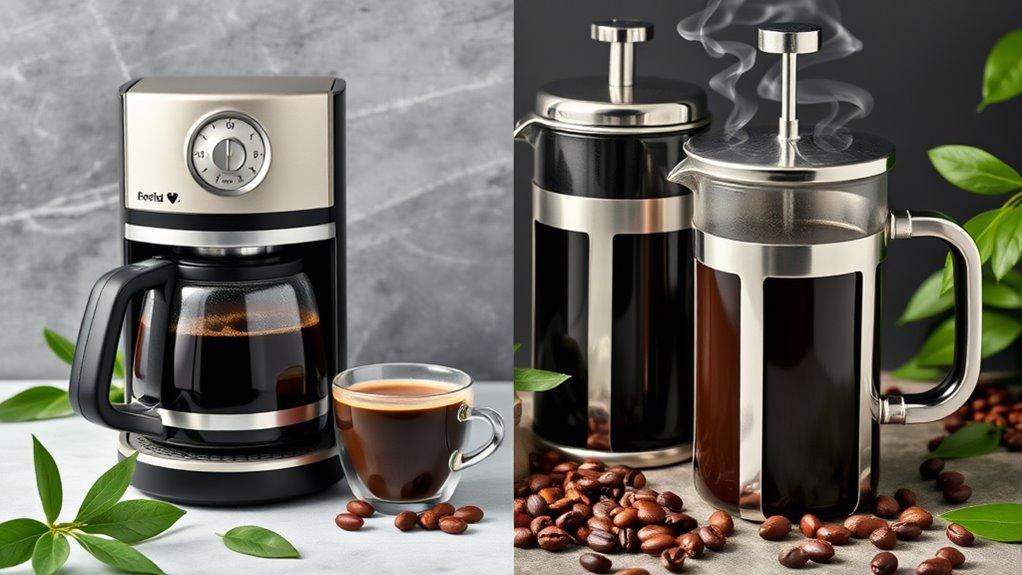
When it comes to brewing coffee, understanding the health implications of different methods is essential for making informed choices.
Let's examine these differences.
Filtered Coffee Benefits
Using a coffee maker with paper filters reduces diterpenes like cafestol and kahweol. These compounds can raise LDL cholesterol.
Filtered coffee also has fewer unhealthy fats and lowers the risk of death by 15%, as shown in a Norwegian study.
French Press Concerns
French Press coffee retains more diterpenes, potentially increasing cholesterol levels.
It may also contribute to plaque buildup in arteries, raising cardiovascular disease risks.
Choosing your brewing method carefully can impact your health considerably.
Frequently Asked Questions
Can I Make Tea Using a French Press?
Yes, you can make tea using a French press. Just clean it thoroughly to remove coffee oils, add tea leaves, steep with hot water, then press and pour. Adjust steep time and temperature for your tea type.
How Do I Clean a French Press Properly?
To clean your French press, empty grounds, rinse with lukewarm water, add dish soap, and pump the plunger. Rinse thoroughly, scrub the interior, and dry it. Regularly clean the filter to prevent buildup and maintain taste.
Are There Eco-Friendly Options for Coffee Filters?
You've got several eco-friendly coffee filter options. Choose organic linen for a cleaner taste, stainless steel for durability, or cloth for smoothness. These reusable filters cut waste and costs, promoting sustainability while maintaining your coffee's natural flavors.
What Is the Lifespan of a Typical Coffee Maker?
You can expect a coffee maker to last anywhere from 3 to 15 years, depending on usage, maintenance, and water quality. Regular cleaning and using filtered water greatly extend its lifespan, saving you money in the long run.
Can I Use Flavored Coffee Beans in a French Press?
You can definitely use flavored coffee beans in a French press. Just make certain you use a coarse grind to avoid over-extraction. Experiment with different flavors and brands to find the perfect brew that suits your taste.