
Why Does My Coffee Grinder Have Static
Static in your coffee grinder stems from friction and environmental factors like low humidity. When beans rub against the burrs, electrons transfer, creating a charge imbalance. Plastic parts and fast grinding speeds exacerbate this issue, allowing static to persist. Moisture helps, so adding a few water droplets to your beans, called the Ross Droplet Technique, can minimize static effects. By adjusting your grinder settings and maintenance, you'll uncover tips to excel at a static-free grind.
Key Takeaways
- Low humidity environments contribute to static buildup in coffee grinders.
- Friction between coffee beans and grinder burrs transfers electrons, creating static electricity.
- Non-conductive plastic parts in grinders exacerbate static issues.
- High grinding speeds increase static due to rapid movement.
- Environmental temperature and humidity significantly affect static levels in grinders.
Understanding Static Electricity in Coffee Grinders

Understanding static electricity in coffee grinders can seem puzzling, but let's examine how it actually works.
Static builds up due to low humidity, which makes environments dry, causing static accumulation. When coffee beans and burrs frequently contact and separate, static electricity generates. Grinders with non-conductive plastic parts act as insulators, collecting static charges. High grinding speeds increase static, as rapid movement charges the grounds. Environmental conditions, such as ambient humidity and temperature, also affect static levels during grinding. Using a metal container while grinding helps reduce static by providing better grounding. Allowing 5 minutes for static charges to dissipate after grinding can also help reduce static buildup.
Understanding these factors helps you manage static, ensuring a cleaner countertop and more consistent coffee quality.
Let's investigate how to minimize these effects next.
The Role of Friction in Static Generation
Now that we've examined the basics of static electricity in coffee grinders, let's investigate how friction plays an essential part in this phenomenon.
When coffee beans rub against grinder burrs, friction causes electrons to transfer, creating a charge imbalance. This continuous contact and separation increase static buildup, making grounds cling to the grinder's components.
The interlocking asperities and adhesive forces between molecules contribute to this effect, especially during high-speed grinding. Factors like low humidity and bean moisture content further influence static generation.
Understanding these principles helps you manage static electricity in your grinder, ensuring a smoother coffee-making experience.
The type of grind setting you choose, from fine espresso grounds to coarse, can affect how much static electricity builds up during the grinding process.
Impact of Grinder Material on Static Buildup
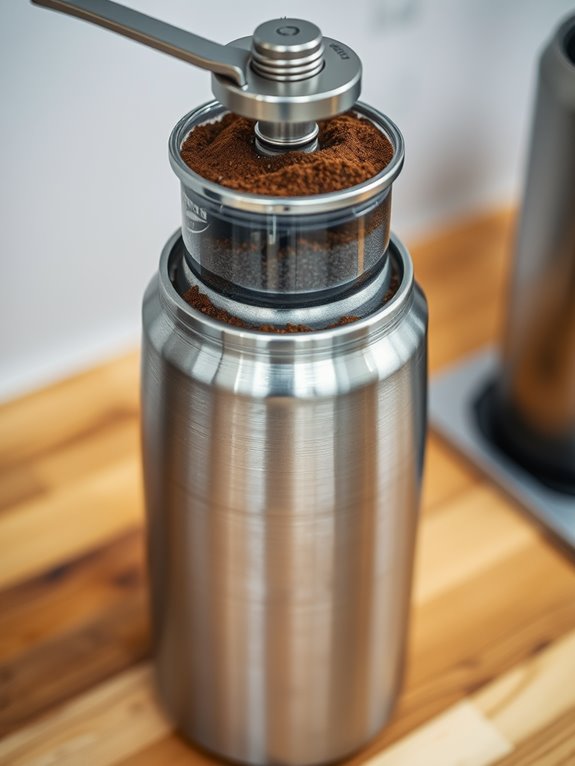
When it comes to understanding static buildup in coffee grinders, the materials used in their construction play an essential role. Some materials are naturally more prone to static because of their insulating properties. Coffee, being a poor conductor, doesn't help either. Let's investigate how different materials impact static buildup:
| Material Type | Static Propensity |
|---|---|
| Metal | Low, but needs grounding |
| Plastic | High, insulates well |
| Treated Bins | Reduced, with treatments |
Conductive materials can help neutralize charges when grounded. However, the coffee's insulating nature makes charge neutralization challenging. Choosing the right materials can meaningfully reduce static issues. Unlike standard grinders, burr grinding systems create uniform grounds through controlled crushing between abrasive surfaces.
How Environmental Conditions Affect Static
While static electricity in your coffee grinder might seem puzzling, environmental conditions play an essential role in its occurrence. Low humidity, common in winter or when using central heating, dries the air, creating a perfect setting for static buildup.
Conversely, high humidity allows electrons to flow freely, reducing static. Seasonal changes also impact static: winter's cold, dry air increases it, while summer's humidity can help—unless air conditioning dries the air again.
Temperature fluctuations influence static, with cooling materials often generating it. To manage static, consider using a humidifier and maintaining stable temperatures to balance charge distribution effectively. Regular grinder cleaning methods using rice or specialized tablets can also help reduce static buildup by removing residual oils and particles.
The Consequences of Static on Coffee Grounds

Understanding the consequences of static electricity on coffee grounds is essential for anyone serious about their brew.
Static electricity can cause grounds to clump together, disrupting uniform distribution. This clumping creates a "channeling effect," where water flows unpredictably through coffee, leading to uneven extraction and inconsistent flavors.
Static also complicates cleanup, with grinds sticking to surfaces, increasing waste and effort.
Let's investigate the main impacts:
- Clumping: Grounds stick together, affecting water flow.
- Non-uniform grinds: Impacts flavor consistency.
- Erratic water flow: Alters Total Dissolved Solids (TDS).
- Messy cleanup: Causes wasted coffee.
- Inconsistent results: Challenges reproducibility.
Exploring Materials to Combat Static
Static electricity can be a pesky problem in coffee grinding, but using the right materials in your grinder can make a big difference.
Material Impact on Static
Let's investigate how materials affect static. Cheap plastics worsen static cling, while metal components reduce it by allowing electrons to flow freely.
However, grounding metal can be tricky since dry coffee, an insulator, doesn't conduct charges well. Glass grind-collectors can help reduce static due to their poor conductivity.
Quality stainless steel and ceramic burrs minimize static during grinding. Opt for grinders with metal catch bins, as they conduct electricity and dissipate static charges.
Mixed material grinders require careful design to prevent static issues.
Techniques to Minimize Static in Your Grinder

Let's investigate some practical techniques to help you minimize static in your coffee grinder.
By using the right methods, you can guarantee a smoother grinding experience with less mess.
- Ross Droplet Technique: Add a few water droplets to your beans before grinding. This increases conductivity and reduces static.
- Waiting and Relaxation: After grinding, let the coffee sit for a few minutes, allowing static to dissipate naturally.
- Use Metal Containers: Metal grounds containers reduce static by conducting electricity better than plastic.
- General Grinder Maintenance: Regularly clean your grinder to prevent charge imbalances.
- High-Quality Components: Opt for grinders with quality materials to further minimize static.
The Effect of Coffee Bean Moisture on Static
When you're dealing with static in your coffee grinder, the moisture content of your beans plays an essential role in either mitigating or exacerbating the issue.
Higher moisture levels help reduce static electricity, leading to less clumping and sticking inside the grinder. This means less coffee waste and a cleaner process. Moisture lowers friction, allowing static charges to dissipate easily.
On the other hand, dry beans increase static buildup, causing grounds to clump and stick, leading to uneven brewing.
Adjusting Grinding Techniques to Reduce Static

Though static in coffee grinders is a common issue, you can effectively manage it by adjusting your grinding techniques.
Let's examine a few methods to help you reduce static cling.
- Water Droplets: Add a couple of water droplets to your beans before grinding. This technique, known as the Ross Droplet Technique, minimizes static by enhancing conductivity.
- Waiting and Tapping: Allowing your grinder to sit for a few minutes or gently tapping it can help dislodge static-clinging particles.
- Material Choice: Opt for grinders with metal components to reduce static.
- Humidity: Consider grinding in a humid environment.
- Wet Spoon Stirring: Use a wet spoon handle to stir beans evenly.
The Importance of Grinder Maintenance
Maintaining your coffee grinder isn't just about keeping it clean; it's about ensuring your coffee tastes as good as it can. Regular cleaning stops the buildup of coffee oils and old grounds, which can lead to unpleasant flavors.
Clean your grinder every 4-6 weeks if you use it daily, or more often with dark roasts. Deep clean monthly by disassembling parts.
Burrs, essential for consistent grinds, wear out over time; inspect them regularly and replace every 7-10 years.
Store your grinder in a dry place and avoid oily beans to minimize residue. Proper maintenance guarantees quality and reliability.
Solutions for a Static-Free Grinding Experience
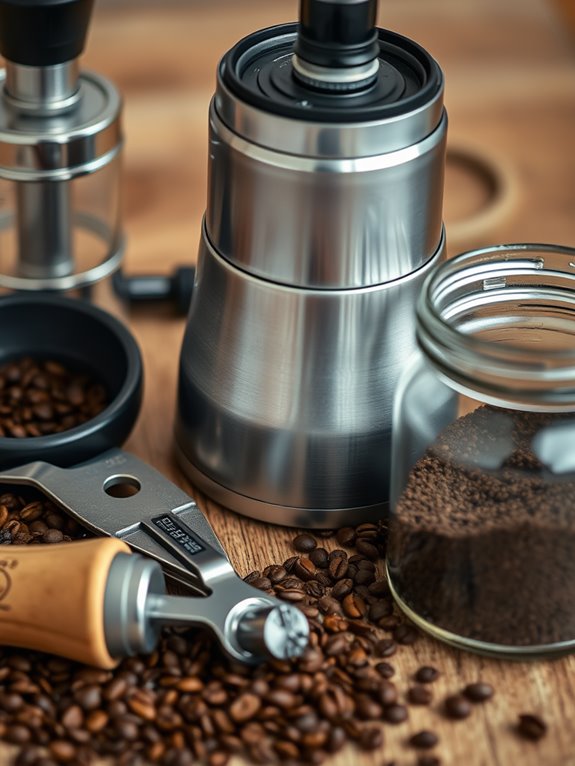
Static electricity in coffee grinders can be a nuisance, but thankfully, there are several effective solutions you can try to reduce this pesky issue.
Let's investigate some practical methods:
- Ross Droplet Technique (RDT): Add a few drops of water to your beans before grinding to reduce static.
- Metal Containers: Use metal instead of plastic for collecting grounds, as metal conducts electricity better.
- Wait Time: Let your grounds settle for a few minutes post-grinding to dissipate static charges.
- Moisture Control: Increase humidity to naturally lessen static.
- Quality Grinders: Invest in grinders with superior components to minimize static issues.
Try these to enhance your static-free coffee experience!