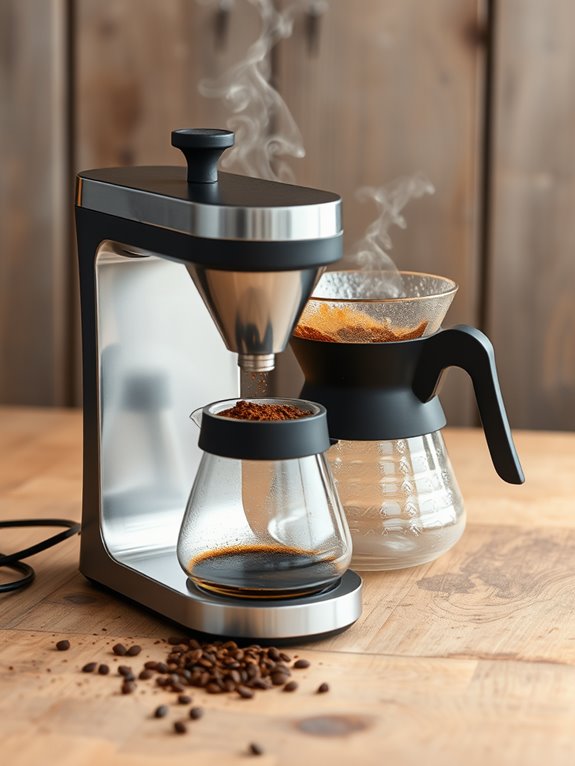
What Are the Disadvantages of Drip Coffee Maker
Drip coffee makers aren't without their downsides. You may face maintenance challenges like mineral buildup, which reduces efficiency and requires regular descaling. Brewing inconsistencies can arise from clogged filters or incorrect drip rates, affecting taste quality. Equipment durability could be an issue, indicated by strange noises or leaks. Additionally, these machines limit creativity with specific filters and pre-ground beans. If you're curious about more details on these points, there's plenty more to contemplate.
Key Takeaways
- Mineral buildup requires regular descaling to maintain efficiency and avoid costly repairs.
- Automatic brewing offers limited control over taste, affecting coffee quality.
- Regular maintenance is essential to prevent clogs and maintain consistent brewing.
- Equipment durability issues like leaks and noises indicate wear and require attention.
- Dependence on specific filters and pre-ground beans limits customization and freshness.
Maintenance Challenges
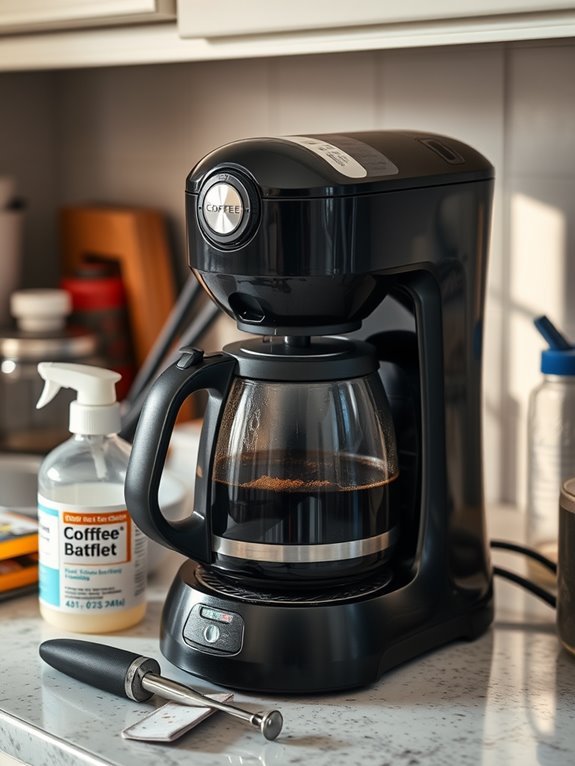
When it comes to drip coffee makers, maintenance challenges can sometimes be a bit intimidating, but understanding them can make the process much easier.
Let's investigate some key aspects:
Descaling Issues: Mineral buildup from hard water can reduce your machine's efficiency. Regular descaling with solutions or vinegar and water mixtures is crucial to prevent clogs and breakdowns. Multiple water-only cycles should follow each descaling treatment to ensure thorough cleaning. A well-maintained machine operates more efficiently, consuming less energy and reducing strain on components.
Cleaning of Removable Parts: Wash carafes and filter baskets with warm soapy water to prevent coffee oil buildup.
Water Quality and Filter Maintenance: Replace water filters regularly and use filtered water to avoid stale taste and bacteria growth.
Following these practices guarantees your coffee maker stays in top condition.
Brewing Complications
Brewing a perfect cup of coffee with a drip coffee maker can sometimes feel like a science experiment, where precision and attention to detail are key.
Let's investigate some complications you might face.
Condensation can build up in the water chamber, leading to clogs.
Filters and grind chambers often get blocked if the coffee grind is too fine or not pre-wetted.
Incorrect drip rates, whether too fast or slow, affect brewing consistency.
Mineral deposits from hard water can block water lines and heating elements, causing brewing delays.
Faulty equipment like water pumps and heating elements also contribute to brewing issues.
Regular descaling every 3-6 months helps prevent mineral buildup that can seriously impact brewing performance.
Taste Quality Concerns
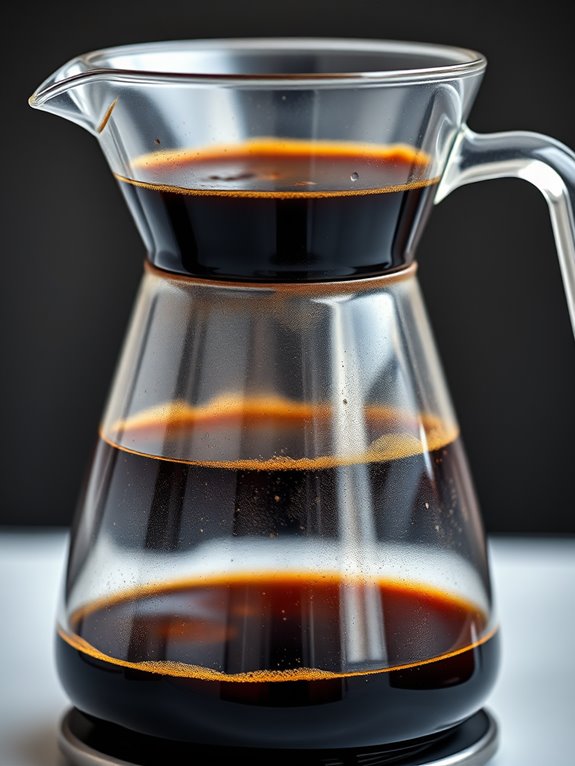
1. Water Quality: Tap water often contains chlorine and minerals that can alter the taste.
Using filtered water is key for a clean flavor.
2. Temperature Issues: Many machines don't heat water properly, leading to a sour or bitter taste.
Regular cleaning can prevent mineral buildup that affects performance.
3. Coffee Beans: Using freshly roasted beans is essential for flavor.
Low-quality beans or incorrect grind size result in a less satisfying cup.
For a richer taste profile, consider adding Coffee Mate Original powdered creamer to enhance overall coffee flavor.
Equipment Durability Issues
Equipment durability is an important factor when considering a drip coffee maker, as it directly affects the longevity and performance of the machine. You might notice technical issues like strange noises or leaks, signaling wear and tear. These problems can worsen over time, requiring costly repairs. Regular descaling is vital to combat scale build-up, but it gets tougher the longer you use the machine. Performance declines can result in inconsistent brew quality. Design flaws can lead to spills and leaks, causing further damage.
| Issue Type | Common Problems | Solutions/Indicators |
|---|---|---|
| Technical Issues | Noises, leaks | Regular maintenance needed |
| Build-Up and Cleaning | Scale build-up | Periodic descaling required |
| Performance Decline | Inconsistent brewing | Check temperature control |
| Design and Structural | Carafe leaks | guarantee proper installation |
Environmental Considerations
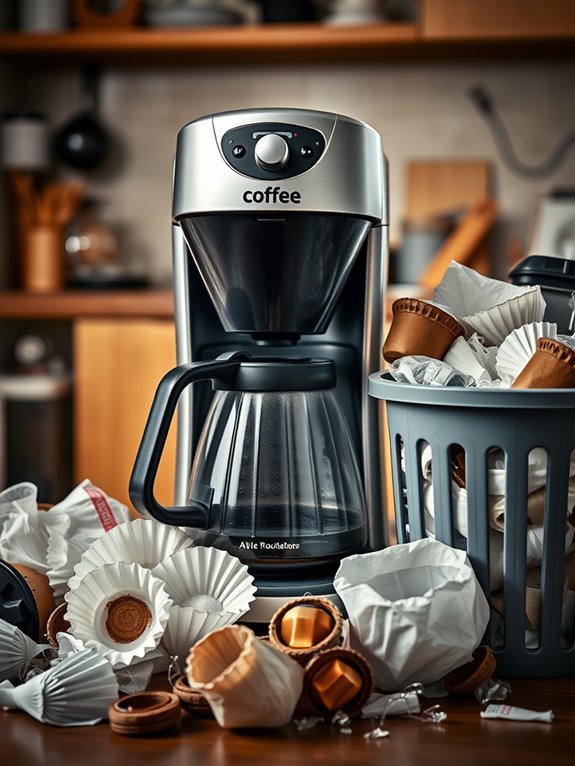
When considering drip coffee makers, it's important to think about their environmental impact, which extends from energy consumption to waste management.
Let's investigate some key points:
- Energy Consumption: Drip coffee makers, especially full-auto models, use significant power, contributing to greenhouse gas emissions. The choice of appliance affects your carbon footprint.
- Materials and Waste: Paper, plastic, and aluminum in coffee packaging lead to waste. Single-serve systems increase landfill contributions. Composting grounds can mitigate this impact.
- Coffee Cultivation: The coffee growing process is emission-heavy. Choosing Fairtrade or shade-grown beans can reduce harmful effects on ecosystems and support sustainable practices. Switching to organic coffee beans can further minimize environmental impact through sustainable farming methods.
Cost Implications
Cost implications of drip coffee makers are an important factor to take into account, whether you're buying one for home use or a commercial setting.
Let's investigate initial costs: the cheapest models start at 600 CZK, often made from plastic. In contrast, high-end machines, beginning around 4,500 CZK, use durable stainless steel and offer better coffee extraction.
Maintenance costs can't be ignored, either. You'll need cleaners, replacement parts, and electricity, adding to ongoing expenses.
In commercial settings, preventive maintenance and part replacements are essential to avoid costly repairs. Remember, neglecting regular care can lead to early machine failure.
Convenience Limitations
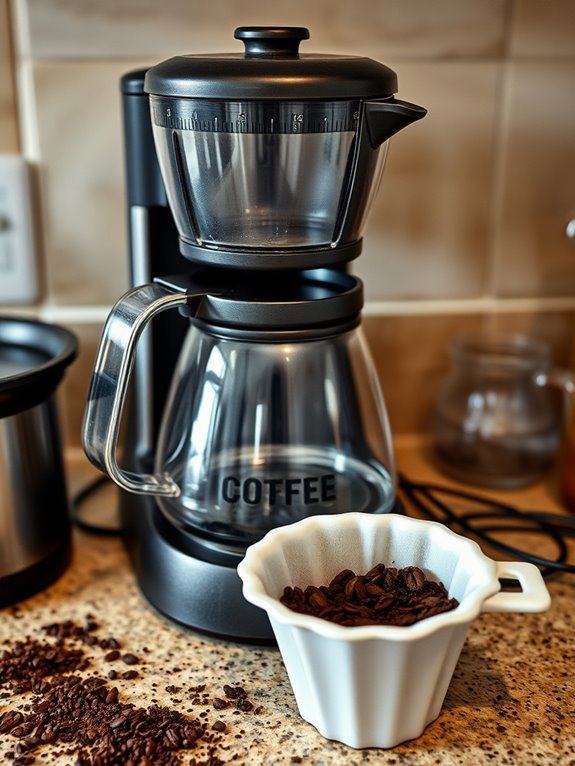
Drip coffee makers are popular for their convenience, but they come with several limitations that you should consider.
Let's investigate some of these.
- Taste Control: Automatic brewing limits your control over taste and quality. Aluminum heating rods often fail to reach the ideal temperature, affecting the coffee's flavor potential.
- Cleaning Hassles: Regular maintenance is essential. You need to flush with vinegar periodically to remove mineral buildup and clean the filter basket to prevent mold.
- Limited Versatility: These machines aren't great for coffee enthusiasts. They lack customization options, depend on specific filters, and often require pre-ground beans, limiting flavor investigation.
Space and Storage Constraints
Beyond the convenience limitations of drip coffee makers, there's another important factor to contemplate: space and storage constraints.
Drip coffee makers can take up a lot of counter space; even compact models need their own spot. To keep your kitchen organized, consider storing supplies in cabinets above.
Deep cabinets can help maximize space, using risers for efficiency. Remember, drip machines come with parts like filters and carafes that need storage, along with accessory items like mugs and syrups.
Optimizing cabinet space with shelves and risers helps manage these needs, ensuring your kitchen stays tidy and efficient.