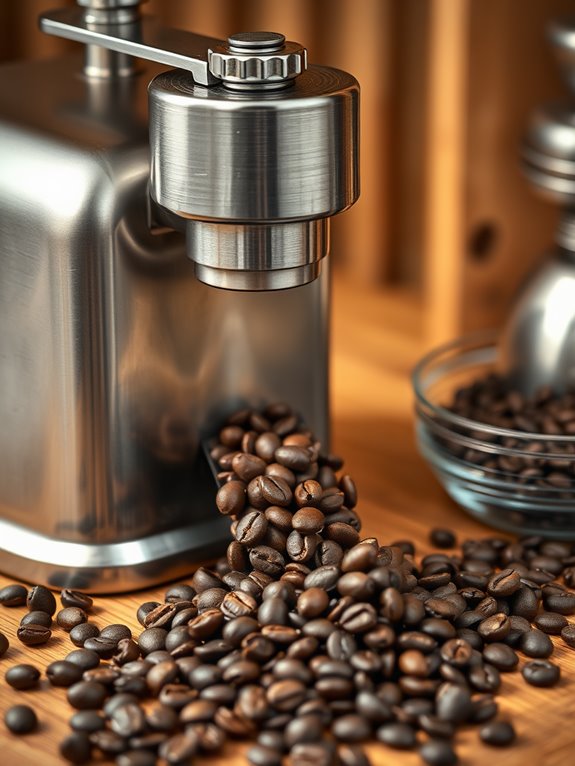
How to Use Coffee Grinder for Espresso
To craft perfect espresso, use a burr grinder for consistent, fine grounds. Start by cleaning and calibrating your grinder, ensuring fresh beans in the hopper. Adjust the grind size to a fine to medium-fine texture like finer salt, tweaking settings in small steps. Maintain even ground distribution in the portafilter for ideal extraction. Regularly clean the grinder to prevent stale tastes. Understanding these steps equips you to excel in espresso brewing efficiently and effectively.
Key Takeaways
- Use a burr grinder for consistent, fine grounds suitable for espresso.
- Adjust the grind size to a fine to medium-fine texture, similar to fine salt.
- Clean and calibrate the grinder regularly for accurate grind settings.
- Fill the hopper with fresh beans and adjust the dosing mechanism if available.
- Conduct maintenance checks and clean the grinder every 1-2 weeks for optimal performance.
Understanding Different Types of Coffee Grinders
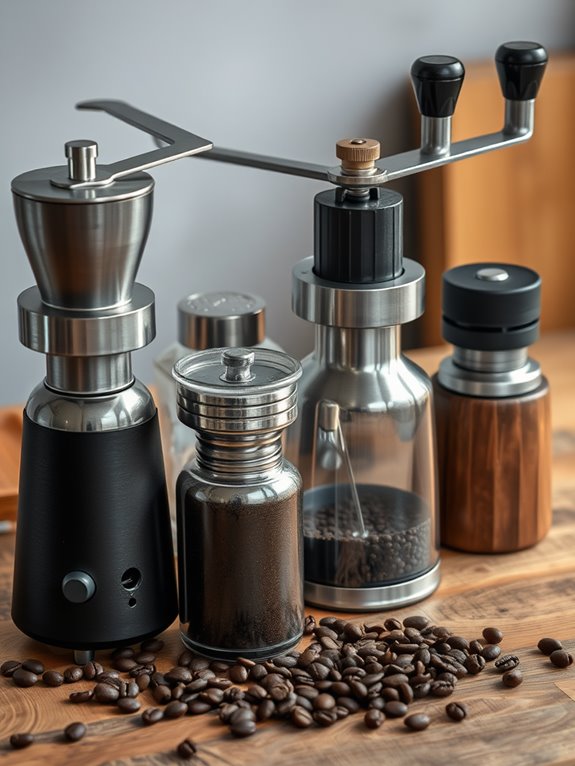
When it comes to brewing the perfect espresso, understanding the different types of coffee grinders is essential.
Let's investigate your options:
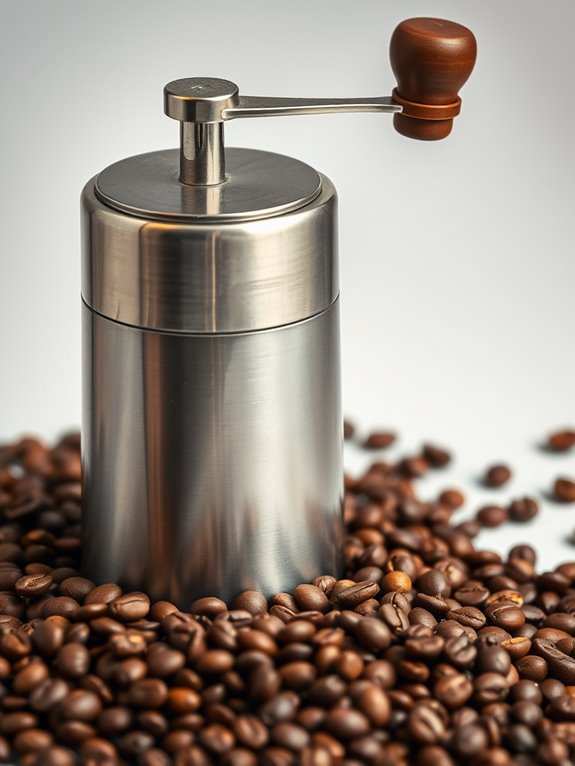
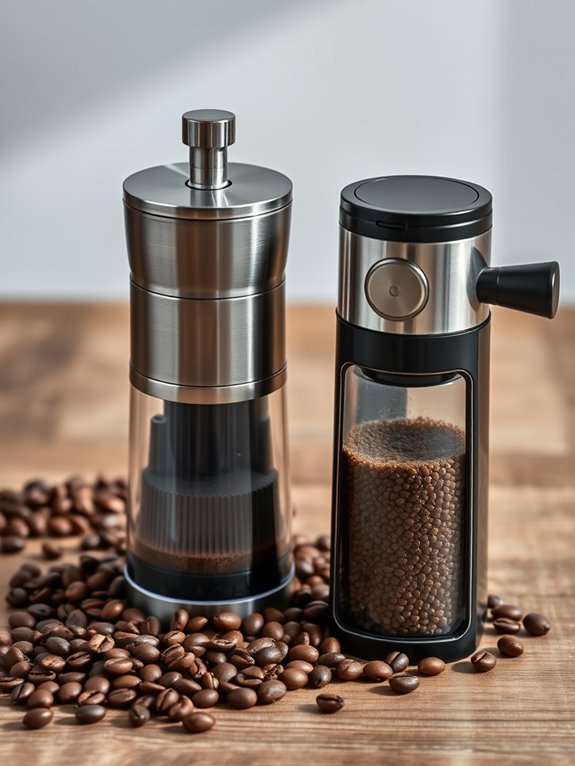
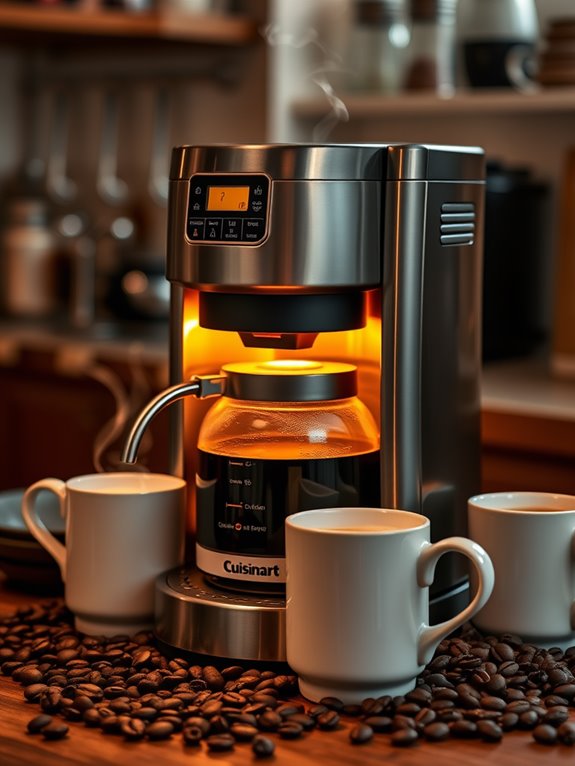
Electric burr grinders use motors for precise, consistent grinds. Manual grinders, powered by hand, offer portability. Conical burr grinders, with their cone-shaped burrs, reduce noise and trapped grounds. Flat burr grinders, faster and louder, may retain more grounds. Blade grinders, using spinning blades, are less consistent. The Cuisinart DBM-8P1 offers 18 unique grind positions for optimal results. Burr grinders excel in consistency, heat control, and ease of cleaning. Investing in a quality grinder can significantly improve the coffee experience and prevent the need for frequent upgrades. Consider features like grind settings and replaceable burrs for versatility and longevity.
Choosing the right grinder is key to espresso excellence.
Setting Up Your Coffee Grinder for Espresso
Now that you're familiar with the different types of coffee grinders, it's time to set up your grinder for making espresso. Start by choosing a burr grinder, as it provides consistent, fine grounds. Clean and calibrate the grinder to guarantee accurate grind settings. Fill the hopper with fresh beans, avoiding stale flavors, and adjust the dosing mechanism if available. The conical burr design provides optimal consistency for superior espresso extraction. Always refer to the manual for specific instructions.
| Setup Step | Action |
|---|---|
| Clean and Calibrate | Confirm accurate settings |
| Fill Hopper | Use fresh coffee beans |
| Adjust Dosing Mechanism | Set desired coffee dose |
Let's investigate how these steps enhance your espresso-making experience.
Adjusting Grind Size for Perfect Espresso
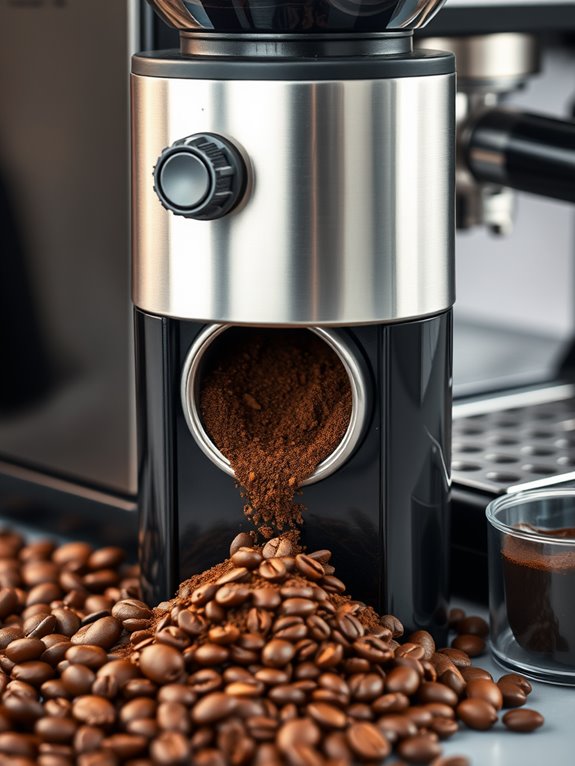
To achieve the perfect espresso, adjusting your grind size is essential. Start by using a fine to medium-fine grind, resembling finer salt.
Adjust in small increments to avoid over-extraction or under-extraction. Always turn the grinder on while adjusting to prevent burr jamming.
Empty the doser or grind container before making changes, ensuring no leftover grounds affect your test. Brew a shot to evaluate the new grind size.
Remember, different beans may require re-calibration. Factors like temperature, humidity, and barometric pressure can influence your grind size needs.
Let's examine these adjustments to perfect your espresso-making skills.
The OXO Brew grinder offers 15 precise settings to help you dial in the perfect espresso grind.
Ensuring Consistency in Coffee Grounds
Achieving the perfect espresso grind is only part of the journey; guaranteeing consistency in your coffee grounds is where the art truly unfolds. Consistent grounds are essential for a balanced espresso.
Use a burr grinder to maintain uniformity; its rotating burrs guarantee even crushing. Adjust the grind setting to match the fine to medium-fine range ideal for espresso. Pre-grind checks and regular maintenance prevent issues.
A consistent coffee-to-water ratio, typically 1:2, aids in achieving balanced flavors. Remember, even distribution of grounds in the portafilter is critical.
For maximum precision, choose a grinder with 25 grind settings to perfectly dial in your preferred espresso consistency.
Let's investigate these techniques to refine your espresso-making skills further.
Tamping Techniques for Optimal Extraction
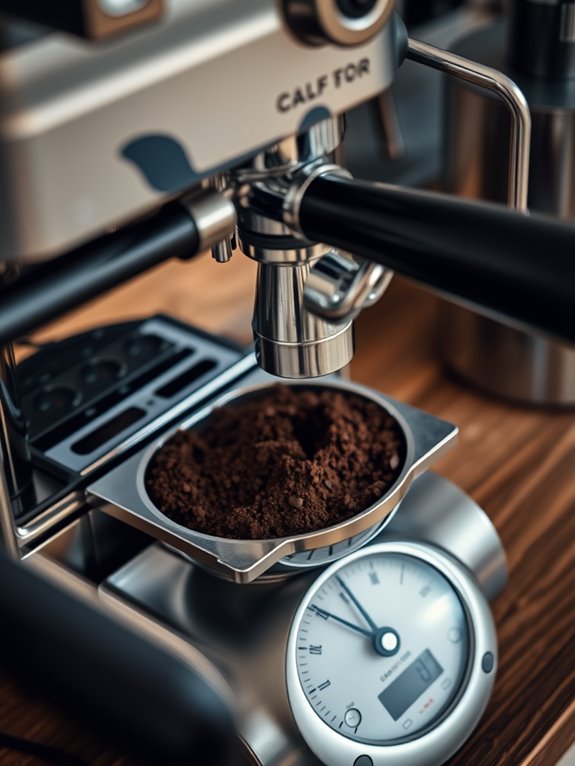
Becoming skilled in tamping techniques is essential for achieving ideal espresso extraction, and it all begins with understanding the basics.
First, verify even distribution by using a tool like the Saint Anthony Wedge and tap the portafilter gently. Hold your tamper like a doorknob, keeping it level with the portafilter. Apply light pressure—around 15 pounds—to start forming the puck, then increase to 20-30 pounds.
Consistency in pressure is key, so practice regularly. After tamping, use a twisting motion to polish the puck.
Preparing Espresso With Ground Coffee
Before you plunge into preparing espresso with ground coffee, it's important to understand the crucial steps involved to achieve that perfect shot.
Start by using 16-18 grams of freshly ground coffee for peak flavor. Verify your grind is consistent and fine, around 600 microns, using a quality burr grinder.
Preheat your cups to maintain espresso temperature and purge the group head briefly before use. The brew temperature should be between 93-95°C, aiming for a 23-30 second extraction time.
Brew directly into a preheated cup for the best taste. Let's investigate these steps to reveal your espresso's full potential.
Cleaning and Maintenance of Your Grinder
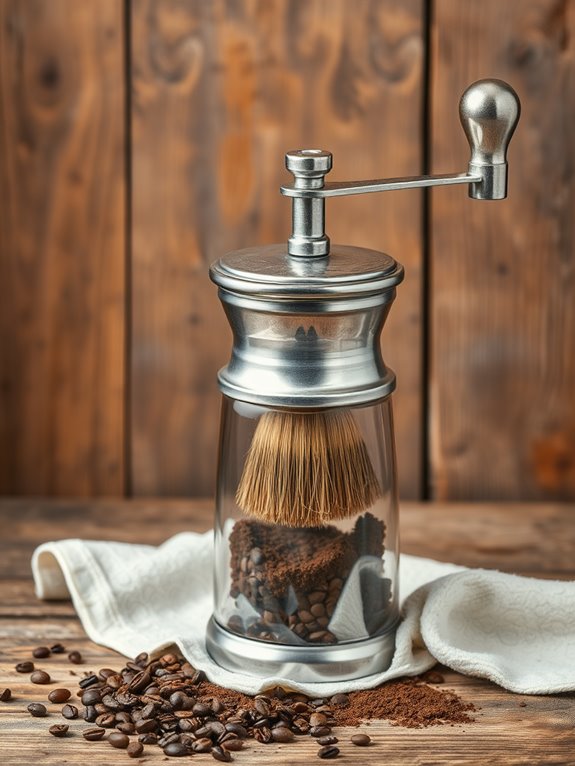
Keeping your coffee grinder clean is essential for ensuring you always get the best flavor from your espresso. Coffee oils can go rancid, contaminating new grounds and altering taste. To avoid these issues, clean your grinder every 1-2 weeks. Use special cleaning beans or grinder cleaner tablets instead of rice, which can damage parts. Regular maintenance includes emptying hoppers and cleaning gaskets.
Here's a quick guide:
| Task | Frequency | Tools Needed |
|---|---|---|
| Clean with tablets | Every 2 weeks | Grinder cleaner tablets |
| Empty hoppers | Daily | Cloth |
| Vacuum grinding discs | Monthly | Vacuum cleaner |
| Detail clean with brush | Weekly | Brush |
Let's examine these methods to maintain your grinder effectively.
Storing Your Grinder and Coffee Beans Properly
Once your coffee grinder is clean and well-maintained, it's equally important to think about how you store both the grinder and your coffee beans.
For ideal freshness, store beans in airtight containers, keeping them away from heat and light. A cupboard or pantry works best.
If you need long-term storage, freeze beans in airtight bags, but avoid refrigeration.
Grind only what you need to maintain flavor. Keep ground coffee in airtight containers and use within a week.
For the grinder, verify it's dry and stored in a stable temperature environment.
Let's investigate the best storage practices to maintain coffee quality!