What Is the Difference Between Manual and Automatic Coffee Maker
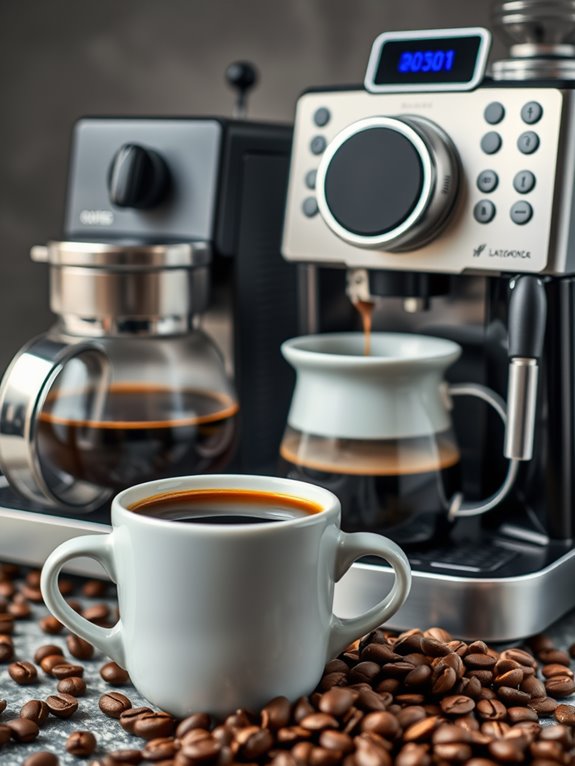
The main difference between manual and automatic coffee makers lies in how they brew coffee. With a manual coffee maker, you take control of every step, adjusting water temperature, pressure, and grind size for customized results. It demands skill, patience, and practice. An automatic machine simplifies the process by using built-in grinders and pre-programmed settings, offering convenience and consistency. Both types promise quality results, but their use reflects personal preferences. Let's investigate more about which might suit your needs.
Key Takeaways
- Manual coffee makers offer precise control over brewing parameters like temperature, pressure, and grind size.
- Automatic machines provide convenience with built-in grinders and pre-programmed settings for consistent coffee results.
- Manual machines require user skill and practice, while automatic models are user-friendly with minimal effort.
- Maintenance for manual machines is more frequent but they are more durable, whereas automatic models need regular servicing.
- Initial costs are generally lower for manual machines, but automatic machines may incur higher maintenance expenses over time.
Control and Customization Options
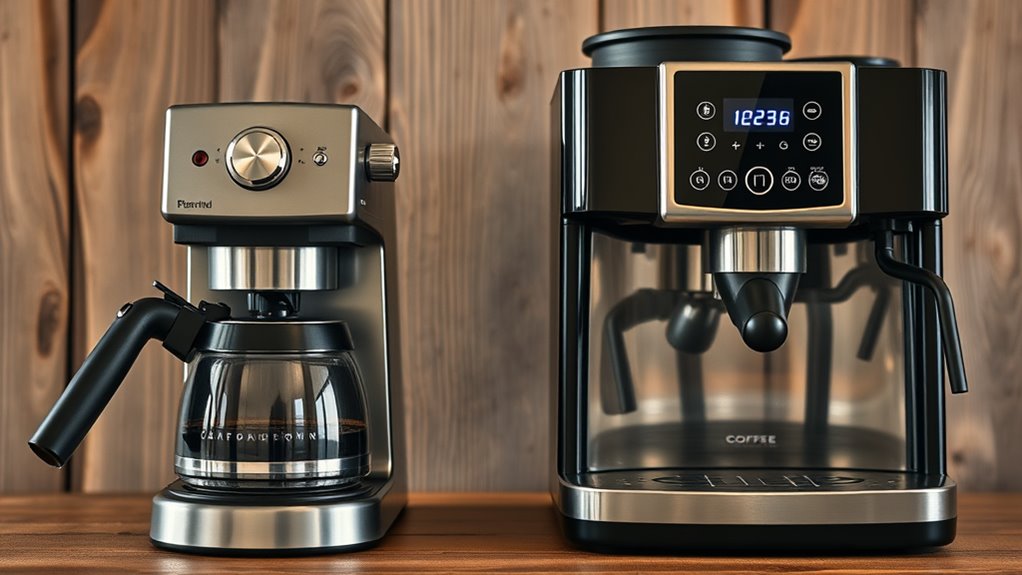
When it comes to brewing your perfect cup of coffee, understanding the control and customization options available can make all the difference.
With manual coffee makers, you gain precise control over water temperature and brewing time. You can customize pressure and experiment with different brewing techniques.
Fine-tune the grind size and extraction time to match various coffee types, allowing for a personalized touch. Accept the artisanal approach by perfecting your skills with practice.
Manual makers offer flexibility in brewing methods, roast levels, and coffee-to-water ratios, letting you tailor each cup to your unique taste preferences and creativity.
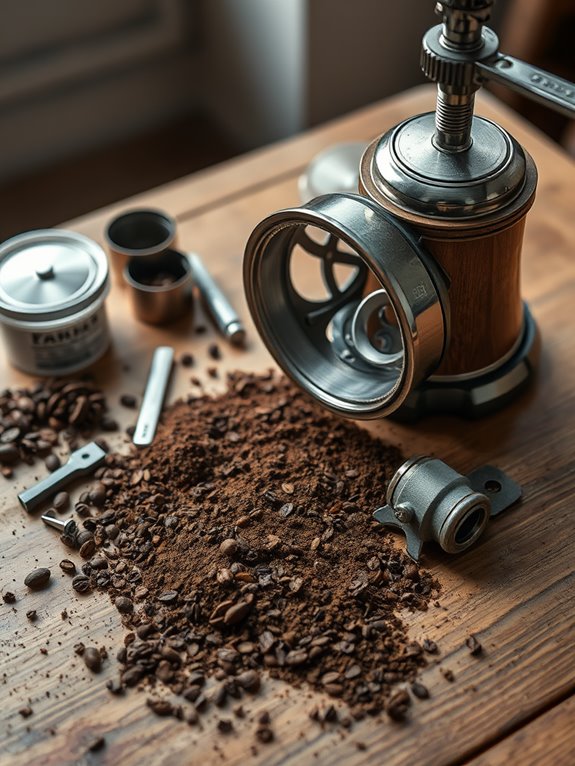
Unlike electric options, manual grinders with ceramic burr grinders provide consistently sized grounds while maintaining quieter operation for a more peaceful brewing experience.
Let's investigate!
Operation Mechanism Variations
Exploring the operation mechanism variations between manual and automatic coffee makers reveals a fascinating array of differences that influence how you brew your coffee. Manual machines rely on your input, using a lever or handle to control brewing functions. They offer control over brewing parameters like pressure and water flow. In contrast, automatic machines use electric pumps and integrated systems to streamline the process. These machines often include built-in grinders and pre-programmed settings for consistent results. While manual machines require more expertise, they appeal to enthusiasts who value precise brewing control and enjoy the hands-on coffee-making ritual.
| Feature | Manual Machines | Automatic Machines |
|---|---|---|
| Control Method | Manual force | Electric pumps |
| Brewing Process | Manual operation | Automated brewing |
| Design Complexity | Simpler design | Complex with electronic controls |
| User Interaction | Direct and hands-on | Minimal input required |
User Experience and Ease of Use
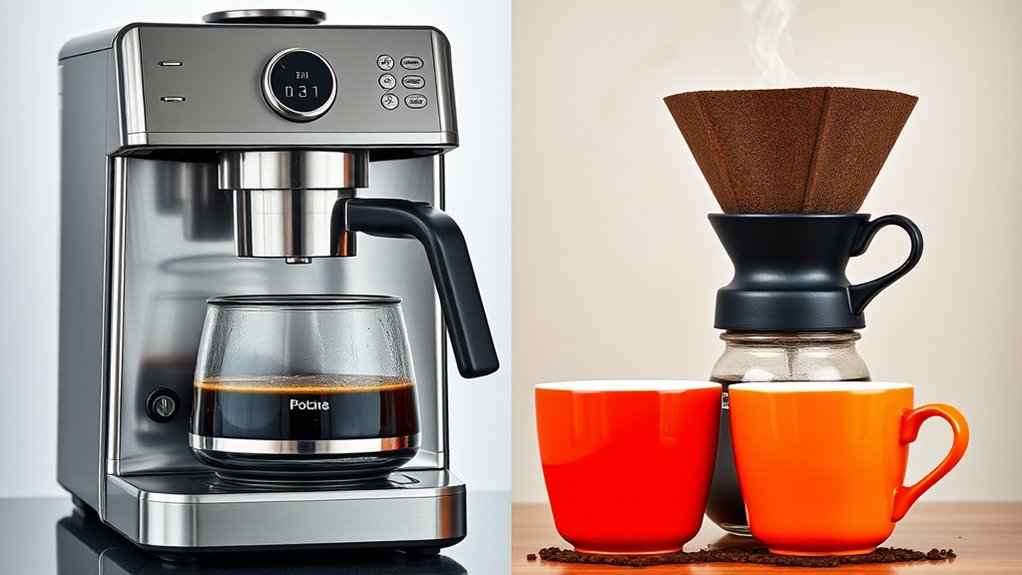
Let's investigate how user experience and ease of use differ between manual and automatic coffee makers.
Automatic machines offer convenience, with minimal effort needed for a consistent cup. They're user-friendly, featuring pre-set functions, and save time, making them perfect for busy mornings. You don't need extensive coffee knowledge to use them, ensuring every cup meets the same standard.
In contrast, manual coffee makers provide a hands-on experience. They allow you to control grind size, water temperature, and brew time. This requires skill and practice but rewards those who enjoy crafting their perfect cup.
For optimal manual brewing results, maintain water temperatures between 195°F and 205°F for proper extraction.
Each method offers distinct experiences based on your preferences.
Maintenance and Cleaning Requirements
Even though both manual and automatic coffee makers deliver delicious brews, their maintenance and cleaning requirements differ considerably, offering distinct challenges and benefits. Automatic machines need regular servicing, including descaling and cleaning every 12-18 months, while manual machines demand daily attention. Automatic models often come with self-cleaning features, simplifying upkeep. Manual machines, with fewer electronic parts, boast increased durability but require hands-on maintenance like cleaning the portafilter after each use.
| Maintenance Aspect | Manual Machine |
|---|---|
| Frequency | Daily |
| Durability | Higher due to fewer electronics |
| Cleaning Tasks | Portafilter, group head |
| Automatic Features | None |
| Risk of Buildup | Lower with regular cleaning |
Cost and Value Considerations
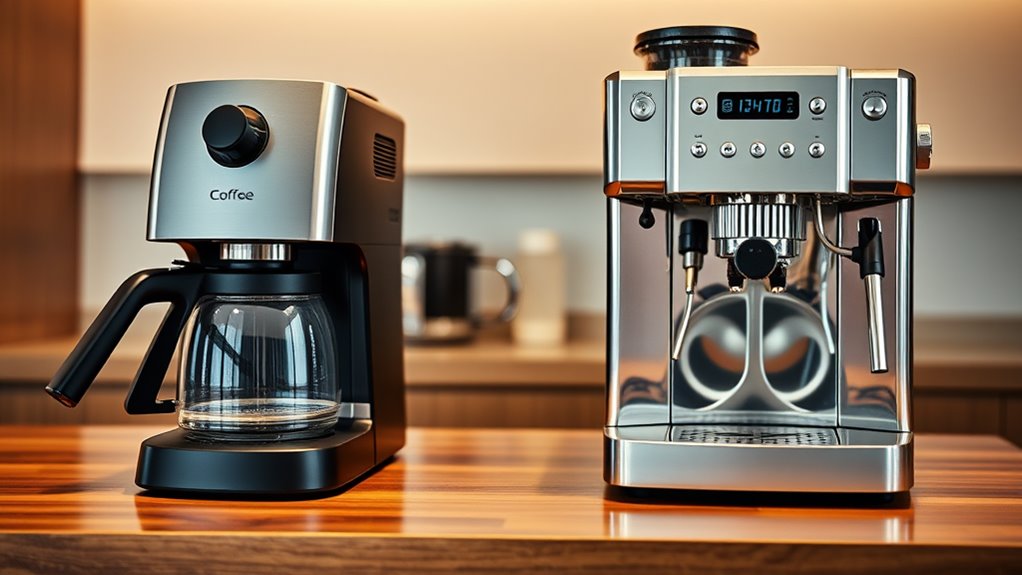
Understanding the maintenance differences between manual and automatic coffee makers is just the beginning of choosing the right machine for you.
When considering cost and value, manual machines often come out ahead. Their initial cost is lower, ranging from $20 to $500, and they offer long-term value with fewer replaceable parts.
In contrast, automatic models start at $100 and can go up to $2,000, with higher operating costs due to electricity use and potential part replacements.
Let's investigate the key points:
- Initial cost varies greatly
- Operating costs are lower for manual systems
- Manual systems last longer with care
- Automatic machines offer convenience
- Brand reliability impacts long-term value
Brew Quality and Consistency
When it comes to brew quality and consistency, understanding the differences between manual and automatic coffee makers can help you make an informed decision.
Manual machines give you precise control over grind size, temperature, and pressure, allowing for an exceptional brew with high-quality beans. However, achieving consistency requires skill and practice.
Automatic coffee makers, on the other hand, excel in providing a consistent cup every time with automated settings, minimizing human error. They're easy to use, perfect for busy mornings.
While automatic options limit control, they still offer quality with quick heat-up times and professional-grade steam wands.
Personalization and Skill Involvement
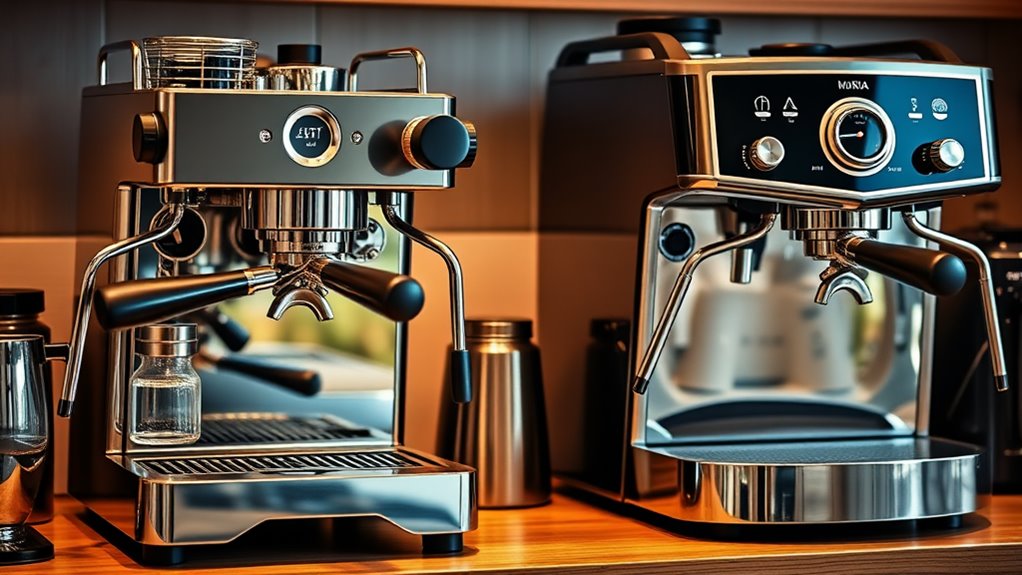
Investigating the personalization and skill involvement in coffee making reveals distinct differences between manual and automatic machines.
With manual machines, you control grind size, water temperature, brew time, and pressure, creating a truly personalized cup. Manual brewing requires understanding these factors, offering a rewarding experience for coffee enthusiasts who like perfecting the craft.
Automatic machines, on the other hand, limit customization with pre-set functions, designed for consistency rather than detailed personalization. While advanced models offer some adjustments, they can't match the manual's depth.
Let's investigate:
- Adjust grind size and brew time
- Control water temperature and pressure
- Personalize each cup
- Experiment with techniques
- Perfect the brewing craft
Convenience and Time Efficiency
Convenience and time efficiency are essential factors to take into account when choosing between manual and automatic coffee makers.
Let's investigate automatic machines first. With just a press of a button, they grind beans and brew coffee swiftly, making them perfect for busy mornings. They save time, consistently producing great-tasting coffee without hassle.
In contrast, manual coffee machines demand more time and effort. They require you to heat water and brew manually, which may not suit rushed mornings. Mastering them takes practice, but offers control over the brewing process.
Ultimately, your choice depends on your lifestyle and daily routine.
Long-term Investment and Durability
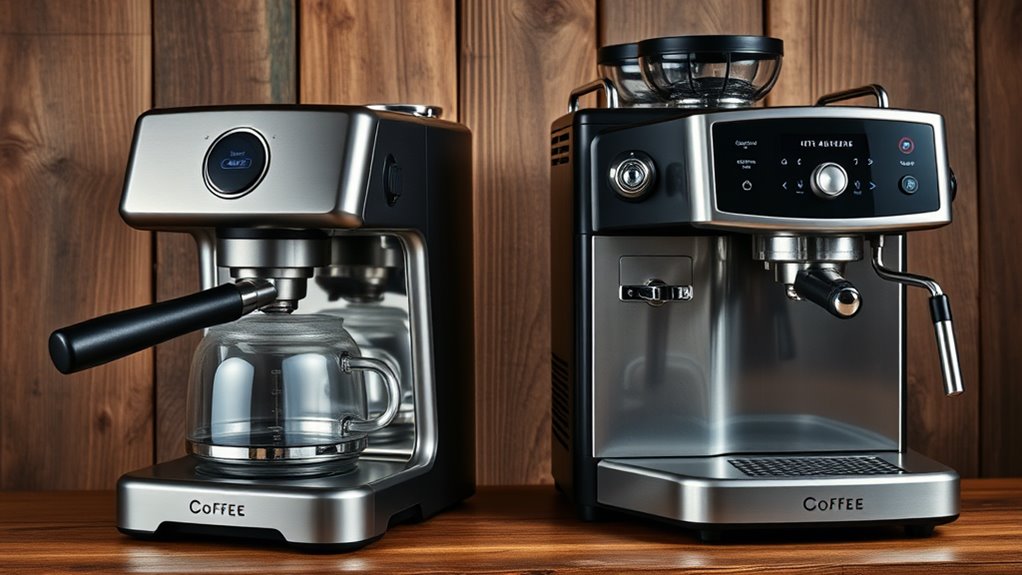
Let's investigate how long-term investment and durability impact your choice between manual and automatic coffee makers.
Manual machines generally cost less upfront, yet require frequent, affordable part replacements. Automatic models, while pricier initially, might save you money over time if maintenance is minimal.
Consider the materials: manuals often boast stainless steel or brass, enhancing their lifespan, whereas automatics may contain more plastic, risking quicker wear.
Maintenance plays a vital role; regular care extends any machine's life.
- Manual machines use high-quality materials, like stainless steel.
- Automatic machines can incur higher maintenance costs.
- Manuals need frequent part replacements.
- Automatics require descaling to prevent mineral buildup.
- Proper maintenance guarantees longevity for both types.
Frequently Asked Questions
Which Coffee Maker Is More Environmentally Friendly?
You should choose a manual coffee maker for a more environmentally friendly option. It uses less energy, generates minimal waste, and has a longer lifespan. You'll contribute less to electronic waste and resource consumption with this choice.
Are There Any Health Benefits to Using a Manual Coffee Maker?
You'll enjoy health benefits from manual coffee makers, like higher antioxidants, reduced cancer risks, and improved cognitive function. Methods like French Press brew coffee rich in nutrients, protecting against diseases like Alzheimer's, Parkinson's, and Type II diabetes.
Can Both Types of Machines Use the Same Coffee Beans?
Yes, you can use the same coffee beans, but manual machines give you more flexibility with bean types. Automatic machines need less oily beans to prevent clogs and guarantee consistent performance. Choose beans wisely for each machine.
What Are the Noise Levels of Each Type?
You'll notice manual coffee makers, like hand grinders, typically produce 73dB to 84dB. Automatic machines range from 66dB to 70dB. Some automatic grinders can reach 70dB, comparable to washing machines, affecting your environment's tranquility.
How Do Manual and Automatic Coffee Makers Impact Coffee Flavor Notes?
You'll find manual coffee makers let you control every brewing aspect, leading to richer flavors. Automatic machines simplify the process but limit flavor complexity. They're consistent yet often lack the depth and aroma manual methods achieve.