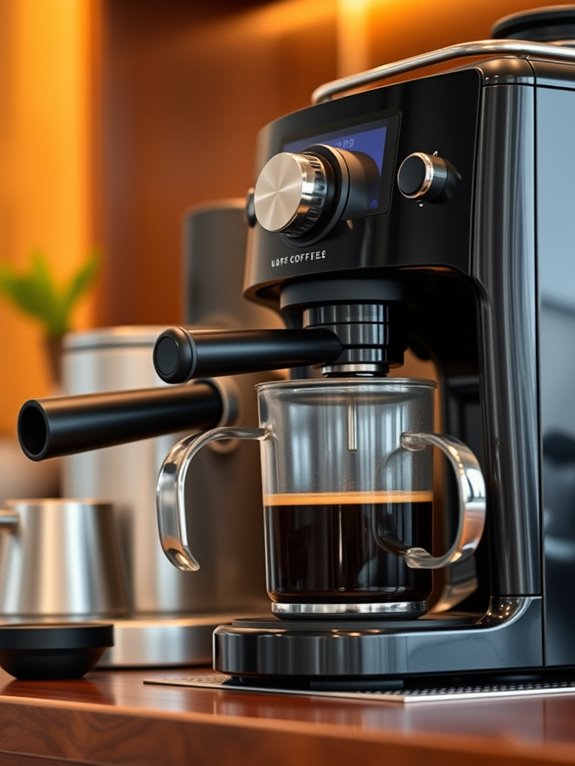
What Is the Difference Between Coffee Maker and Coffee Machine
Let’s investigate the difference between a coffee maker and a coffee machine. A coffee maker generally involves drip filtration, perfect for everyday use, offering ease, and affordability. It brews smoother, lighter flavor profiles. A coffee machine, on the other hand, can use various methods like pressurized infusion for crafting espressos or lattes, providing more customization options and complex flavors. Both cater to different preferences; examine further to uncover which suits your coffee experience best.
Key Takeaways
- Coffee makers typically refer to drip filter devices, while coffee machines include various types like espresso and percolation machines.
- Coffee makers are budget-friendly and easier to use, suitable for larger groups through automation.
- Coffee machines often use pressure for diverse drinks like espressos and lattes, offering more customization options.
- Espresso machines in the coffee machine category provide stronger flavors with faster brewing times.
- Coffee makers create smoother, lighter drinks by absorbing oils through paper filters.
Brewing Methods Explained
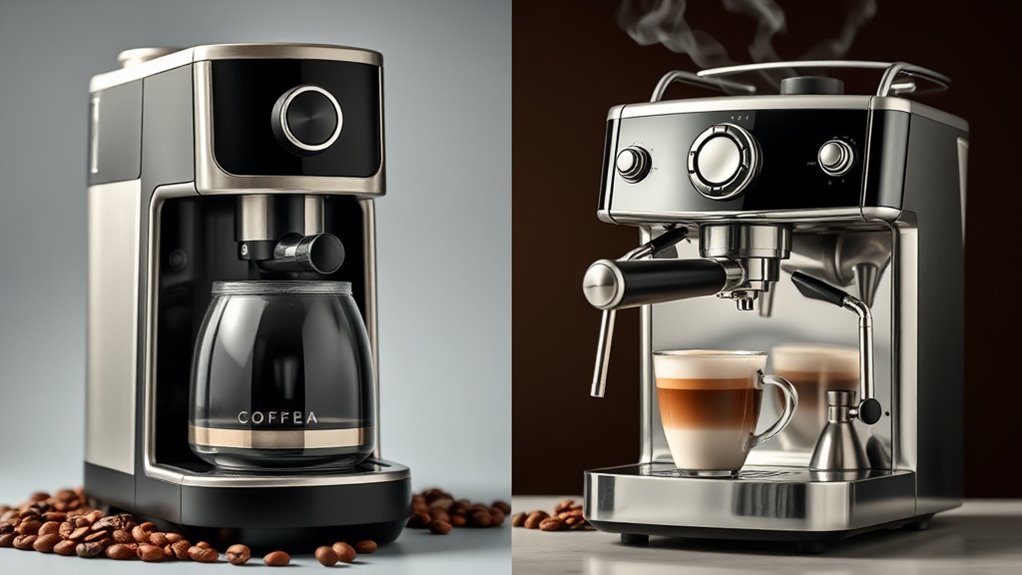
When it comes to brewing coffee, understanding the various methods can enhance your experience, allowing you to choose the one that best suits your taste and lifestyle.
Drip Filtration and Steeping
Drip filtration passes hot water over coffee grounds using a paper filter.
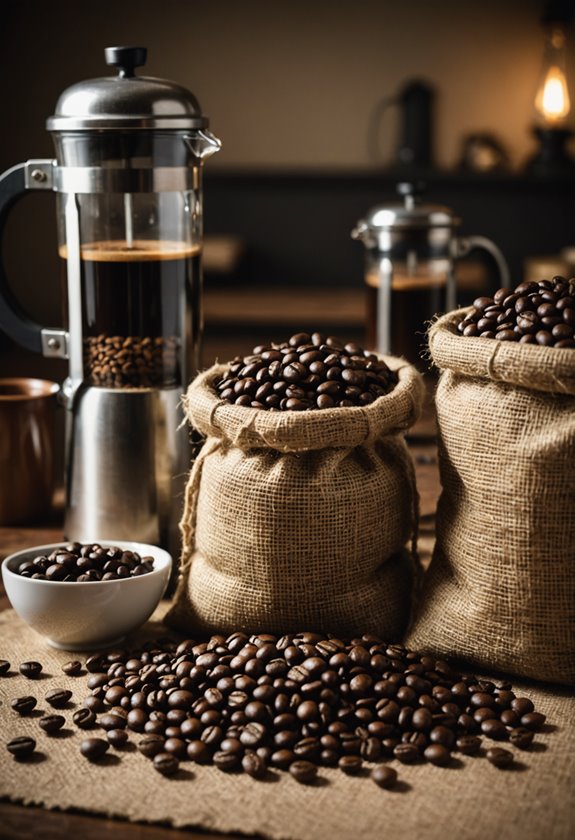
Steeping, like the French press, involves immersing grounds in water before separating them.
Pressurized Infusion and Percolation
Pressurized infusion uses pressure to extract flavors, as seen in espresso machines.
Percolation cycles boiling water through grounds using gravity, often in electric percolators.
Manual vs. Automated
Manual methods offer control, like pour-over, while automated machines, such as auto-drip, provide convenience for large groups.
Choose based on preference and need.
Specialty coffee drinks like lattes and cappuccinos require an espresso machine rather than a standard coffee maker.
Coffee Types and Varieties
Understanding the different ways coffee is brewed is just the beginning; next, let’s investigate the fascinating world of coffee types and varieties.
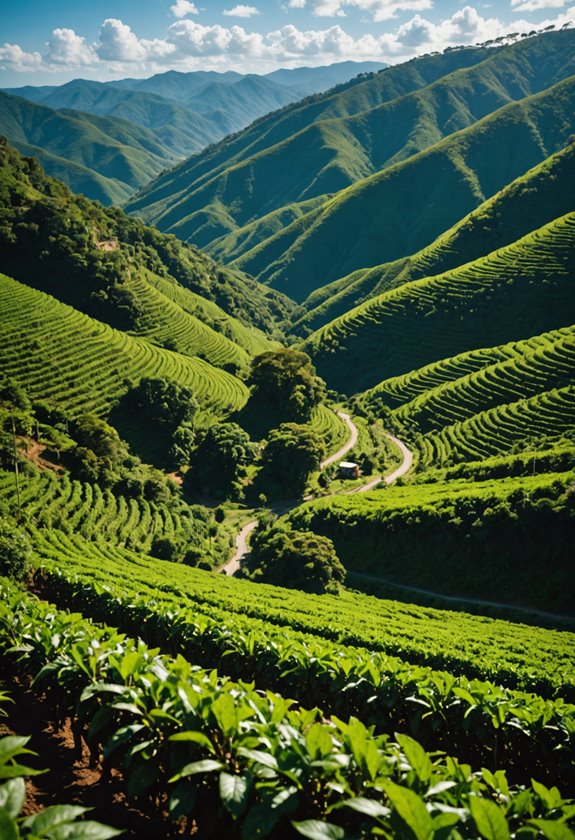
You’ll find Arabica, dominant with 56-60% of the market, known for its bright acidity, grown in regions like Colombia. Varieties like Typica and Bourbon offer distinct flavors.
Strong, with a higher caffeine content and bold taste, thrives in Vietnam’s humid climate. It covers 44% of global production.
Don’t miss the rare Excelsa, adding tart complexity to blends, or Liberica, which brings unique fruity notes. Each type offers a whole new dimension to your coffee experience.
Espresso Roast beans work particularly well for Turkish coffee preparation due to their rich, bold flavor profile.
Key Features to Consider
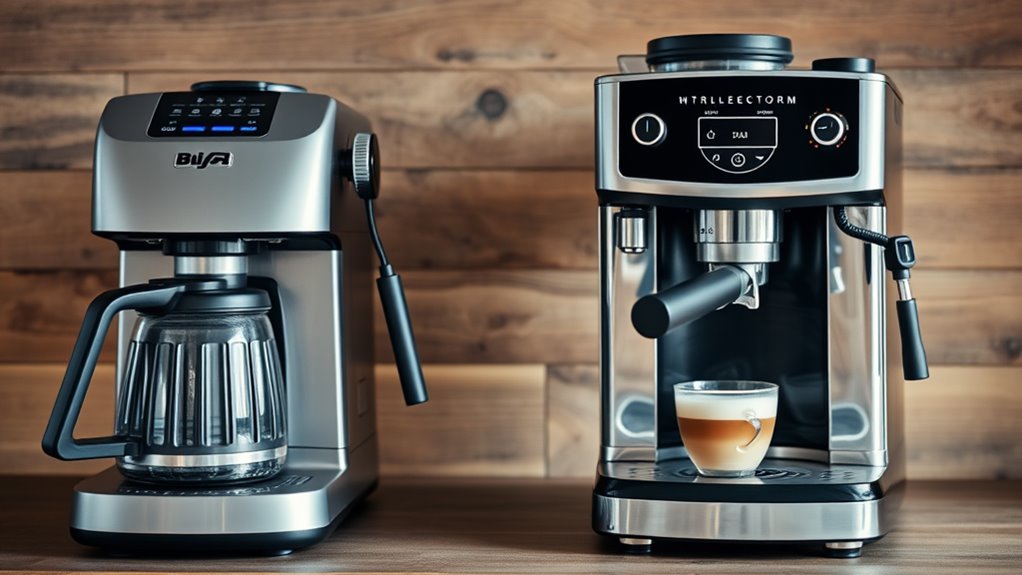
Though choosing the right coffee maker or coffee machine can seem challenging, understanding their key features can help simplify your decision.
Let’s investigate simplicity: drip coffee makers are budget-friendly with easy use, often featuring programmable settings for timed brewing and thermal carafes.
Now, complexity: machines using pressure can make espressos, cappuccinos, and lattes, often including built-in grinders and milk frothers.
Automation features like auto start timers, bloom pause, and dial-a-brew offer convenience.
Additional functions include water filters for better taste, cleaning notifications, and options for hot chocolate or tea.
High-end espresso machines with 20 Bar pressure deliver optimal extraction for rich, flavorful coffee.
Consider these features as you decide which suits your needs best.
Performance Differences
Let’s investigate the performance differences between coffee makers and coffee machines, which can greatly impact your morning brew.
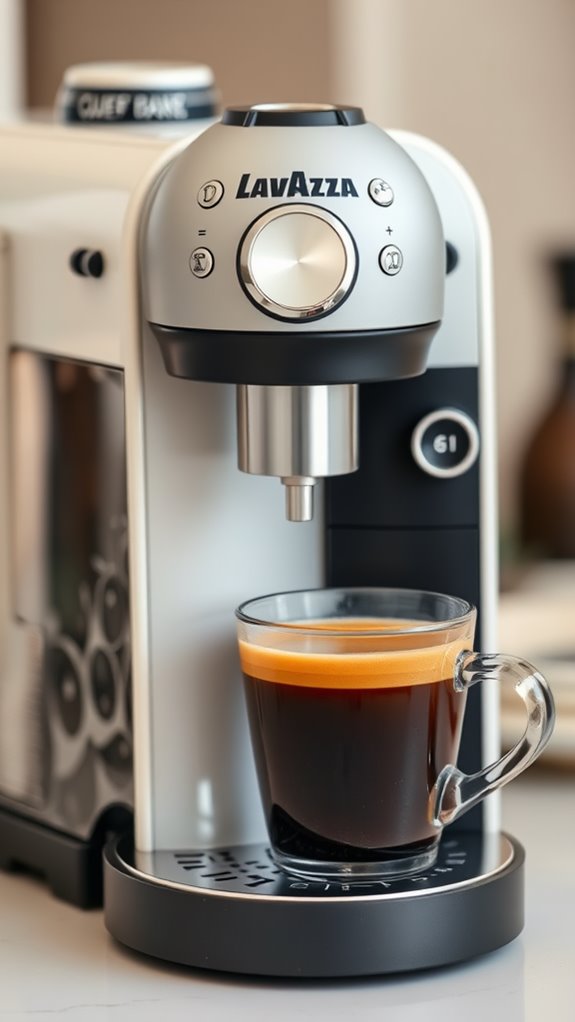
Espresso machines, using fine coffee grounds, deliver a sturdy coffee shot by applying high water pressure and brewing in seconds. This pressure results in a stronger flavor and a rich crema topping.
Drip filter coffee makers, however, absorb coffee oils through a filtering process, creating a smoother, lighter drink with reduced sediment.
Espresso machines are more energy-efficient, offering auto-power down and zero-watt standby features.
Both types allow customization, but espresso machines excel in creating diverse coffee drinks like cappuccinos and lattes.
Design and Operation Characteristics
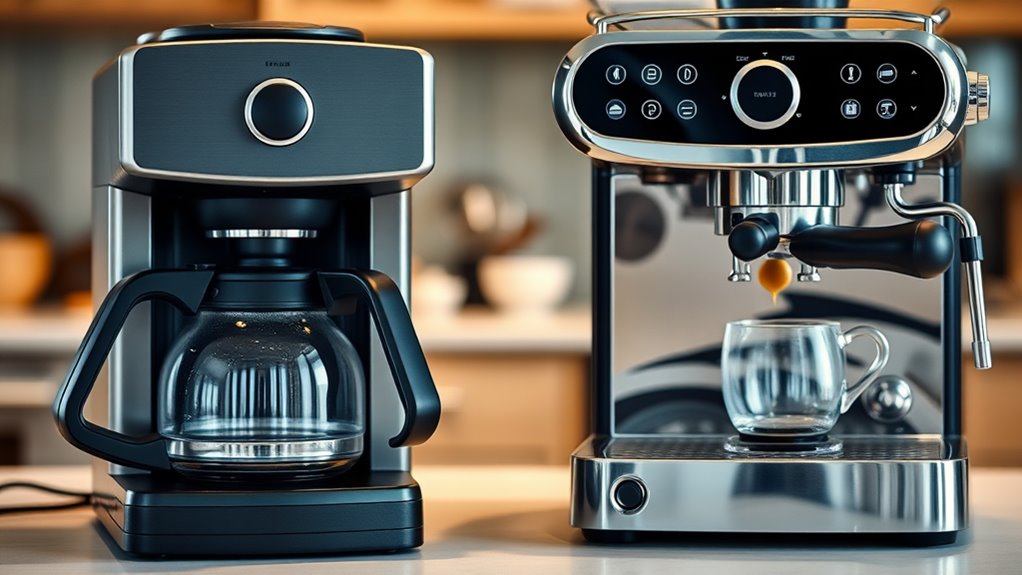
When comparing the design and operation characteristics of coffee makers and espresso machines, you’ll notice distinct differences in both their physical layout and functionality.
Coffee makers are generally more compact, requiring less counter space. They use a drip method, with water flowing through coarser grounds into a carafe.
Espresso machines, however, are larger due to components like grinders and frothers. They use high pressure to extract coffee quickly, in about 30 seconds, from finely ground beans.
While coffee makers are user-friendly with programmable settings, espresso machines offer precise thermal control and can automatically clean, preparing for the next brew.
Customization Options Available
Investigating the customization options available in coffee makers reveals a range of features that cater to diverse preferences and brewing styles.
Let’s examine brew settings: high-end models offer multiple choices like Accu-Brew for precise measurements and “my brew” options for adjusting bloom time, temperature, and water flow.
Next, temperature control: you can set the brewing temperature from 185 to 205 degrees Fahrenheit, ensuring ideal extraction.
Additionally, smart features like Wi-Fi connectivity allow brewing via apps or voice commands.
Finally, advanced customization includes large brew baskets, dripless carafes, and removable filters, offering flexibility and ease in your coffee experience.
Comparing Flavor Profiles
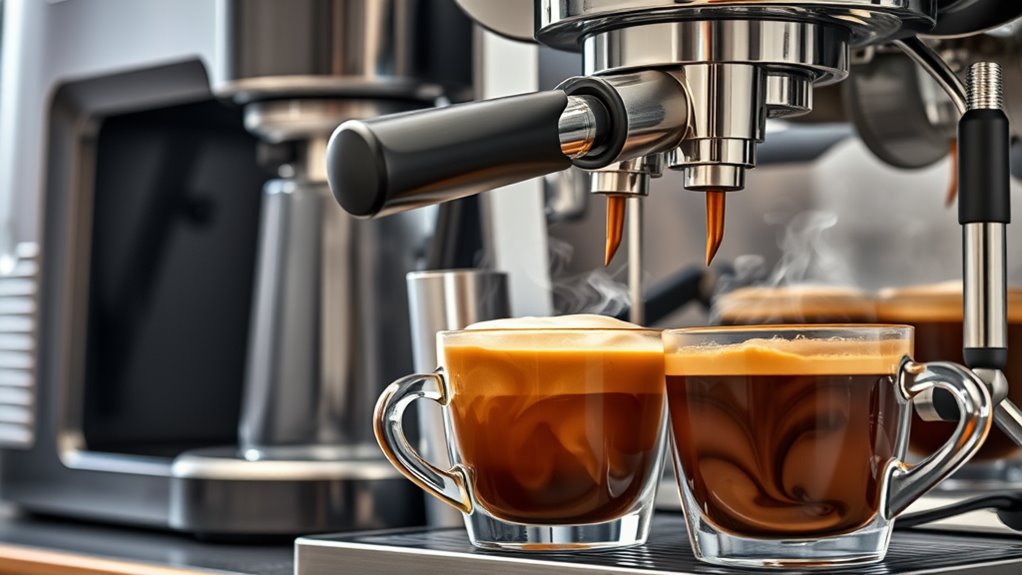
While you might think all coffee brews are created equal, the flavor profiles of coffee made with espresso machines and coffee makers tell a different story.
Espresso machines craft strong, concentrated flavors with a rich body and creamy crema, thanks to high-pressure extraction. In contrast, coffee makers produce subtler, lighter brews with gentle flavors through drip or pour-over methods.
Let’s investigate roast impact: Light roasts deliver bright, fruity acidity; medium roasts balance with nutty notes; dark roasts offer powerful, chocolatey richness.
Espresso’s quick extraction highlights these flavors, while coffee makers provide a smoother, mellow experience. Both methods suit different taste preferences.
Choosing the Right Machine for You
Choosing the right coffee machine can change your daily coffee experience from average to exceptional.
Let’s examine the essentials. If you crave variety, consider a coffee machine that offers espresso shots, lattes, and cappuccinos. These machines use pressure for rich flavors and often feature brew strength control, programmable settings, and multiple grind sizes.
Water temperature control is essential for perfect extraction. For convenience, some machines have built-in grinders, saving time and ensuring freshness.
If simplicity suits you, a drip coffee maker might suffice, but remember, espresso machines deliver a more intense, flavorful coffee experience.
Choose wisely, considering both cost and needs.
Frequently Asked Questions
How Do I Clean My Coffee Maker or Espresso Machine?
You should clean your coffee maker or espresso machine monthly. Use vinegar or a specialized cleaner to descale. Wash removable parts with soap, scrub filters gently, and air dry everything. Regular maintenance prevents buildup, ensuring great-tasting coffee.
What Is the Average Lifespan of These Machines?
You’re wondering about the average lifespan of coffee machines. Drip coffee makers typically last 5-10 years, espresso machines 7-15 years, and pod machines 3-7 years, depending on frequency of use and maintenance habits.
Are There Health Benefits to Using One Type Over the Other?
You won’t find health benefits from choosing one brewing method over another. Both coffee makers and machines deliver the same antioxidants and compounds. Focus on moderate consumption to enjoy coffee’s health perks, regardless of your brewing choice.
Can I Use Pre-Ground Coffee in Both Machines?
You can use pre-ground coffee in both machines, but coffee makers handle it more flexibly. Espresso machines require a finer grind and specific features. Confirm your machine supports pre-ground coffee for the best brewing experience.
What Is the Average Cost Difference Between the Two?
You’ll find coffee makers are generally cheaper, with entry-level models starting at $20, while espresso machines start around $200. Espresso machines offer more features, but they’re a bigger investment upfront compared to coffee makers.