How to Avoid Static in Coffee Grinder
To avoid static in your coffee grinder, focus on several key aspects. First, increase humidity by misting beans with water or using a humidifier, as dry air raises static. Next, opt for grinders with metal burrs or anti-static features for better static management. Maintain cleanliness by regularly removing old grounds and oils, which can worsen static issues. Employ the Ross Droplet Technique for moisture balance. With these steps, you'll achieve a much cleaner grind experience. Uncover more tips and techniques.
Key Takeaways
- Use a humidifier to increase air moisture, reducing static buildup during coffee grinding.
- Implement the Ross Droplet Technique by misting beans with water before grinding to minimize static.
- Choose grinders with metal or ceramic burrs for better conductivity and less static accumulation.
- Clean the grinder regularly to remove dust and residues that contribute to static.
- Grind coffee in a more humid environment to decrease static electricity effects.
Understanding the Causes of Static Electricity in Coffee Grinding

When you grind coffee beans, understanding the causes of static electricity is vital to achieving a mess-free and consistent brew.
Static electricity arises from friction and electron transfer as beans interact with grinder burrs. The high velocity of grounds and the charge imbalance between positive and negative charges contribute to static buildup. Materials like plastic in grinders act as insulators, exacerbating the issue. Additionally, dry environments and low humidity can increase static accumulation. Static causes messy countertops and inconsistent coffee, as charged particles cling to containers. Regular burr maintenance helps minimize static buildup while ensuring optimal grinding performance.
It's important to grasp these mechanisms to mitigate the unwanted effects on your coffee experience.
Let's examine how these factors influence your daily grind.
The Role of Humidity and Environmental Factors
Although often overlooked, the role of humidity and environmental factors is essential in managing static electricity during coffee grinding. Let's examine how these elements influence your grinding experience. Higher humidity accelerates static dissipation, making moist air more conductive. This helps direct static away from the grinder. Conversely, dry air enhances static buildup, causing clingy grounds. You can manage humidity by using a humidifier or placing a water tray nearby. Additionally, try the Ross Droplet Technique by adding water to beans before grinding. The triboelectric charging process creates friction between coffee particles and grinder components. Here's a quick view of humidity's impact:
| Humidity Level | Effect on Static |
|---|---|
| High | Reduces static |
| Low | Increases static |
| Moist Air | Conductive |
| Dry Air | Clingy grounds |
| Water Tray | Adds moisture |
Choosing the Right Grinder Design to Minimize Static
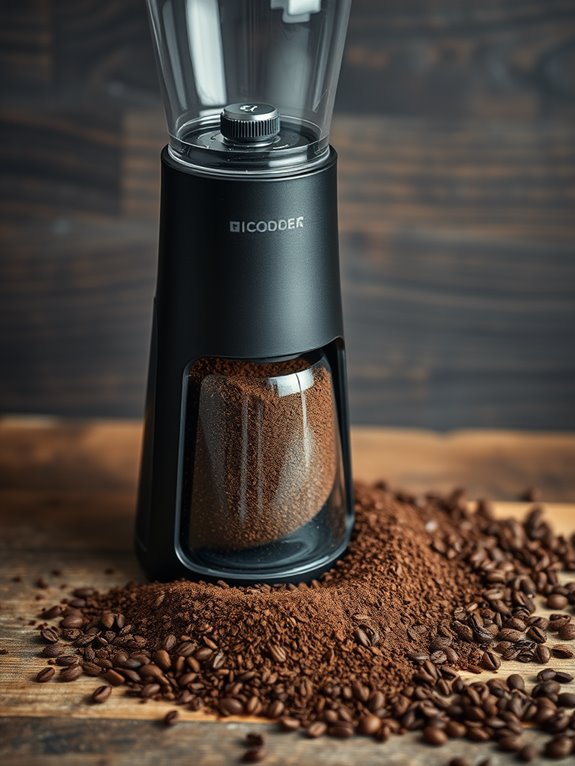
Choosing the right grinder design can greatly reduce static and improve your coffee grinding experience.
Let's examine key features and materials. Opt for stainless steel or metal burrs, which generate less static due to their conductive properties. Ceramic burrs are also a great choice for minimizing static.
Look for grinders incorporating anti-static ion generators or those with slower burr speeds to lower static. Designs with choke points can compress grounds, reducing static cling.
High-quality grinders often include these features. Prioritize conductive materials and easy-clean designs to prevent static buildup, ensuring a smoother, less static-prone coffee preparation process.
The Shardor Conical Burr grinder features an anti-static design that effectively minimizes mess during the grinding process.
Practical Techniques for Reducing Static in Coffee Grinders
Static electricity in coffee grinders can be a pesky issue, but with some practical techniques, you can greatly reduce it. Start by keeping your grinder clean; removing dust and old grounds helps minimize static buildup. Opt for grinders with metal parts—they conduct electricity better than plastic, reducing static. Also, consider grinding in a humid environment or misting beans with water before use to lower static. The RDT method involves adding a few drops of water to beans before grinding to reduce static and retention. Here's a quick summary:
| Technique | Benefit |
|---|---|
| Regular Cleaning | Reduces residual charges |
| Metal Parts | Conducts electricity better |
| Humidity Increase | Lowers static buildup |
| Water Misting | Minimizes static during grinding |
Try these methods for a smoother coffee-making experience!
Implementing the Ross Droplet Technique Effectively

When it comes to reducing static in your coffee grinder, the Ross Droplet Technique is a simple yet effective method you should consider.
Start by measuring out your coffee beans. Next, add a few droplets of water using a spoon, finger, or spray bottle. Make certain the water is evenly distributed by lightly stirring or shaking the beans.
This process helps simulate higher humidity, making the grinder environment more conductive, consequently reducing static. Remember, using minimal water is essential to prevent any damage to the grinder burrs.
Proceed with grinding immediately, avoiding prolonged bean exposure to moisture. Let's investigate this technique!
Cleaning and Maintenance Tips for Static Reduction
To effectively reduce static in your coffee grinder, start by focusing on regular cleaning and proper maintenance. Regularly clean your grinder to remove oils and coffee residues, which contribute to static buildup.
Make sure your grinder's parts are dry, as a dry environment can increase static. Opt for grinders with removable parts; they allow thorough cleaning, reducing static potential. However, avoid over-cleaning, as this can lead to more static.
Patience is essential: waiting after grinding helps dissipate static charges. Additionally, tapping and shaking your grinder's container will help dislodge clinging grounds, making your coffee experience smoother and more enjoyable.
Materials and Components That Influence Static Buildup
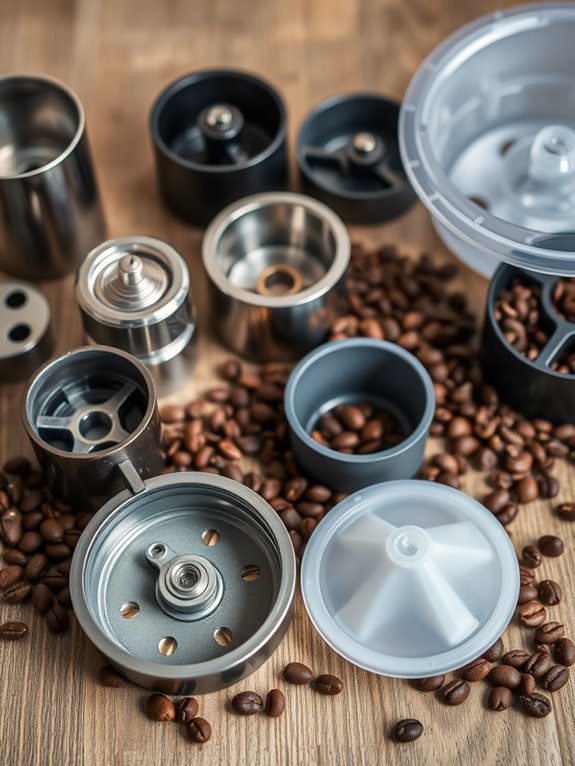
Having a clean grinder is just one piece of the puzzle in managing static; the materials and components of your grinder play a significant role too.
Metal Components
Let's examine metal components. Metal burrs and containers allow electrons to flow freely, reducing static buildup.
Although metal parts can minimize static, they won't eliminate it entirely because coffee beans are insulators.
Plastic and Insulating Materials
Plastic parts, common in many grinders, are insulators.
These parts cause static cling and make it difficult for charges to dissipate.
Ceramic Components
Ceramic burrs generate less static than metal, helping to reduce static buildup, though not completely eliminating it.
Leveraging Scientific Insights to Tackle Static Electricity
Understanding the science behind static electricity can greatly enhance your coffee grinding experience. Static arises from friction in grinding, causing coffee beans to cling annoyingly to grinder parts. Let's examine how to tackle this using scientific knowledge.
| Technique | Description | Benefit |
|---|---|---|
| Ross Droplet Technique | Add water to beans to increase conductivity | Less static, better flavor |
| Wait Time | Pause after grinding for static to dissipate | Reduced clumping |
| Metal Catch Bin | Use metal containers for grinding | Minimized static buildup |
Embrace these methods to enjoy a smoother coffee prep, reducing static's pesky influence!