How to Adjust the Grind on a Coffee Grinder
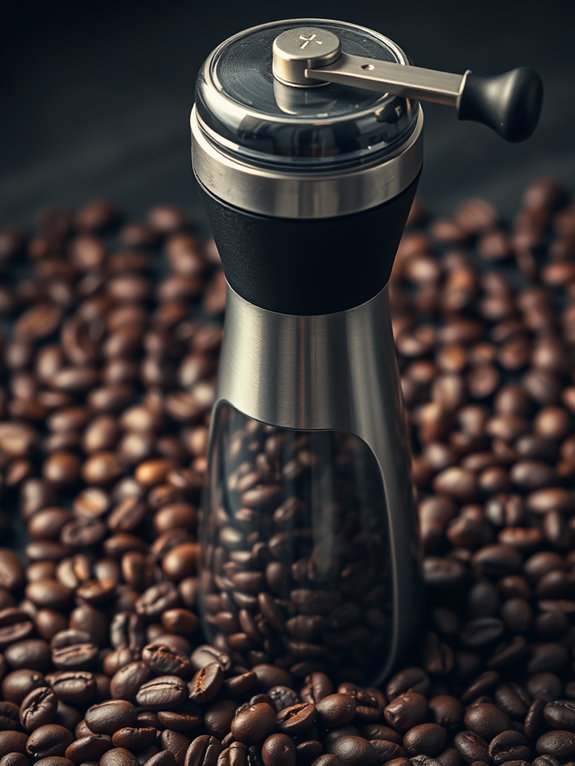
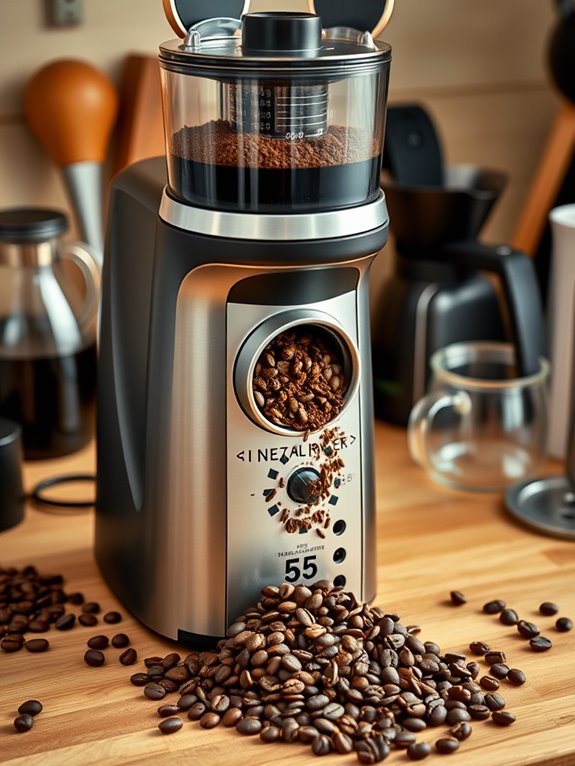
To adjust your coffee grinder, first identify the type—manual or motorized. For manual ones, locate the adjustment ring near the burrs; clockwise for finer, counter-clockwise for coarser grinds. Motorized grinders usually have a knob or collar for settings. Aim for a balance in brew time and taste, ensuring consistent doses. Remember, finer grinds extract quickly, needing less time, whereas coarser grinds require more. With adjustments, you'll reveal a richer coffee experience.
Key Takeaways
- Turn the adjustment dial clockwise for a finer grind and counter-clockwise for a coarser grind.
- Establish a zero-point setting by turning until the burrs just touch.
- Use small incremental adjustments to prevent over-correction of grind size.
- Regularly calibrate your grinder to ensure consistent and accurate grind sizes.
- Clear the grinder chamber after each adjustment to avoid flavor contamination.
Understanding the Importance of Grind Size
Grind size plays an essential role in coffee brewing, influencing not just the flavor but the entire experience.
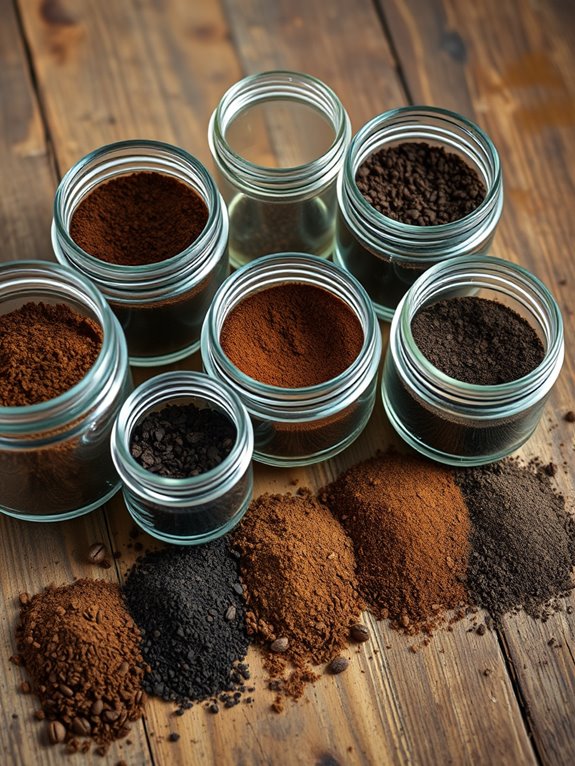
When you use larger coffee grounds, the surface area decreases, allowing water to flow freely, slowing extraction. This means coarser grounds need longer brewing times.
Conversely, finer grounds create stronger, more intense flavors but require shorter times to avoid over-extraction. Surface area contact with water increases significantly with finer grinds, leading to more efficient extraction of flavor compounds.
The right balance in grind size guarantees a harmonious extraction of acids, sugars, and bitter compounds. Proper grind size selection is essential for achieving optimal results with your chosen brewing method.
Small adjustments can dramatically impact taste, so understanding grind size's importance helps you achieve a balanced, pleasing cup of coffee.
Let's investigate these subtleties together.
Types of Coffee Grinders and Their Adjustment Mechanisms
When it comes to brewing the perfect cup of coffee, the type of grinder you use can make a world of difference.
Let's examine the main types. Stepped grinders feature preset settings, making them user-friendly with options like self-holding and lever-release.
Stepless grinders, however, provide infinite adjustment, allowing precise control over the grind size.
Burr grinders—conical or flat—offer consistent grinds for various brews. Conical burrs trap fewer grounds, while flat burrs run hotter, potentially affecting flavor.
Adjustments typically involve notches, each changing extraction time by 3-5 seconds. Understanding these mechanisms helps you achieve the ideal grind for your brew.
Modern grinders like the Shardor offer 51 grind settings for precise customization of your coffee grounds.
Techniques for Adjusting Grind Size on Manual Grinders
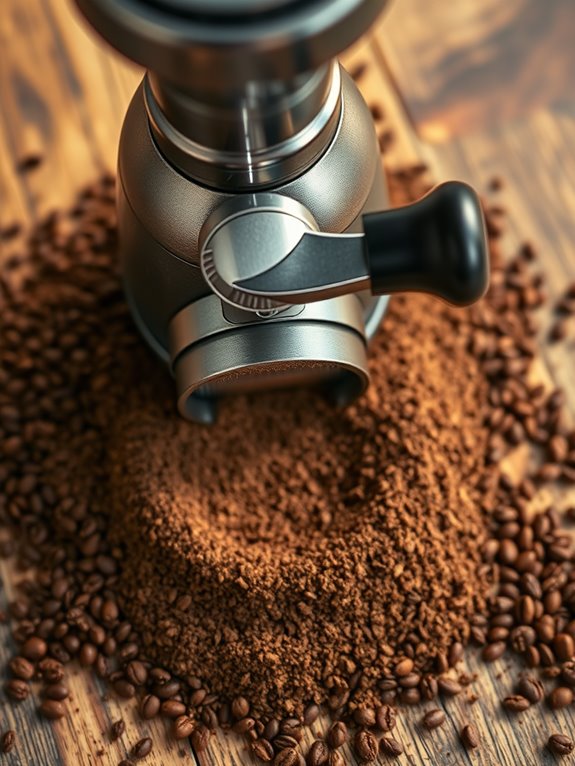
Adjusting the grind size on a manual coffee grinder might seem intimidating at first, but with a bit of practice, it becomes a straightforward process that can dramatically improve your coffee's flavor.
Locate the adjustment mechanism, typically near the burrs. Turn the dial clockwise for a finer grind, counter-clockwise for coarser grounds.
Start by removing the top nut, handle, and locking ring to access the adjustment ring. Establish a zero-point setting by turning until burrs touch.
Use a step dial to select your grind size, marking preferred settings for consistency.
Reattach the handle securely, ensuring the locking ring is tight.
For optimal French press brewing, aim for coarse grind settings similar to those offered by specialized electric grinders like the Cuisinart.
Adjusting Grind Size on Motorized Grinders
While using a motorized coffee grinder, understanding how to adjust the grind size can greatly enhance your brewing experience, making it both an art and a science.
Let's examine the fundamentals. Adjust grind size by turning a knob or spinning an adjustment collar. Move burrs closer for a finer grind, or farther for a coarser one. Stepless grinders offer infinite adjustments, while stepped grinders have preset stops.
Always adjust in small increments to avoid over-correction. Remember, finer grinds lengthen brewing time, and coarser grinds shorten it.
Regular calibration and maintenance guarantee consistency. Mark adjustments to maintain settings effectively.
The Cuisinart Coffee Grinder offers 18 different grind settings from ultra-fine to coarse, making it versatile for various brewing methods.
Fine-Tuning Electronic Grinders for Optimal Results
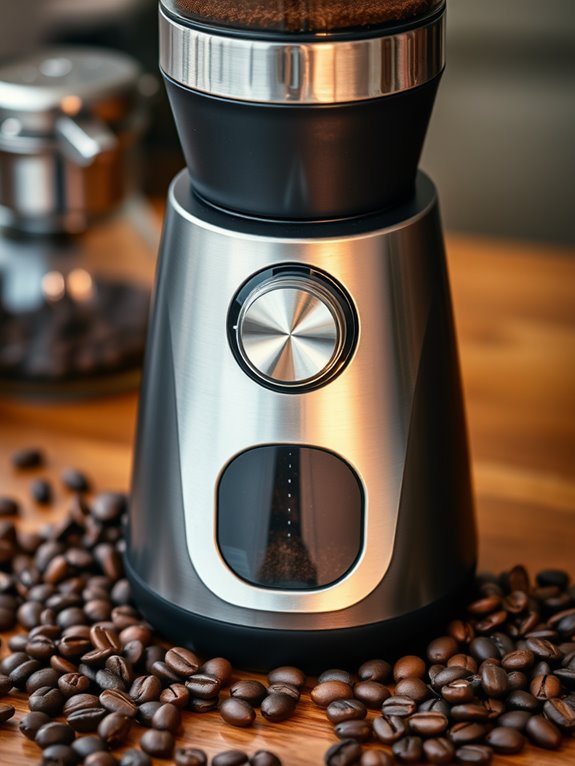
Fine-tuning your electronic coffee grinder can change your brewing game, much like adjusting the grind size on motorized grinders enhances your coffee's flavor profile.
Start by adjusting grind time, which is essential as changing grind size impacts dosing. Use the zero-point method to calibrate and set a reference point.
Consistency in grind size requires considering factors like bean age and grinder cleanliness.
- Incremental Adjustments: Make small, precise changes and test the results.
- Stepless Grinders: Allow for finer, detailed tuning of grind sizes.
- Use Scales: Accurately measure doses to guarantee consistency in your coffee experience.
Matching Grind Size to Coffee Type and Roast Level
Understanding how to match grind size to coffee type and roast level can dramatically impact the quality of your brew.
Let's examine how grind size aligns with roast levels and coffee types. Lighter roasts, dense and less soluble, need finer grinds for proper extraction. Medium roasts hit a sweet spot with medium grinds. Dark roasts, lower in density, benefit from coarser grinds.
Ethiopian coffees often require coarser settings. Remember, brew methods matter too; for example, espresso demands a fine grind due to short contact time, while French Press thrives on coarser grinds.
Each adjustment enhances flavor, revealing your coffee's potential.
Practical Tips for Consistent Grind Adjustments
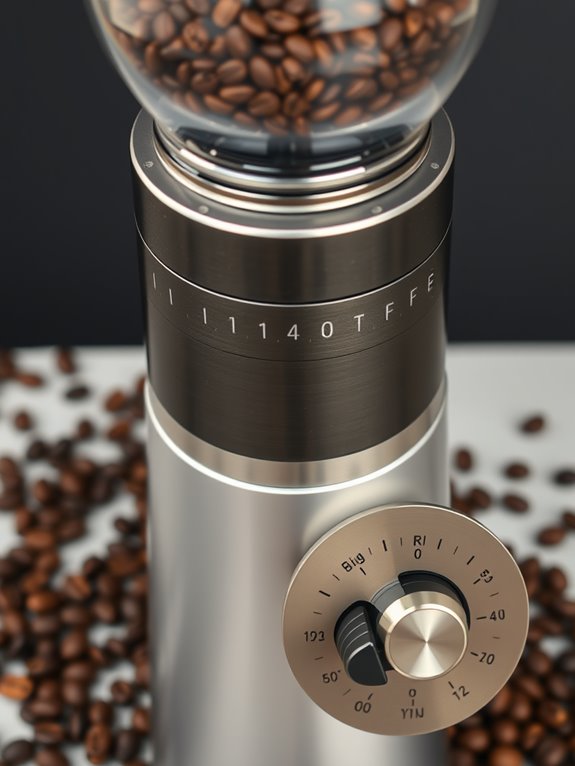
When it comes to bringing out the best flavors in your coffee, understanding the practical aspects of grind adjustments is key.
Start by familiarizing yourself with your grinder's notch sensitivity—small changes make a big difference. Adjust your grind size by one notch at a time, guaranteeing consistency. Always clear old grinds to avoid mixing sizes.
Observing these practices helps maintain ideal brewing results:
- Mark Your Settings: Use a marker to track adjustments, making sure you can return to the perfect setting.
- Keep Hopper Half Full: This guarantees consistent dosing and grind consistency.
- Document Changes: Record settings to replicate successful brews.
Troubleshooting Common Grind Size Issues
How do you address those pesky grind size issues that seem to sabotage your perfect cup of coffee? Let's examine common problems and solutions.
Misaligned Grinder Burrs: If you notice uneven grind sizes and hear "chirping," inspect burr alignment. Use small brushes to recalibrate and realign burrs for even spacing.
Blunt Grinding Burrs: Slow grind times and clumping signal dull burrs. Check burr edges and replace if needed. Regular inspections prevent wear.
Jammed Coffee Grinders: Blockages stop grinding. Clear the chute with brushes and adjust burr spacing.
Calibration Issues: Irregular grind sizes may stem from misaligned knobs. Recalibrate and fine-tune burrs for consistency.
Maintaining Your Grinder for Consistent Performance
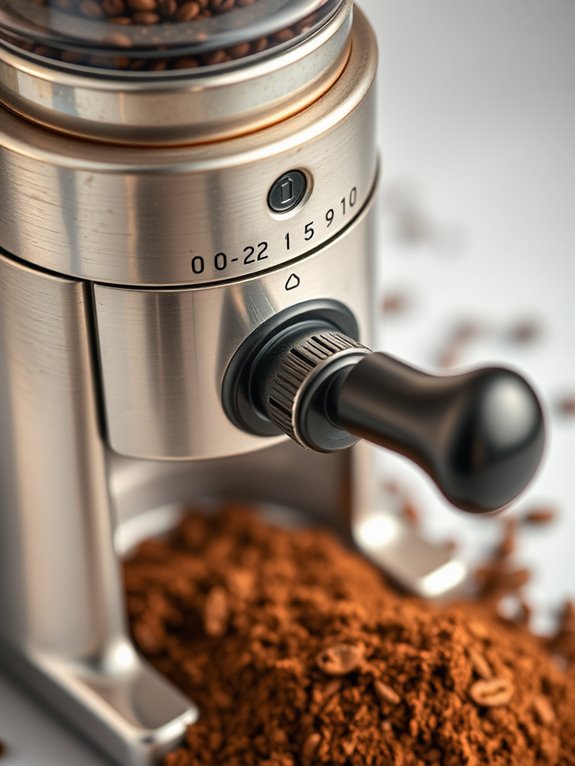
Having tackled those pesky grind size issues, it's time to focus on maintaining your coffee grinder for consistent performance.
Regular cleaning is essential for flavor quality and equipment longevity. Start with daily cleaning: simply dust off excess grounds and wipe the exterior.
Weekly, empty and wipe the hopper and grind chamber.
Deep clean every 1-3 months by disassembling the grinder and using professional products. A stiff brush works wonders for the burrs, removing stubborn coffee particles.
- Use compressed air for clearing loose grounds in the chamber.
- Replace burrs every 7-10 years.
- Consider rice cleaning to remove oils and residue.
Testing and Evaluating Grind Adjustments
Ever wondered how to achieve that perfect cup of coffee at home? Testing and evaluating grind adjustments is key.
Start with small changes, like a 1-notch shift, to finely tune your grind. Maintain a consistent dose for accurate testing. Use a timer, aiming for 20-25 grams in 30 seconds for double shots.
If your shot runs too fast, go finer; too slow, go coarser. Taste is your guide—balance acidity, sweetness, and bitterness.
Label your grinder to remember adjustment directions. Clear the grinder chamber after each change, ensuring new settings.
Systematic testing helps refine your grind for that ideal brew.