

How to Reduce Coffee Machine Noise
To reduce coffee machine noise, start by identifying the source of the sound, whether it's the grinder, pump, or brew basket, and then apply targeted solutions. Techniques like applying Dynamat, sorbothane sheets, or noise reduction materials can minimize vibrations and noise. You can also try repositioning the machine, using slower grinding processes, and maintaining your equipment regularly. By addressing these common noise sources and applying the right strategies, you can brew your morning coffee in peace. Want to learn more about silencing your coffee machine?
Key Takeaways
- Identify and address noise sources like vibrating metal components, grinders, pumps, and heating elements to develop an effective noise reduction strategy.
- Apply noise reduction materials like Dynamat, sorbothane sheets, and rubber mats to minimize vibration and noise from espresso machines and grinders.
- Regular descaling and maintenance can prevent mineral buildup, ensure great-tasting coffee, and contribute to a quieter machine.
- Position the coffee machine on a cushioned surface, such as a thick rubber mat, to absorb vibrations and reduce noise.
- Choose quiet coffee grinders, like burr grinders, and operate them at slower speeds to minimize grinding noise.
Silencing Strategies for a Quieter Brew

When it comes to silencing your espresso machine, the key to success lies in identifying the sources of noise and developing an effective strategy to tackle them.
You can start by applying Dynamat to parts that vibrate noticeably, which can help minimize grinding noises and create a quieter coffee experience.
Let's examine other silencing strategies: using noise reduction materials like Dynamat Extreme, sorbothane sheets, and thick recycled rubber mats can reduce vibrations and noise.
Additionally, proper grind settings can also play a significant role in reducing the overall noise level of your machine.
Identifying the Source of the Noise
To pinpoint the source of your coffee machine's noise, you'll need to listen carefully and observe its operation.
Take note of when the noise occurs – is it during brewing, grinding, or pumping? Does the noise change pitch or volume depending on the stage of the process?
Let's examine these questions to help you narrow down the source. Pay attention to any unusual vibrations, rattling, or hissing sounds that might indicate the root cause of the noise.
Additionally, beeping alerts, such as those on Cuisinart coffee makers, can often be silenced through button combinations or settings adjustments.
Common Noise Sources in Coffee Machines
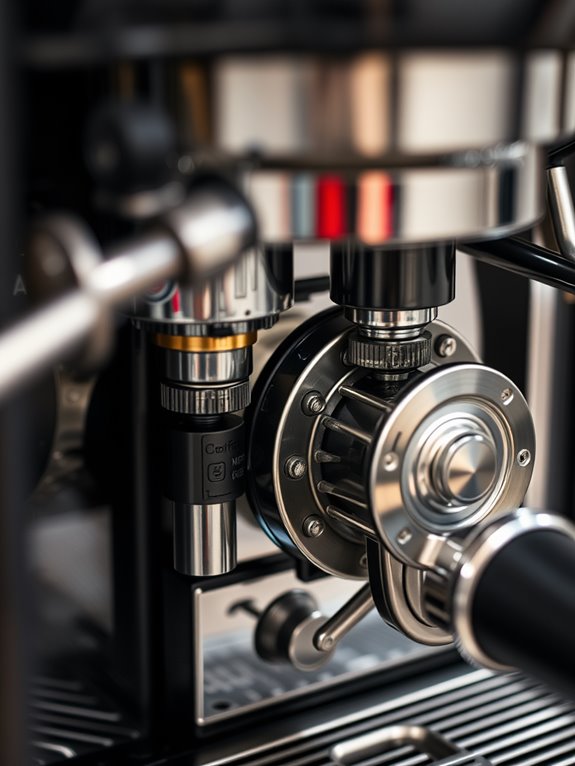
Now that you've pinpointed when and how your coffee machine is making noise, let's investigate the common culprits behind the racket. Noisy coffee machines often have metal components that vibrate, grind, or collide, producing unwanted sounds. These components can be found in various parts of the machine. Electric grinders, like the KRUPS Silent Vortex, operate significantly quieter than traditional grinders, making them a great option for those who value quiet operation and a peaceful brewing experience.
| Component | Description | Noise Source |
|---|---|---|
| Grinder | Crushes coffee beans into fine particles | Vibrations, grinding sounds |
| Pump | Forces pressurized water through the system | Whirring, gurgling noises |
| Brew Basket | Holds coffee grounds during brewing | Clattering, rattling sounds |
| Heating Element | Warms water to ideal brewing temperature | Humming, buzzing sounds |
Techniques to Reduce Vibration and Noise
By understanding the sources of noise in your coffee machine, you're one step closer to a quieter brewing experience.
Now, let's delve into some techniques to reduce vibration and noise.
- Apply Dynamat to parts that vibrate noticeably to minimize noise in espresso machines.
- Use sorbothane sheets under pump mounts to reduce vibration and noise, and consider soft-mounting pumps in an enclosed cabinet.
- Replace copper pipes with rebent or rerouted pipes to minimize noise, and use electrical tape to reduce rattling or vibration from loose parts.
- Consider upgrading to a lever espresso machine, known for being the quietest type, or look for machines with proper design and construction that contribute to quieter operation.
Regular descaling and maintenance is also crucial to prevent mineral buildup and ensure great-tasting coffee, which can also contribute to a quieter machine.
Noise Reduction Materials for a Peaceful Morning
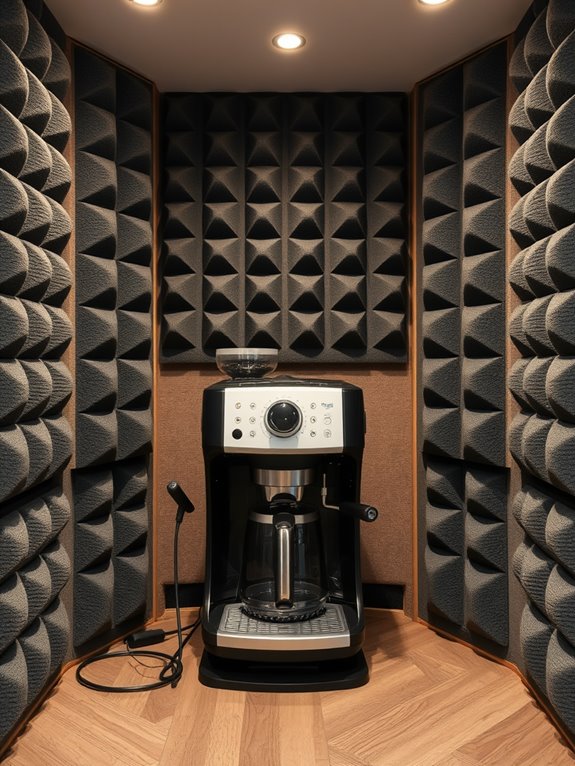
When it comes to reducing coffee machine noise, you've already taken a substantial step by understanding the sources of vibration and noise.
Now, let's investigate the noise reduction materials that can help you achieve a peaceful morning.
Sound-dampening materials like Dynamat Extreme can be applied to parts that vibrate noticeably, minimizing noise.
Sorbothane sheets can reduce vibration and noise under pump mounts, while thick recycled rubber mats can absorb vibrations and noise from the machine.
Additionally, electrical tape can be used to reduce rattling or vibration from loose parts, and using foam inside the grinder can substantially reduce noise during grinding.
Machine Design and Noise Levels
Coffee machines, designed with noise reduction in mind, can make a significant difference in your morning routine.
A well-designed machine can minimize noise-producing factors, making your daily brew more enjoyable.
Let's delve into some key design elements that impact noise levels:
- Material selection: Machines with stainless steel or metal outer panels can be noisier than those with plastic or wood due to sound amplification.
- Part fitment: Loose or improperly fitted parts can rattle and vibrate, increasing noise levels.
- Pump placement: Outboarded pumps in enclosed cabinets can reduce noise by absorbing vibrations.
- Construction quality: A solid machine design and construction can reduce noise by minimizing rattling and vibrations.
Choosing the Right Location for Minimal Noise
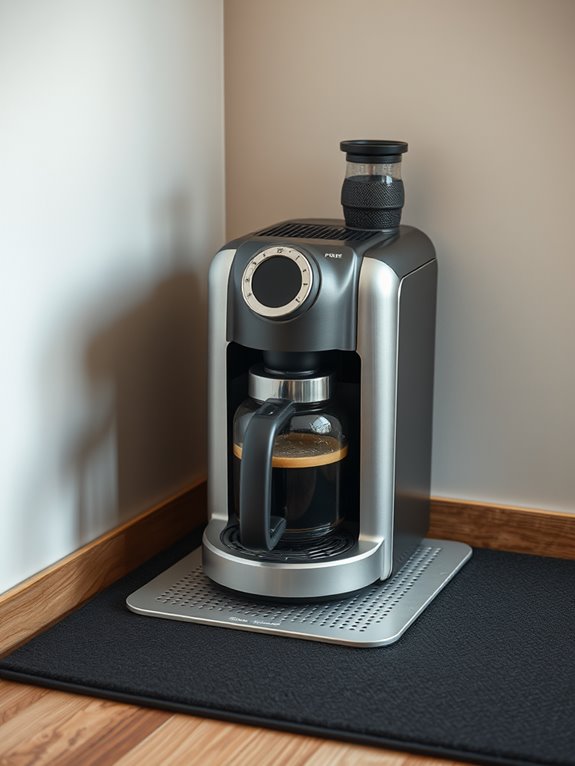
You've invested in a coffee machine designed with noise reduction in mind, but its placement can substantially impact the noise level it produces.
Now, let's investigate how to optimize its location for minimal noise. Position your machine on a cushioned surface, such as a thick rubber mat, to absorb vibrations and reduce noise.
Avoid placing it on wooden or tile floors, which can amplify noise. Instead, opt for a room with a stable room temperature and sound-absorbing materials.
Operating Techniques for a Quieter Machine
Optimizing your coffee machine's operation is key to minimizing its noise output.
By adopting a few simple techniques, you can substantially reduce noise and enjoy a more peaceful brewing experience.
Let's investigate the following operating techniques to quiet your machine:
- Slower grinding: Grind your beans at a slower pace to reduce the noise generated by the grinder.
- Use the correct grind size: Verify the grind size is appropriate for your brewing method to avoid putting excessive stress on the machine.
- Clean the machine regularly: Remove any built-up residue and old coffee oils to prevent clogs and reduce noise.
- Monitor the water level: Avoid overfilling the water tank to reduce noise caused by excessive water flow.
Upgrading and Modifying Equipment for Silence
Taking your coffee machine's noise reduction to the next level involves upgrading and modifying its equipment.
You can start by replacing the grinder blades with ones designed for noise reduction, substantially minimizing grinding noise.
Installing sound-dampening materials inside the grinder can also absorb vibrations and reduce noise levels during operation.
Consider machines with noise-reducing features, like silicone or rubber sleeves, when purchasing a new model.
These advanced technologies can further enhance quietness during brewing, making your coffee-making experience more peaceful.
Expert Fixes for Quieting Down Coffee Grinders
While upgrading your coffee machine's equipment can substantially reduce noise levels, this is vital to focus on the grinder, which is often the loudest component.
To quiet down your coffee grinders, consider these expert fixes:
- Replace blades with quieter alternatives, such as silicone sleeves, to minimize sound generation.
- Incorporate sound-dampening materials, like foam, inside the grinder to decrease operating noise.
- Opt for electric grinders with built-in sound insulation for maximum noise reduction.
- Choose burr coffee grinders, like the Baratza Encore Conical Burr Coffee Grinder, which produce relatively less noise due to their slower grinding process.
Conclusion
You've now got a thorough guide to reducing coffee machine noise. By identifying the source, using noise reduction materials, and implementing operating techniques, you can enjoy a quieter brew. Don't forget to ponder the machine's location and upgrade or modify equipment when needed. With these strategies, you'll be well on your way to a peaceful morning routine. Remember, a little creativity and experimentation can go a long way in silencing your coffee machine.