
What Is the Difference Between Espresso Machine and Coffee Maker
Espresso machines and coffee makers differ primarily in brewing methods and the types of coffee they produce. Espresso machines use high pressure, around 9 bars, to rapidly extract concentrated flavors in 25-30 seconds, ideal for espresso and other specialty drinks. Coffee makers employ the drip method, allowing hot water to pass slowly through coffee grounds, producing traditional drip coffee with a milder taste. Understanding these differences helps you choose the right machine for your perfect brew. Uncover more aspects of these machines…
Key Takeaways
- Espresso machines use high pressure (9 bars) for extraction; coffee makers rely on gravity-based drip methods without pressure.
- Espresso machines heat water precisely to 195-205°F; coffee makers have simpler, less precise heating systems.
- Espresso produces concentrated flavors; coffee makers create larger volumes with a milder taste.
- Espresso machines are typically more expensive and less portable than coffee makers.
- Espresso machines require more user involvement; coffee makers provide convenience with less manual effort.
Brewing Process and Technology
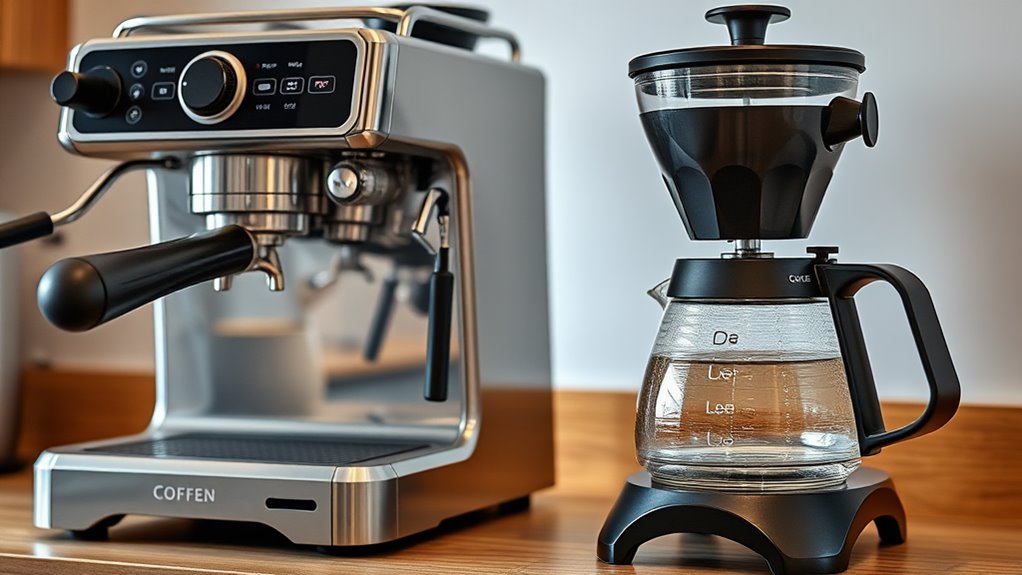
When it comes to understanding the brewing process and technology behind espresso machines and coffee makers, it's all about how each device extracts flavors from coffee grounds.
Let's investigate this further. Espresso machines use high pressure, around 9 bars, to swiftly extract concentrated flavors, while coffee makers rely on the drip method, where hot water gradually passes through the grounds.
Espresso machines heat water to 195-205°F and offer precise control over extraction parameters. They often include features like programmable settings and advanced extraction techniques.
In contrast, coffee makers generally have simpler heating systems and slower brewing times.
While both types have their merits, manual brewing methods require more skill but allow for greater customization of the final cup.
Types of Coffee Produced
Let's investigate the fascinating world of coffee types produced by espresso machines and coffee makers. Each machine crafts unique flavors and styles, catering to different preferences.
With coffee makers, you can enjoy a variety of brews:
- Drip Coffee: Hot water drips over coffee grounds for a classic cup.
- Cold Brew: Coarse coffee steeps in cold water for smooth, bold flavor.
- French Press: Grounds steep, then separate from liquid for rich taste.
- Single-Serve Coffee: Convenient pods for quick, single servings.
- Percolated Coffee: Water cycles through grounds for a strong brew.
Espresso machines offer:
- Espresso: Intense, concentrated coffee shots.
- Americano: Espresso blended with hot water.
- Cappuccino: Espresso with steamed milk and foam.
- Latte: Espresso, steamed milk, and light foam.
- Macchiato: Espresso topped with steamed milk.
For optimal pour-over results, maintain water temperature between 195°F and 205°F to achieve the best flavor extraction.
Machine Design and Features
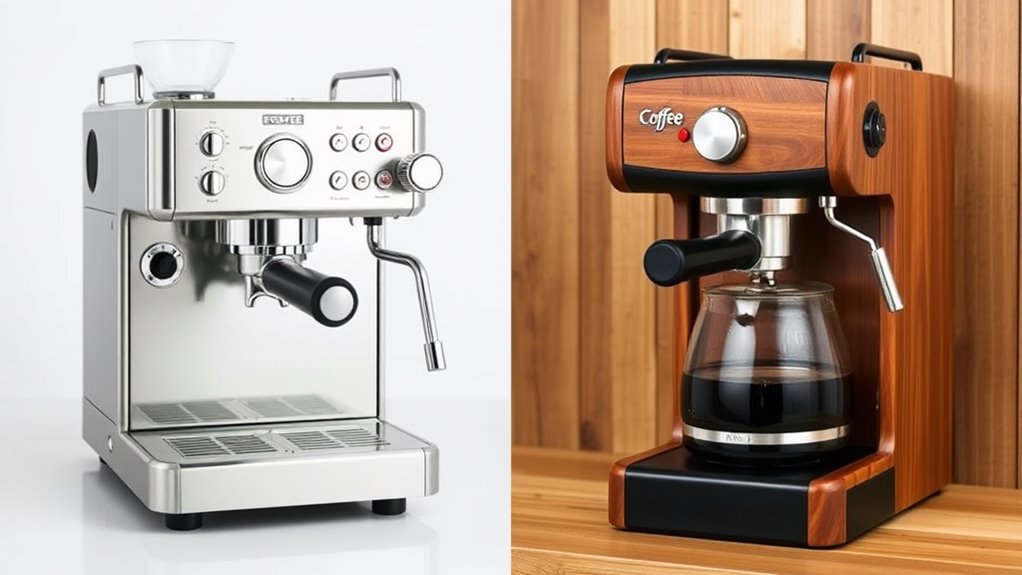
Although coffee enthusiasts might gravitate towards one type of machine over another, understanding the design and features of espresso machines versus coffee makers can greatly enhance your brewing experience.
Machine Components
Let's investigate the components. Espresso machines use boilers or thermoblocks to reach ideal temperatures (195-205°F), while coffee makers rely on heating elements for lower heat.
Espresso machines employ high-pressure pumps for brewing; coffee makers don't. The brewing mechanism differs—espresso machines use a group head and portafilter, whereas coffee makers use drip mechanisms.
Physical Design
Espresso machines are larger and less portable, often built with stainless steel.
Coffee makers are more compact, using various materials, and require less maintenance.
High-end espresso machines like the Breville Barista Touch feature intuitive touchscreen interfaces for precise control over brewing variables.
Operational Differences
Understanding the operational differences between an espresso machine and a coffee maker can greatly enhance your appreciation of each brewing method.
Espresso machines employ pressurized water to extract flavors from finely ground coffee, resulting in a concentrated shot. In contrast, coffee makers rely on gravity, using a drip method to brew larger quantities.
Let's investigate further:
- Pressure: Espresso machines use around 9 bars, while coffee makers use none.
- Extraction: Espresso's high pressure extracts more flavors and oils.
- Ratio: Espresso uses a 1:2 water-to-coffee ratio; drip coffee uses 1:15.
- Brewing Time: Espresso brews in 25-30 seconds.
- User Skill: Espresso requires more involvement.
Commercial and Home Use
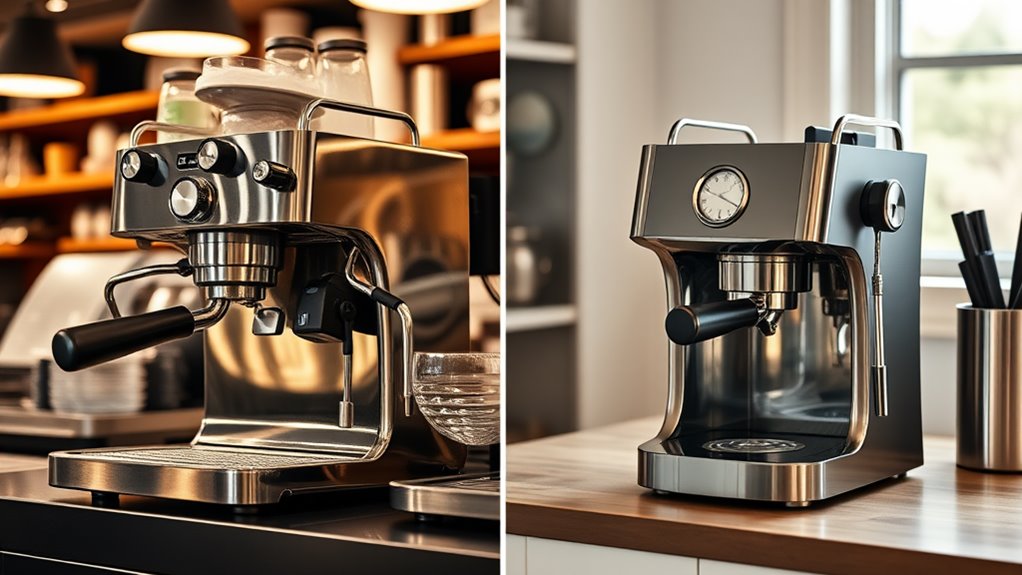
When choosing between commercial and home use espresso machines, it's crucial to understand the distinct needs each type addresses.
For businesses, commercial machines are sturdy, built from durable materials, and designed for high-volume output with features like multi-boiler systems and programmable settings. They cater to busy environments like coffee shops and require significant investment, both in money and space.
Conversely, home machines are compact and user-friendly, perfect for personal use. They focus on simplicity, featuring single-boiler systems and fewer advanced settings.
These machines are ideal for households, offering affordability and ease of maintenance without sacrificing quality.
Let's examine these options further.
Key Similarities Between Both Machines
Let's investigate the key similarities between espresso machines and coffee makers that make them both reliable choices for coffee enthusiasts.
Both machines primarily use coffee beans, allowing you to control freshness and quality. You can customize drinks by adjusting coffee, water, and milk, experimenting with different roasts and brewing parameters for ideal flavor.
In terms of operation and maintenance, these machines require regular cleaning, descaling, and often have removable parts for easy upkeep.
They share features and capabilities such as:
- Various brewing options
- Range of coffee strengths
- Temperature control
- Milk frothing or steaming
- Programmable brewing options
Cost and Eco-Friendliness
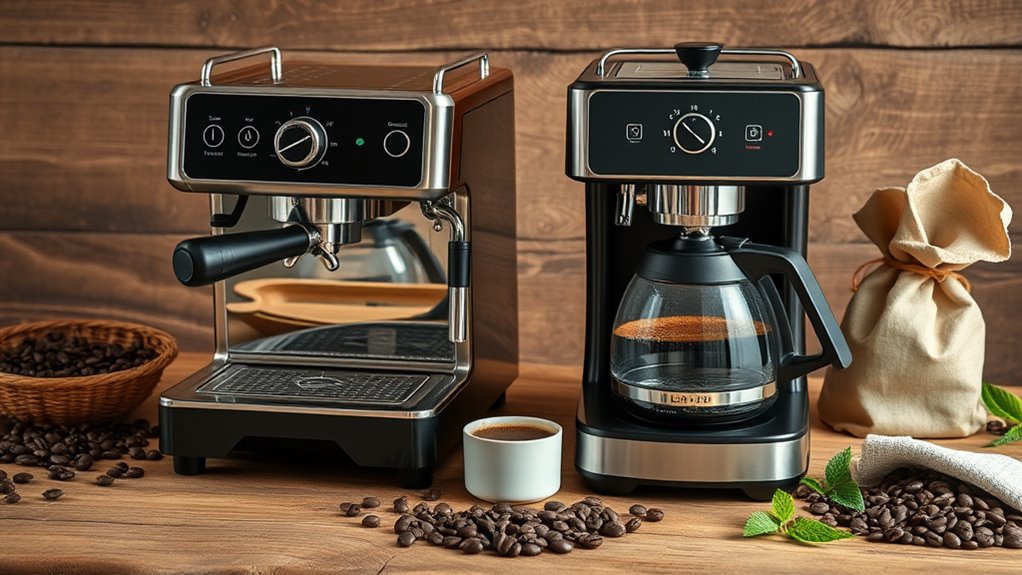
Investigating the cost and eco-friendliness of espresso machines and coffee makers reveals fascinating observations into your choices as a consumer.
Let's assess cost first. Espresso machines range from $100 to over $5,000, depending on features. Coffee makers are generally cheaper, with many under $100.
Now, eco-friendliness. Espresso machines have a higher environmental impact during use, but energy-efficient models help. Coffee makers use less energy, but frequent replacements and materials can be less sustainable.
Proper maintenance, in both, extends lifespan and reduces waste. Your choice impacts both wallet and planet, so weigh these factors when deciding your preferred brewing method.
Frequently Asked Questions
How Do Espresso Machines Affect the Taste Compared to Coffee Makers?
You'll notice espresso machines deliver a more intense, aromatic taste due to high pressure and temperature, creating a rich, complex flavor with crema. Coffee makers, using gravity, offer a milder, smoother taste with less concentration.
Are Espresso Machines More Energy-Efficient Than Coffee Makers?
You'll find that espresso machines with advanced technologies are more energy-efficient than traditional coffee makers. They consume less power, reduce CO2 emissions, and offer significant annual savings, making them a greener choice for your coffee needs.
Which Machine Is Easier to Clean, Espresso or Coffee Maker?
You'll find coffee makers easier to clean than espresso machines. Coffee makers have fewer parts and don't need specialized tools. Espresso machines require regular, detailed cleaning of components like the steam wand, group head, and portafilter.
Can Both Machines Use Pre-Ground Coffee?
You can use pre-ground coffee in both machines, but expect different results. Espresso machines struggle with pre-ground coffee due to grind size and freshness. Coffee makers handle it better, thanks to their less stringent requirements.
Do Espresso Machines Require Special Water Types Compared to Coffee Makers?
Yes, you should use special water for espresso machines. They need water with specific hardness, pH, and TDS levels to prevent limescale and maintain flavor, unlike coffee makers. Regularly test and adjust water quality for ideal performance.