
Can You Put Ground Coffee in a Coffee Grinder
Let's investigate why putting pre-ground coffee into a grinder isn't a great idea. Using ground coffee instead of whole beans can damage your grinder and degrade your coffee's taste. The fine particles can clog motorized burr grinders, create inconsistent grinds, and accelerate wear on the blades. Even with manual grinders, you lose control over grind size and consistency, affecting your brew. Keeping your grinder clear of ground coffee guarantees peak performance and flavor. Uncover more ways to optimize your coffee grinding process next.
Key Takeaways
- Using ground coffee in grinders can cause clogs and jams, especially in burr grinders.
- Ground coffee increases oxidation, leading to bitter and stale flavors over time.
- Electric grinders may overheat or malfunction if used with pre-ground coffee.
- Fine particles from ground coffee wear down grinder blades and burrs faster.
- Consistent grind size is difficult to achieve with pre-ground coffee in manual grinders.
Risks of Using Ground Coffee in Grinders
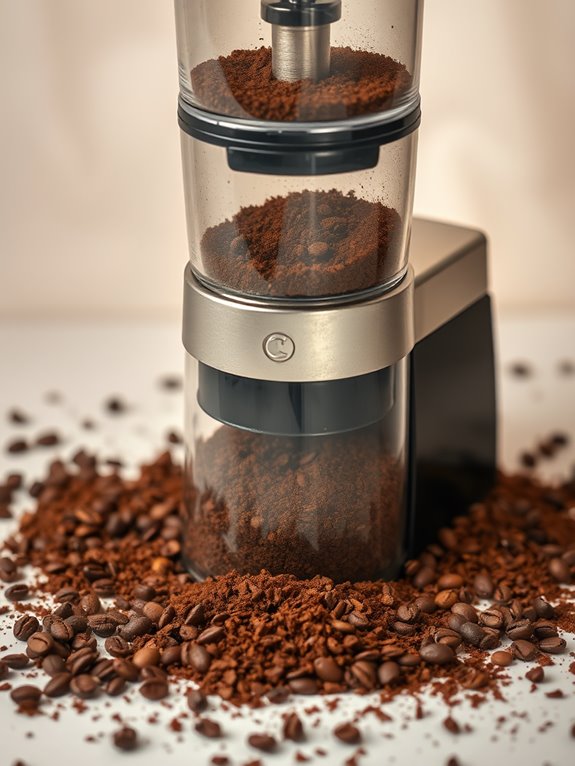
When you're considering putting ground coffee in a coffee grinder, it's important to understand the potential risks involved.
Flavor degradation can occur as heating causes aromatics to evaporate, resulting in a loss of rich taste and aroma. Oxidation speeds up staleness, making the coffee taste bitter. Furthermore, pre-ground coffee exposes oils, leading to a cumulative taste difference over time. Elevated temperatures can initiate oxidative processes in coffee, which means the surface area of ground coffee increases the potential for oxidation.
Let's examine hygiene risks: cross-contamination from coffee oils and dust can affect future brews. While weekly cleaning is recommended for heavy users, neglecting maintenance can compound these issues.
Mold growth is possible if moisture is present, complicating cleaning. Contamination and residue buildup can alter flavors, emphasizing the need for thorough cleaning.
Impact on Burr Grinder Performance
In investigating the impact on burr grinder performance, you'll find that using ground coffee in these machines isn't advisable.
Let's examine why. Burr grinders are crafted to handle whole beans, not ground particles. Introducing ground coffee can cause clogs, jamming the motor and making cleaning tricky.
The static from fine particles creates clumps, leading to inconsistent grind sizes. This inconsistency affects flavor, as uneven grinds lead to poor extraction.
Additionally, the fine particles wear down the burrs faster, shortening the grinder's life. Using ground coffee also forces the grinder to use more energy, reducing efficiency and potentially increasing costs.
Rancid coffee oils can build up from ground coffee residue, negatively affecting the taste of future brews.
Effects on Blade Grinder Functionality
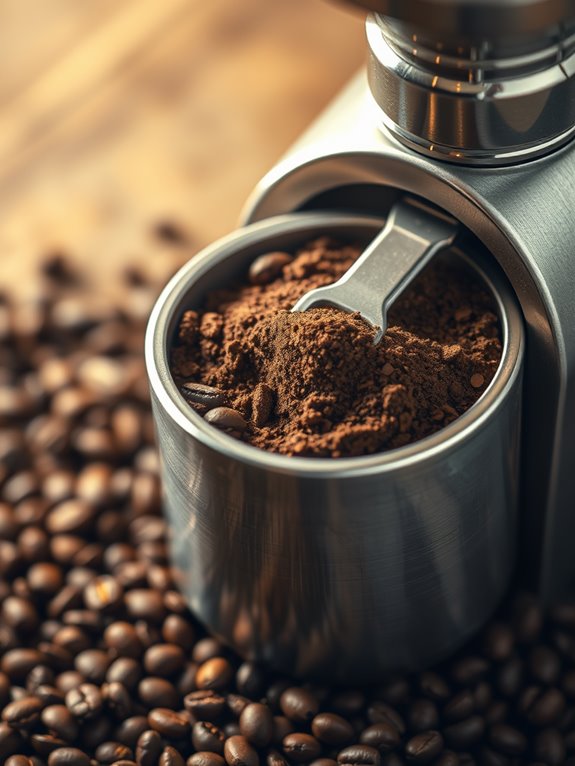
Although blade grinders are a common choice for many coffee enthusiasts, their functionality takes a hit when you try to re-grind ground coffee in them.
Blade grinders are designed to chop whole beans, not re-grind coffee grounds. This process often results in uneven particle sizes, with a mix of ultra-fine dust and larger chunks, leading to inconsistent flavor profiles.
Overheating is another issue, as increased friction generates heat, potentially altering the coffee's taste. Additionally, using pre-ground coffee can dull blades faster, causing wear and tear.
Blade grinders excel with whole beans but struggle when tasked with re-grinding existing grounds.
Regular burr alignment checks can help maintain optimal grinding performance and prevent issues with uneven particle sizes.
Challenges With Manual Grinders
Manual coffee grinders present several challenges, particularly when it comes to achieving a consistent grind size. You might find that inconsistent grind sizes affect both extraction and flavor. Factors like burr alignment and grinding motions play a role. Adjustments need to be precise, and recalibration may be required for consistent results. Ceramic burr mechanisms provide the most reliable grind consistency compared to other manual grinder components.
| Challenge | Description | Solution |
|---|---|---|
| Grind Size Consistency | Uneven grind sizes impact flavor | Correct burr alignment |
| Physical Effort | Manual grinding requires more effort and time | Practice |
| Mechanical Maintenance | Requires regular cleaning and maintenance | Regular upkeep |
Let's investigate how physical effort and time consumption add complexity to manual grinding.
Issues With Electric Grinders
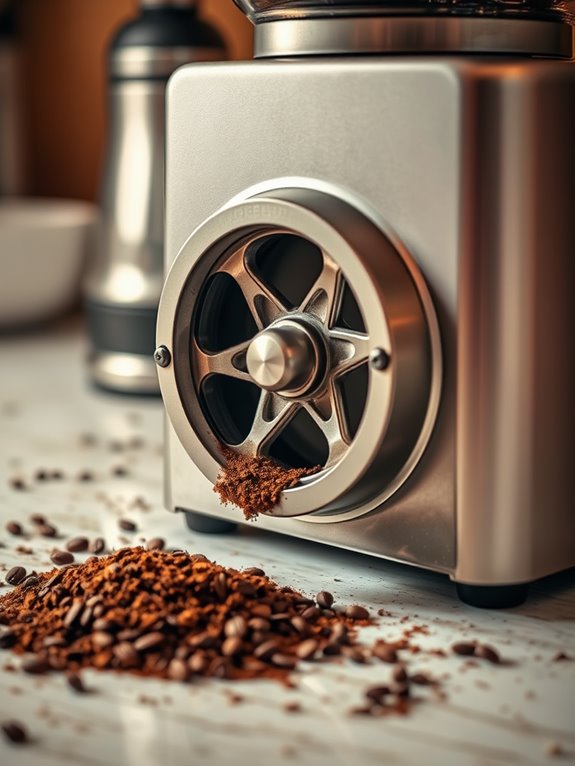
Electric grinders, while convenient, come with their own set of challenges that can impact your coffee-making experience.
Electrical Issues
You may encounter electrical faults like short circuits or broken wires. First, verify your grinder's plugged in and the power switch is on. Check for tripped breakers or turned-off outlets.
Some grinders have secondary switches that can be accidentally flipped off.
Jamming Issues
Jamming can happen if the grounding chamber or chute gets clogged. Empty the hopper and test without beans to resolve this.
If the burrs are too close, adjust to a coarser setting. Regular cleaning helps prevent these issues.
Recommendations for Optimal Coffee Grinding
For ideal coffee grinding, understanding the subtleties of grind size and consistency is vital because it directly influences the flavor and quality of your brew.
Let's examine some key recommendations for optimal grinding:
- Use a Burr Grinder: Unlike blade grinders, burr grinders provide consistent grind sizes, essential for balanced flavor extraction.
- Select the Right Grind Size: Different brewing methods require specific grind sizes. For instance, espresso needs a fine grind, while a French press demands a coarse grind.
- Grind Immediately Before Brewing: To guarantee maximum freshness and flavor, grind your coffee beans just before brewing.
Maintenance and Cleaning Tips for Grinders
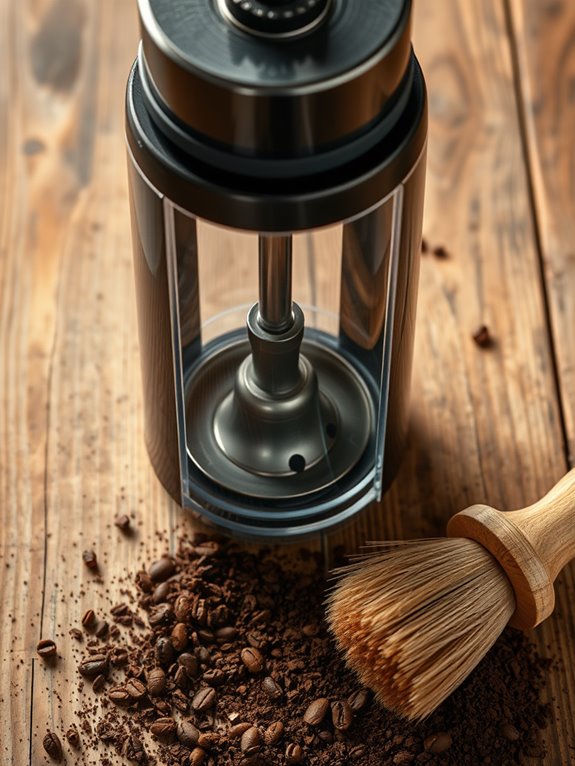
A perfect cup of coffee starts with the right grind, but maintaining your coffee grinder is just as important as using it properly.
Daily, dust off excess grounds and wipe the exterior. Every 1-2 weeks, clean the hopper and grind chamber.
Monthly, unplug and disassemble the grinder, using a stiff brush to clean the burrs. Use a vacuum cautiously.
Regular deep cleaning prevents retention, where old coffee particles taint new grinds, ensuring quality maintenance.
Always inspect burrs for wear and tear. Use dry cleaning tools, and follow safety precautions.
Let's investigate how these tips extend your grinder's lifespan.