
What Is the Difference Between a Spice Grinder and a Coffee Grinder
Let's investigate the difference between spice and coffee grinders. Spice grinders offer versatility, handling various dry ingredients like spices and nuts with smaller, often open hoppers, utilizing quick blade mechanisms. In contrast, coffee grinders focus on precision, using burr systems to achieve consistent grind sizes essential for coffee's flavor. Coffee grinders usually have larger, covered hoppers to prevent spills. Using the right grinder guarantees peak results, so stick around to learn more about getting the best from each.
Key Takeaways
- Spice grinders handle various dry ingredients, while coffee grinders are precision-engineered for coffee beans.
- Spice grinders often result in varied grind sizes; coffee grinders achieve consistent sizes for optimal flavor extraction.
- Using one grinder for both spices and coffee can lead to flavor cross-contamination.
- Coffee grinders have larger, covered hoppers to prevent spills; spice grinders have smaller, often lidless hoppers.
- Burr grinders in coffee grinders control grind size precisely, whereas spice grinders use a chopping action.
Grinding Mechanisms: Blade vs. Burr
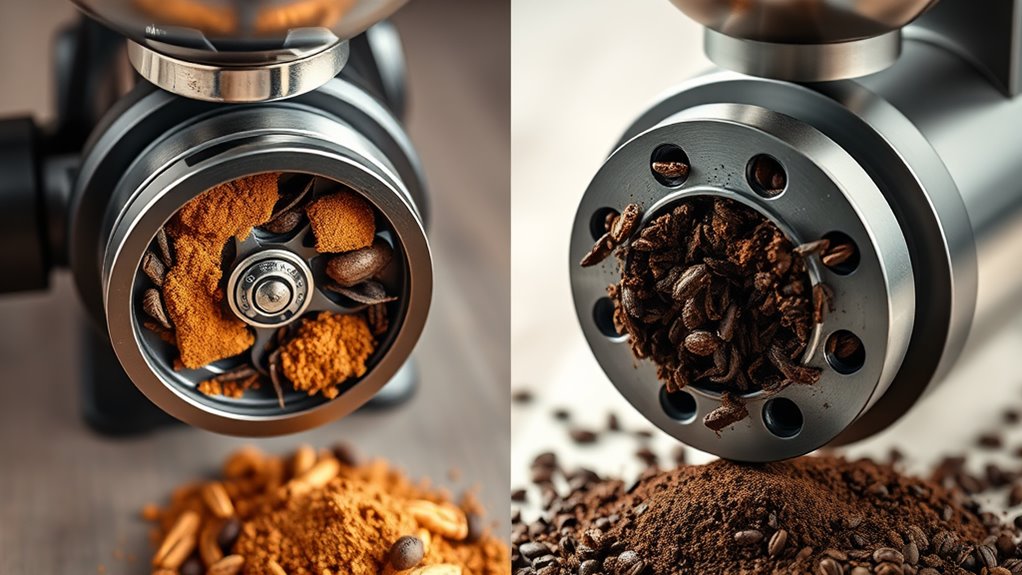
When it comes to grinding mechanisms for spices and coffee, understanding the differences between blade and burr grinders is essential.
Blade grinders use spinning blades, like a blender, to chop ingredients. They're quick and affordable, making them great for spices. However, they produce uneven grind sizes and can heat up, affecting flavor.
On the other hand, burr grinders crush ingredients between two surfaces, offering consistent, precise grind sizes ideal for coffee. They preserve flavors better but are pricier and larger.
While blade grinders suit casual users, burr grinders cater to those prioritizing consistency and flavor in their coffee experience.
While blade grinders can handle dry ingredients like spices and nuts, they cannot properly process wet ingredients or large quantities of food.
Design and Purpose: Tailored for Specific Needs
Understanding the design and purpose of spice and coffee grinders is key to choosing the right tool for your kitchen tasks.
Spice grinders, versatile in design, handle a wide range of dry ingredients like whole spices and tea leaves, using electric blades or manual methods like mortars. They're adaptable, with sizes ranging from compact to large professional models.
Coffee grinders, however, are precision-engineered for coffee beans, often employing burr mechanisms for controlled grinding. They focus on achieving specific grind sizes for different brewing methods.
Using the same grinder for both coffee and spices can result in flavor cross-contamination due to lingering coffee oils.
Selecting the correct grinder guarantees peak performance and prevents damage, aligning perfectly with your culinary needs.
Consistency in Grind Size
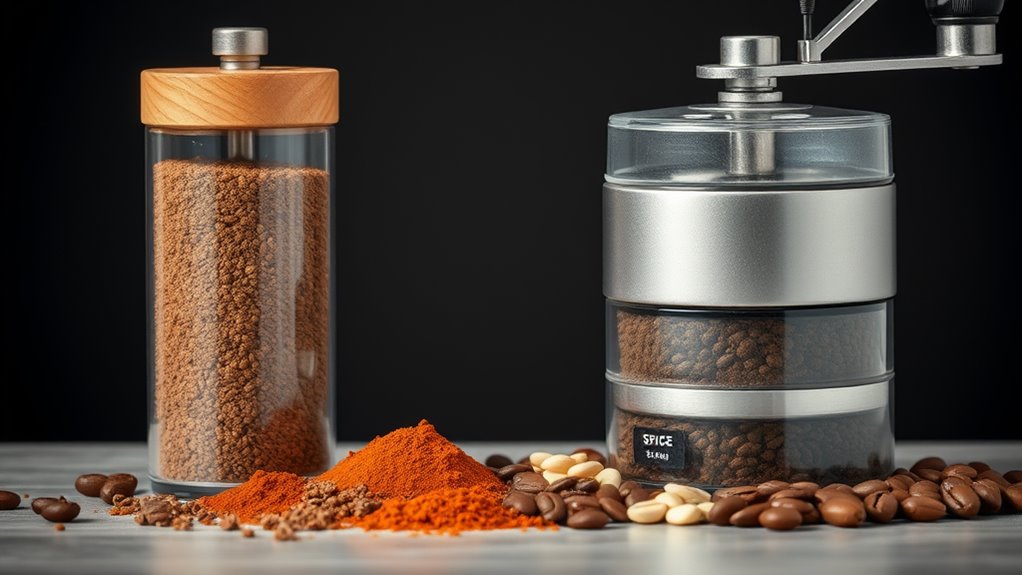
Consistency in grind size is an important factor that distinguishes spice grinders from coffee grinders, each designed for their unique purposes.
Spice grinders, often using blade mechanisms, result in varied grind sizes due to their chopping action. This variance is less significant for spices but can negatively impact coffee flavor.
Coffee grinders, particularly burr types, use two abrasive surfaces to achieve a uniform grind size, vital for ideal flavor extraction. The precise control of grind size in coffee grinders, measured in microns, guarantees consistency across different brewing methods.
One burr remains fixed while the other rotates, creating a precise crushing mechanism that produces consistently-sized coffee particles.
Let's examine how these differences affect your grinding experience and flavor results.
Hopper Design and Capacity
As you consider the importance of grind size consistency, it's equally important to investigate how hopper design and capacity play a role in the functionality of spice and coffee grinders.
Spice grinders usually have smaller hoppers ranging from 1.5 to 2 ounces, often without lids due to the dust created during grinding. In contrast, coffee grinders feature larger, covered hoppers to prevent spills and guarantee precise feeding of beans.
The material choice, typically stainless steel or plastic, guarantees durability and hygiene.
- Spice Grinders: Smaller, uncovered, various shapes
- Coffee Grinders: Larger, covered, precise feeding
- Materials: Stainless steel, plastic
- Capacity: Spice vs. coffee size differences
Versatility and Limitations of Use
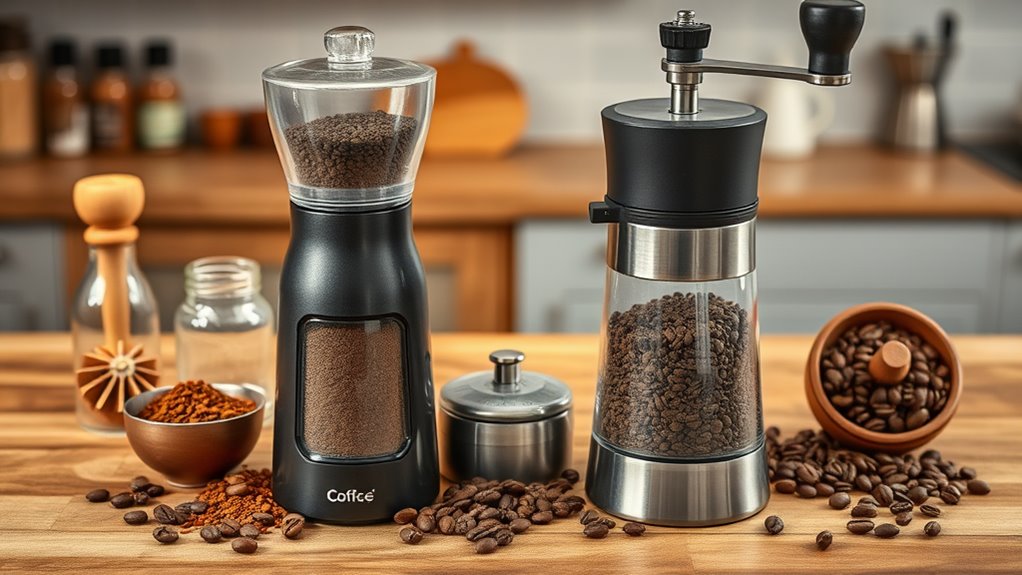
When it comes to versatility and limitations of use, spice and coffee grinders serve different purposes, and knowing these differences can help you choose the right tool for your needs.
Spice grinders, with their spinning blades, excel at processing a wide range of textures, from hard nuts to delicate bay leaves. They're cost-effective but can lead to uneven grinds, making them unsuitable for coffee.
Coffee grinders, equipped with burrs, provide consistent grind sizes essential for great coffee. However, they're not designed for spices, risking flavor cross-contamination and mechanical damage.
Let's examine each tool's purpose to maintain quality and functionality.
Frequently Asked Questions
Can a Spice Grinder Be Used for Grinding Coffee Beans in Emergencies?
In emergencies, you can use a spice grinder for coffee, but expect inconsistent results. They aren't designed for coffee beans, affecting flavor and safety. Consider alternatives like a mortar and pestle or blender for better outcomes.
How Do Cleaning Methods Differ Between Spice and Coffee Grinders?
You clean spice grinders using dry rice and avoid water to prevent rust, while coffee grinders benefit from rice and vinegar for deodorizing. Use brushes for residue removal, ensuring regular maintenance to maintain peak performance for both.
What Are the Noise Levels Like for Each Type of Grinder?
You'll find spice grinders noisier, reaching over 90 dB, with electric coffee grinders around 80-90 dB. Manual coffee grinders are quieter at 72-74 dB. Use cushioned surfaces and regular cleaning to manage noise levels effectively.
Are There Any Health Concerns With Using a Spice Grinder for Coffee?
You're risking cross-contamination and flavor retention when using a spice grinder for coffee. Allergens and chemical residues could mix in, and inconsistent grind size affects taste. Regular cleaning and dedicated use are essential to avoid health issues.
Do Spice Grinders Affect the Aroma Retention of Spices?
You need to use the right spice grinder to maximize aroma retention. Different mechanisms release flavors effectively, while materials like glass and high-quality PET bottles help preserve aroma. Advanced techniques, like cryogenic grinding, further enhance aroma preservation.