Do Tea Leaves Have More Caffeine Than Coffee Beans?
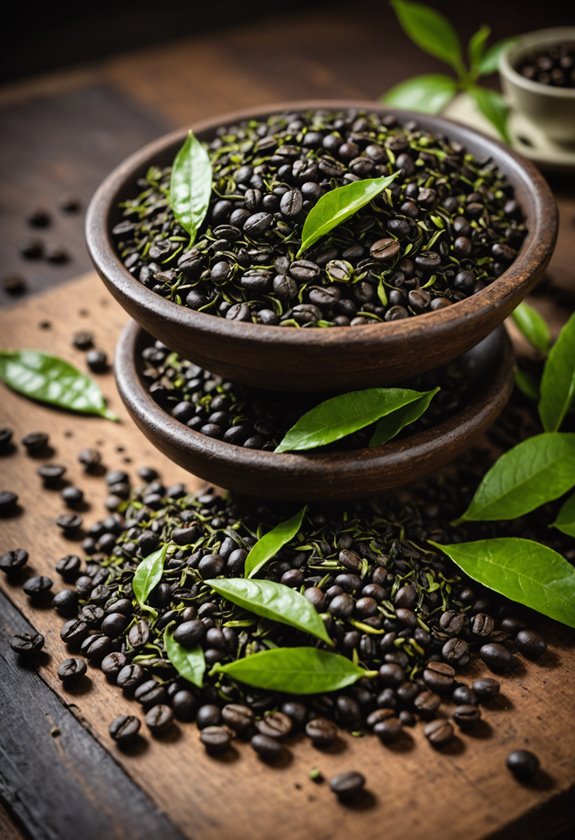
Let's investigate the question of caffeine content between tea leaves and coffee beans. Tea leaves actually contain more caffeine by weight, about 3.5%, compared to coffee beans, which range from 1.1% to 2.2%. However, the way these are brewed changes the caffeine you consume. A cup of brewed coffee often has more caffeine than a cup of brewed tea because coffee is typically brewed at higher temperatures and longer durations. Also, the caffeine in tea can vary based on the type, like black or green. So, understanding how preparation affects caffeine levels reveals deeper understanding into your beverage choices.
Key Takeaways
- Tea leaves contain around 3.5% caffeine by weight, which is generally higher than coffee beans' 1.1% to 2.2%.
- Unbrewed tea leaves typically have more caffeine than unbrewed coffee beans.
- The brewing process significantly affects the caffeine level in both tea and coffee.
- Brewed coffee usually has more caffeine per cup due to higher brewing temperatures and longer durations.
- Quantity differences in brewing (10g coffee vs. 5g tea) contribute to varying caffeine concentrations in final beverages.
Caffeine Content in Tea and Coffee

Although tea leaves contain a higher percentage of caffeine by weight compared to coffee beans, the brewing process substantially affects the caffeine content in your cup.
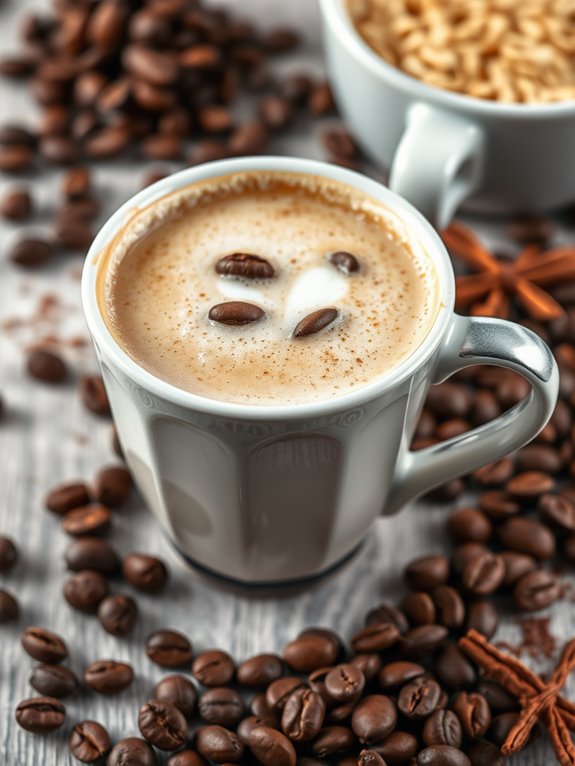
When you brew a cup of coffee, it typically has between 95 to 200 mg of caffeine. This is because the brewing process for coffee extracts more caffeine due to the higher temperatures and longer brewing times used.
In contrast, a cup of black tea averages about 40 to 95 mg of caffeine, while green tea contains approximately 20 to 45 mg per serving.
Tea leaves contain about 3.5% caffeine by weight, whereas coffee beans range from 1.1% to 2.2%. Despite this, brewed coffee usually ends up with more caffeine per cup.
This is partly because about 10 grams of coffee grounds are used to brew a cup, compared to only about 5 grams of tea leaves.
Let's investigate how the caffeine content in tea and coffee varies. Black tea and green tea have different caffeine levels, influenced by the brewing process.
While unbrewed tea leaves have more caffeine by weight, the ultimate caffeine content is often higher in cups of coffee due to the brewing method and serving size.
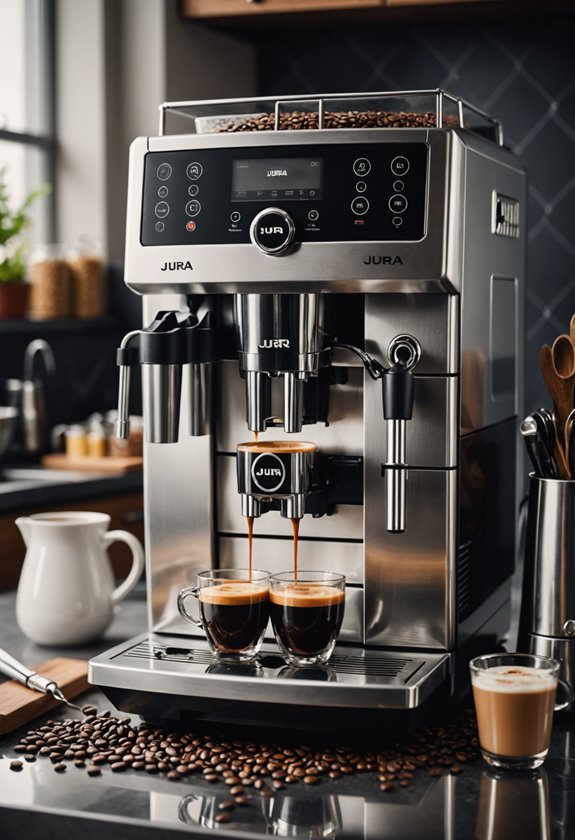
The high-pressure extraction method used in espresso creates a more concentrated caffeine content compared to regular coffee brewing methods.
Brewing Methods and Their Effects
When you investigate the brewing methods for tea and coffee, you'll find they greatly affect the caffeine content in your cup.
Let's examine how brewing impacts caffeine levels in both beverages.
Brewing Temperature and Time
Coffee is brewed at higher temperatures and for longer durations than tea, enhancing caffeine extraction.
Hot water facilitates the extraction process from coffee beans, leading to a more concentrated caffeine level.
Tea, on the other hand, usually brews at lower temperatures and shorter times, but longer steeping can increase caffeine.
For instance, steeping black tea for five minutes yields less caffeine than coffee due to these brewing differences.
Quantity and Extraction
The amount of coffee beans and tea leaves used also affects caffeine concentration.
Typically, over 10 grams of coffee beans are needed for a cup, compared to about 5 grams of tea leaves.
This larger quantity means more caffeine is extracted during brewing.
Freshness and grind size of coffee beans further influence caffeine levels, as finely ground coffee allows quicker extraction.
Using an airtight container for coffee storage helps preserve the beans' optimal flavor and caffeine content.
Understanding these brewing methods helps you appreciate why coffee often contains more caffeine than tea, even though tea leaves have a higher initial caffeine percentage.
Health Implications of Caffeine

Exploring how brewing methods affect caffeine content reveals not just differences in coffee and tea but also potential health implications. When you consider caffeine intake, moderate consumption from tea and coffee can offer health benefits, such as reducing the risk of coronary heart disease and Parkinson's disease.
However, it's important to remember that caffeine in tea is often accompanied by L-theanine, which can promote relaxation and help balance the stimulating effects of caffeine.
Green coffee beans contain chlorogenic acid that helps regulate blood sugar levels and boost metabolism.
On the flip side, excessive caffeine consumption can have some negative effects, like anxiety, insomnia, and increased heart palpitations. These effects are especially pronounced in those who are more sensitive to caffeine.
Pregnant individuals, for example, should be careful and limit their caffeine intake to under 200 mg per day to avoid potential risks for both themselves and their babies.
It's also worth noting that individual responses to caffeine can vary widely. Some people may experience the health benefits of moderate caffeine intake, while others might feel jittery after just a small cup.
Your genetic makeup and personal tolerance will influence how your body reacts to caffeine in coffee or tea, so it's essential to pay attention to how it affects you personally.
Myths and Facts About Caffeine
Despite popular beliefs, caffeine content in tea and coffee is more complex than many realize.
Let's investigate some common myths and facts about caffeine in these popular drinks.
Myth vs. Fact
1. Myth: Coffee always contains more caffeine than tea.
Fact: Unbrewed tea leaves have about 3.5% caffeine, potentially three times more than coffee beans, which contain 1.1-2.2%.
2. Myth: All teas are low in caffeine.
Fact: Black tea can have 40 to 95 mg of caffeine per cup, rivaling brewed coffee that averages 95 to 200 mg per cup.
3. Myth: Green tea is caffeine-free.
Fact: Green tea typically contains 20 to 45 mg per cup, proving it's a caffeine source.
Processing and Brewing
The caffeine content in tea and coffee isn't just about the plant.
It's also influenced by processing methods and brewing techniques. For instance, darker teas aren't necessarily higher in caffeine; it's the processing that matters.
Some coffee enthusiasts attempt to enhance caffeine levels through re-roasting techniques to improve the beans' overall flavor profile.
Decaffeinated Misunderstandings
Finally, don't be misled by the term "decaffeinated."
Decaf teas can still contain up to 3% of the original caffeine content.
Conclusion
In conclusion, tea leaves and coffee beans each have unique caffeine levels. When you brew them, factors like steeping time and water temperature affect the caffeine content. Remember, caffeine impacts your health in various ways, providing both benefits and potential risks. Let's examine these myths and facts carefully to understand caffeine better. By knowing how much caffeine you're consuming, you can make informed choices about your drinks and enjoy them responsibly.