Do Dark Roast Coffee Beans Have Less Caffeine?
Let's investigate whether dark roast coffee beans have less caffeine. Contrary to popular belief, dark roast beans don't have less caffeine; they actually maintain stable caffeine levels across roast types. The roasting process reduces moisture, making dark beans lighter and affecting their density. Measuring caffeine by weight can indicate higher levels in dark roasts because they're less dense than light roasts. However, by volume, light roasts may seem to have more due to their denser beans. Flavor profiles and brewing methods, like the French press, can also impact how you perceive caffeine strength. Uncover more about this intriguing topic further along.
Key Takeaways
- Caffeine content remains stable regardless of roast strength, contrary to common belief.
- Dark roast beans are less dense, affecting volume measurements but not caffeine content.
- Measuring by weight may show higher caffeine in dark roasts due to moisture loss.
- The rich flavors of dark roasts can mask perceived caffeine strength.
- Misconception: dark roast has less caffeine; roasting impacts flavor, not caffeine level.
Caffeine Content in Roasts
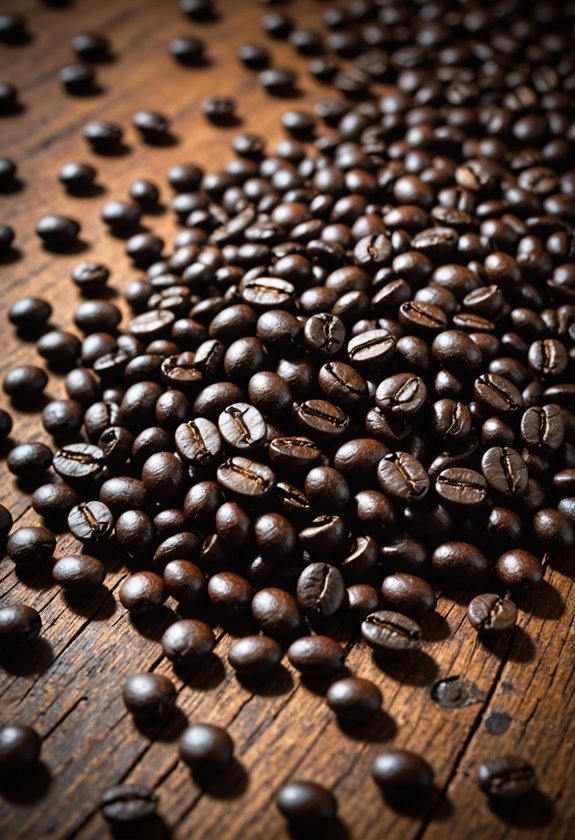
Although many people think dark roast coffee has less caffeine than light roast, the truth is that the caffeine content remains fairly stable across different roast levels. The average caffeine content of Arabica coffee, whether it's light or dark roast beans, is about 1.2%, and this doesn't change much during roasting.
Understanding Caffeine Content
When you look at caffeine content, it's important to take into account how beans are measured. Dark roast beans lose more moisture during roasting, making them lighter. This means when you measure by weight, dark roasts might actually have a slightly higher caffeine percentage than light roasts.
However, if you measure by volume, light roasts are denser and pack more caffeine into a scoop. Bean size variation can significantly impact caffeine measurements across different coffee varieties.
Brewing Methods Matter
Brewing methods also play a big role in the caffeine content of your brewed coffee. Whether you prefer drip, espresso, or French press, each method extracts caffeine differently.
The roast level impacts the flavor profile more than the caffeine content, so you can choose based on taste preference.
Robusta coffee beans contain nearly twice the caffeine of Arabica varieties, making them a stronger choice for those seeking maximum caffeine content.
Let's examine how you can adjust your brewing techniques to get the desired caffeine kick, whether you opt for dark or light roasts. By understanding the subtleties of roast levels and measurement, you can make informed choices about your coffee.
Measurement Methods and Caffeine
Many might wonder how to accurately measure caffeine content in coffee, given the variations in roast levels.
Let's investigate the different measurement methods that can help clarify caffeine levels in dark roast coffee compared to light roast beans.
Weight vs. Volume
When measuring caffeine content, the method you choose—by weight or volume—makes a big difference.
Caffeine remains stable during the roasting process, so when measured by weight, dark roast coffee doesn't inherently have less caffeine than light roast.
However, due to moisture loss, dark roast beans become larger and lighter, meaning they yield less caffeine per scoop when measured by volume.
Roasting Process Impact
Understanding the roasting process is vital.
Because dark roast beans are less dense, measuring by weight can reveal a 12 oz. brewed cup of dark-roasted Arabica coffee might actually have higher caffeine levels than expected.
This contradicts the common misconception that roast strength dictates caffeine content.
Using a burr coffee grinder with multiple settings helps achieve the ideal grind consistency for accurate measurements across different roast levels.
For optimal results, store your beans in airtight containers to maintain consistent moisture levels and prevent flavor variations that could affect measurement accuracy.
Flavor Profiles and Brewing Impact
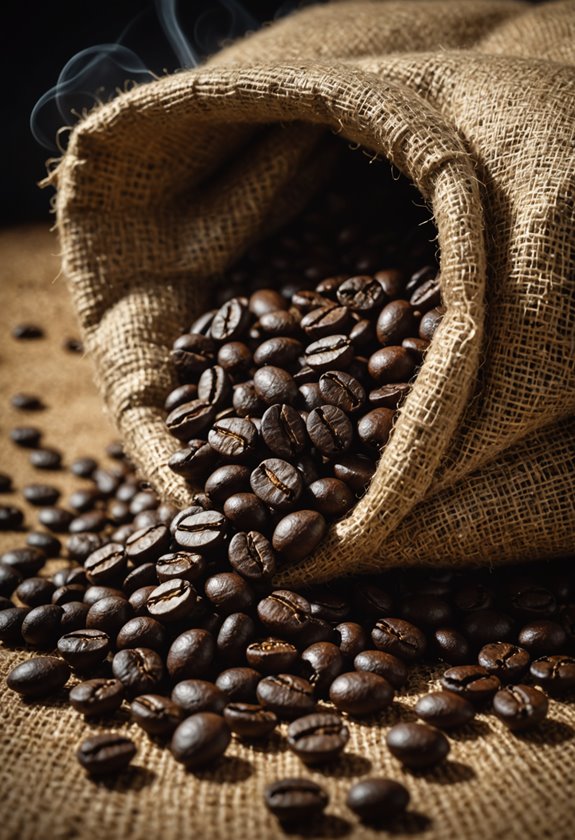
Investigating coffee's caffeine content naturally leads us to consider its flavor profiles and how brewing impacts them.
Dark roast coffee beans offer bold, strong flavors with a thicker mouthfeel due to oils released during roasting. While light roast beans have slightly more caffeine by weight, dark roasts bring a rich, chocolatey flavor that can mask bitterness and perceived caffeine strength.
Let's examine how brewing methods affect this.
- Coffee-to-Water Ratio: Varies the caffeine content, impacting how much caffeine you feel in each sip.
- Brewing Method: Techniques like French press and espresso extract more caffeine than drip brewing.
- Roasting Impact: Dark roasts expand during roasting, reducing mass and slightly lowering caffeine by weight.
- Flavor Extraction: Richer flavors in dark roasts can hide caffeine's strength, altering taste perception.
When you brew your coffee, the method and time play significant roles in caffeine extraction.
Even dark roasts, with their slightly lower caffeine content by weight, can pack a punch depending on how you brew them.
For optimal French press extraction, water temperature around 200°F ensures the best balance of flavor and caffeine content from your dark roast beans.
Frequently Asked Questions
Which Roast of Coffee Has the Least Caffeine?
You're wondering which coffee roast has the least caffeine. It's not about the roast; it's about the decaf. Regardless of roast level, decaffeinated coffee always has the least caffeine. Stick with decaf if you're reducing caffeine intake.
Does a Dark Roast Coffee Have More Caffeine?
You might think dark roast coffee has more caffeine, but it doesn't. The caffeine content remains stable during roasting. Light roast beans are denser, so when measured by volume, they can actually contain more caffeine.
What Type of Coffee Bean Has the Most Caffeine?
You're wondering which coffee bean packs the most caffeine punch. Strong beans are your answer, with nearly double the caffeine content of Arabica beans. Opt for Strong or a blend if you crave maximum caffeine.
Does Dark Roast Coffee Keep You Awake?
You might think dark roast coffee keeps you awake more, but it doesn't have more caffeine than light roast. It's the bold flavor that tricks you. The brewing method and your personal sensitivity actually determine its effects.